


Albuquerque Personal Injury Lawyer for Accident Victims
Injured because someone else was careless? Strong Law helps Albuquerque clients preserve evidence, handle insurance disputes, and pursue compensation for the full impact of an injury.

Albuquerque injury claims may arise from crashes on busy city roads, falls at businesses or apartment properties, dog attacks in residential areas, defective products, or incidents involving public vehicles and property. The evidence, insurance coverage, and legal deadlines can differ based on where and how the injury occurred.
The sections below explain the main parts of an Albuquerque injury claim and connect you with more detailed guidance for specific accidents and injuries.
Do You Have a Personal Injury Claim?
You may have a personal injury claim when another person, company, property owner, or public entity fails to use reasonable care and causes an injury.
Not every accident creates a legal claim. The evidence must usually show that someone had a duty to act safely, failed to meet that duty, and caused measurable harm.
Legal advice may be especially useful when:
- The injury required emergency care, surgery, rehabilitation, or ongoing treatment
- You missed work or can no longer perform the same job
- Fault is disputed or several parties may be responsible
- The insurer requests a recorded statement or broad medical authorization
- You receive a quick settlement offer before your condition is clear
- Video, vehicle data, property records, or other evidence may disappear
- A city, county, state agency, public hospital, school, bus, or public employee may be involved
A free case review can help identify whether a claim may exist, which insurance policies may apply, and which deadlines require immediate attention.
What Types of Injury Cases Does Strong Law Handle in Albuquerque?
Strong Law handles many types of injury claims in Albuquerque. The summaries below can help you find the information that best matches how your injury happened and the losses involved.
Car Accidents
An Albuquerque car accident claim may involve distracted driving, speeding, failure to yield, uninsured drivers, hit-and-run crashes, medical bills, and disputes over who caused the collision.
Our Albuquerque car accident lawyer page explains crash reports, auto insurance, UM/UIM coverage, medical documentation, and common insurer defenses.
Commercial Truck Accidents
Truck crashes may involve a driver, motor carrier, broker, shipper, cargo company, maintenance provider, or equipment manufacturer. Driver logs, electronic data, inspection records, dispatch messages, and commercial insurance may all matter.
The Albuquerque truck accident lawyer page addresses the evidence and federal rules that make trucking cases different.
Motorcycle Accidents
Motorcycle claims often involve severe injuries, rider bias, visibility disputes, left-turn crashes, roadway hazards, and arguments about speed or protective equipment.
The Albuquerque motorcycle accident lawyer page focuses on rider-specific evidence, insurance coverage, and New Mexico motorcycle issues.
Pedestrian and Bicycle Accidents
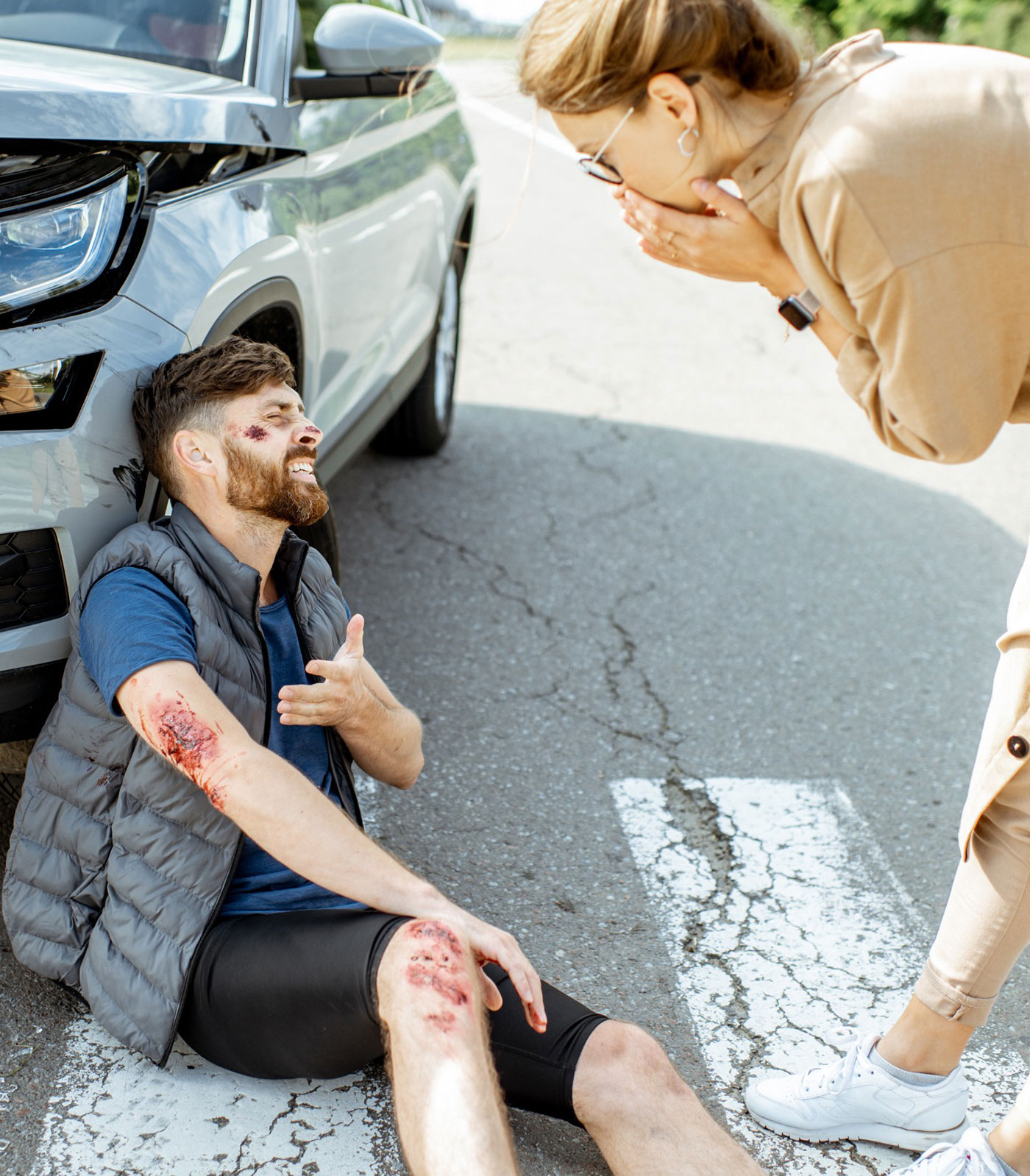
People walking or riding bicycles have little protection from an impact with a vehicle. These cases may involve crosswalks, bike lanes, driveways, traffic signals, visibility, hit-and-run drivers, and unsafe road conditions.
Our Albuquerque pedestrian accident lawyer and Albuquerque bicycle accident lawyer pages provide more detailed guidance for those claims.
For a broader view of where roadway risk appears across the city, review our citywide Albuquerque crash-hotspot analysis, which compares total crashes, fatal crashes, pedestrian crashes, and MRCOG’s traffic-adjusted injury network.
Unsafe Property, Falls, and Dog Attacks
Property owners and businesses may be responsible when an injury is caused by a dangerous condition they knew about or should have discovered. Claims may involve wet floors, broken walkways, poor lighting, damaged stairs, unsafe parking areas, inadequate maintenance, or a dangerous dog.
Learn more from our Albuquerque premises liability lawyer, Albuquerque slip and fall lawyer, and Albuquerque dog bite lawyer pages.
Brain and Catastrophic Injuries
Some injuries affect memory, concentration, mobility, employment, independence, or the need for long-term care. These cases may require detailed medical, vocational, and financial evidence.
The Albuquerque brain injury lawyer and Albuquerque catastrophic injury lawyer pages explain diagnosis, rehabilitation, permanent disability, future care, and reduced earning ability.
Wrongful Death
When negligence causes a death, New Mexico law controls who brings the claim, who may receive the proceeds, which losses may be recovered, and how the estate is involved.
Those issues are covered on our Albuquerque wrongful death lawyer page.
What Does an Albuquerque Personal Injury Lawyer Do?
A personal injury lawyer does more than submit an insurance claim. Strong Law may help identify the people, businesses, and insurers connected to the accident. We can preserve evidence, review reports and records, interview witnesses, investigate insurance coverage, and document the injury’s full effect.
The right investigation depends on the case. A traffic crash may require camera footage, phone records, and vehicle data. A fall may require inspection logs, maintenance records, and prior complaints. A serious brain injury may require testing, rehabilitation records, and observations from relatives or coworkers.
Strong Law builds each claim around the evidence needed for that injury rather than using the same checklist for every client.
How Do You Prove Negligence in New Mexico?
Most personal injury cases are based on negligence. Four basic parts usually must be shown.
Duty
The other person or business had a responsibility to act with reasonable care. A driver has a duty to operate a vehicle safely. A store may have a duty to inspect for and address dangerous conditions. A property owner may have a duty to repair or warn people about a known hazard.
Breach
The person or business failed to meet that responsibility. Examples may include running a red light, making an unsafe turn, failing to clean a spill, ignoring a broken handrail, or allowing a dangerous condition to remain.
Causation
The unsafe conduct must be connected to the accident and injury. It is not enough to show that someone made a mistake. The evidence must show that the mistake caused or contributed to the harm.
Damages
The injured person must have actual losses. Damages may include medical treatment, missed income, pain, disability, scarring, emotional harm, or other effects supported by the evidence.
Can You Recover if You Were Partly at Fault?
Yes. New Mexico uses pure comparative negligence, also called pure comparative fault.
Being partly responsible does not automatically prevent recovery. Instead, compensation may be reduced by the percentage of fault assigned to the injured person.
For example, if total damages were $100,000 and the injured person were assigned 20% of the fault, the recovery could be reduced to $80,000.
New Mexico adopted comparative negligence in Scott v. Rizzo. The rule divides responsibility based on each party’s share of fault.
An insurer’s fault percentage is not final. Scene evidence, video, witness statements, physical damage, business records, and expert analysis may support a different result.
For a closer explanation of how fault percentages are assigned and how they change damages, read our New Mexico comparative fault guide.

Contents
What Should You Do After an Accident in Albuquerque?
Get medical care and report the incident to the appropriate person or agency. Depending on the case, that may mean calling law enforcement, notifying a property manager, completing a business incident report, or reporting an injury to an employer.
Photograph the scene, injuries, vehicles, damaged property, road conditions, warning signs, lighting, or other details that may explain what happened. Collect witness names and contact information when possible.
Preserve damaged vehicles, bicycles, helmets, clothing, products, or other physical evidence. Save medical papers, bills, wage records, insurance messages, and receipts for accident-related costs.
Avoid guessing about fault or signing a broad medical release before the facts and injuries are clear. Evidence may disappear quickly even when the legal filing deadline is years away. Video can be overwritten, vehicles and products can be repaired, unsafe property conditions can change, and witnesses may become harder to locate.
Why Medical Treatment Matters After an Accident
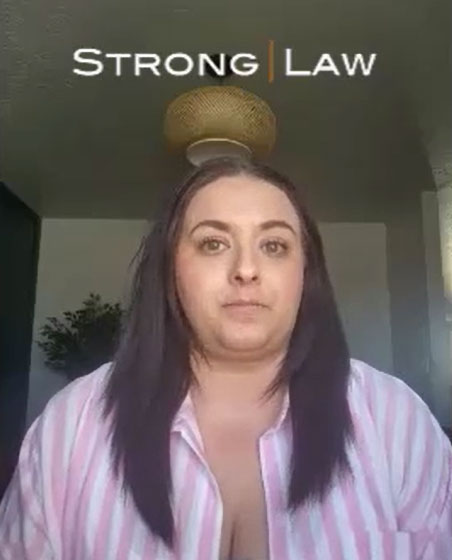
Jed Strong explains why timely medical care can protect your health and help document how an accident affected you.
What Evidence Can Strengthen an Albuquerque Injury Claim?
The most useful evidence depends on how the injury happened.
It may include:
- Police, fire, ambulance, workplace, or business incident reports
- Photographs and video of the scene, vehicles, property condition, or injuries
- Witness names and statements
- Traffic-camera, dashcam, business, residential, or phone video
- Vehicle data, phone records, app data, or electronic logs
- Inspection, repair, maintenance, and safety records
- Medical records, imaging, therapy notes, and work restrictions
- Wage records, tax records, schedules, and employer statements
- Receipts for prescriptions, transportation, equipment, and other costs
- A symptom journal showing how the injury affected daily life
Do not alter or discard damaged property that may be important to the claim. The condition of a vehicle, bicycle, helmet, defective product, or broken piece of equipment may help explain how the injury occurred.
How Do Insurance Companies Challenge Injury Claims?
Insurance companies may dispute fault, medical causation, treatment, or the value of the losses.
An adjuster may claim that the injured person caused the accident, that the injury is minor, or that a prior condition explains the symptoms. The insurer may point to delayed treatment, a gap in care, a return to work, or social-media activity.
It may also request a broad release for years of unrelated medical history or make an early offer before the person knows whether surgery, extended therapy, permanent restrictions, or future work problems will develop.
You may need to report the incident to an insurer, but avoid guessing about fault, speed, distance, symptoms, or recovery. An early recorded statement can later be compared with medical records and used to challenge the claim.
What Compensation May Be Available?
Compensation depends on the injury, fault, available insurance, and the effect on the person’s life.
Economic Damages
Economic damages cover measurable financial losses. They may include emergency treatment, hospitalization, surgery, therapy, rehabilitation, future medical care, lost wages, reduced earning ability, property damage, transportation, and other out-of-pocket expenses.
A qualifying wrongful death claim may also include funeral, burial, and income-related losses.
Non-Economic Damages
Non-economic damages address the personal effects that do not appear on a bill or pay stub.
They may include physical pain, emotional distress, scarring, disfigurement, permanent impairment, loss of mobility, reduced independence, and loss of enjoyment of normal activities.
There is no reliable average value for every Albuquerque injury claim. Two people with similar diagnoses may have very different treatment, work loss, recovery periods, insurance coverage, and long-term limits.
How Are Pain, Suffering, and Daily-Life Losses Proved?
Non-economic damages should be supported with specific evidence rather than broad statements.
Medical and therapy records can show pain, anxiety, sleep problems, mobility limits, or continuing symptoms. Photographs may document scarring, swelling, assistive equipment, or physical changes over time.
Relatives, friends, coworkers, or teachers may describe changes they observed after the accident. Their accounts can help explain why the injured person stopped attending events, needed help with daily tasks, struggled at work, or could no longer take part in hobbies and family activities.
Other useful evidence may include symptom records, calendars, work evaluations, canceled travel, and testimony from the injured person.
The goal is to show how the injury affected real life, not simply attach a dollar figure to a diagnosis.

How Long Do You Have to File a Personal Injury Claim in New Mexico?
Many New Mexico personal injury lawsuits generally must be filed within three years under N.M. Stat. § 37-1-8.
Different rules may apply based on the type of defendant, when the claim legally began, the age of the injured person, and the legal theory involved.
Do not treat three years as a reason to wait. Video, physical evidence, business records, and witness memories may be lost much sooner.
Wrongful death, medical malpractice, insurance-contract, product, and other specialized claims may follow different rules. The deadline should be determined from the actual facts.
What if a Government Entity or Public Employee Was Involved?
Claims involving the State of New Mexico or a local public body may follow much shorter rules.
The New Mexico Tort Claims Act may require written notice within 90 days after the event. The notice generally must describe the time, place, and circumstances of the injury. The state provides an official Tort Notice of Claim process.
A qualifying lawsuit against a government entity or public employee may also be subject to a separate two-year filing period under N.M. Stat. § 41-4-15.
These rules may affect qualifying claims involving public vehicles, buses, schools, hospitals, buildings, roads, property, or government employees acting within the scope of their work.
The Tort Claims Act does not permit every claim simply because a public entity was involved. The law must waive immunity for the type of conduct at issue, and notice must generally be sent to the correct public office.
Government-related claims should be reviewed immediately.
Where May an Albuquerque Personal Injury Lawsuit Be Filed?
Many civil cases connected to Albuquerque and Bernalillo County may proceed through the Civil Division of New Mexico’s Second Judicial District Court.
The correct court depends on where the accident happened, who is involved, how much is in dispute, and whether state or federal law controls the case.
The Second Judicial District Court’s Civil Division is located at 400 Lomas Boulevard NW in Albuquerque. Many injury claims resolve without a trial, but a lawsuit may be needed when the insurer denies responsibility, disputes the injuries, or does not offer a reasonable resolution.
How Does an Albuquerque Personal Injury Claim Move Forward?
- Free case review. Strong Law reviews what happened, the injuries, available records, insurance contact, and urgent deadlines.
- Evidence preservation. Photographs, video, physical evidence, electronic data, reports, and witness information are identified and protected.
- Fault and coverage investigation. The responsible people or companies and available insurance policies are examined.
- Medical and financial documentation. Treatment records, bills, work restrictions, wage information, and evidence of daily-life changes are gathered.
- Claim evaluation. Current losses, future care, earning effects, fault risks, and available coverage are reviewed.
- Demand and negotiations. The claim is presented to the insurer with supporting evidence.
- Litigation when needed. A lawsuit may be filed when the other side denies liability or refuses a reasonable resolution.
- Settlement or trial. The case ends through an agreed settlement, court ruling, or jury decision.
The timeline depends on medical recovery, the number of parties, the available evidence, insurance disputes, and whether litigation is required.
A claim should not be rushed before the long-term injury picture is clear. It also should not sit while important evidence disappears.
Why Choose Strong Law for an Albuquerque Injury Claim?
Strong Law builds injury claims around three questions: what happened, how the injury changed the person’s life, and which people, companies, and insurance policies may be responsible.
Before representing injured people, attorney Jed Strong worked as in-house counsel for GEICO. That experience helps Strong Law recognize insurer efforts to shift blame, question medical treatment, request broad records, limit coverage, and push for early settlements.
Strong Law has handled more than 2,000 successful cases across its offices. The Albuquerque office is located at:
500 Marquette Avenue NW, Suite 1200 #7317
Albuquerque, NM 87102
The Albuquerque intake number is 206-258-6161.
Strong Law offers free case reviews and handles qualifying personal injury matters on a contingency fee basis. There are no upfront attorney fees or hourly bills. The exact attorney fee and any case-cost terms are explained before representation begins. Attorney fees are not owed unless compensation is recovered.
We’ve helped thousands of accident victims like you
we win
98%
4.9
stars
over
2,000


“Very professional, and treated me as an equal.”
"Just wanted to say thank you to Jed and his team at Strong Law. Not only was I happy with the outcome, but the entire process as a whole. I would definitely recommend this firm to anyone. Thanks again."
“Unbelievable work!”
"I had a claim involving my own insurance company. I tried to negotiate with them, and they completely denied my claim – two times. I then hired Strong Law, and the change was instant. The insurance company immediately began negotiating, and Jed was able to secure an unbelievably good settlement. I will never again attempt to take-on an insurance company without Strong Law in my corner. Thank you!"
“I got justice and awesome compensation.”
"I hired Strong Law after my car accident. Jed and his team worked hard on my case. They were professional and compassionate through my surgery and as I recovered, and they were awesome on communication. I got justice and awesome compensation. I would recommend Strong Law to anyone in my situation."
Frequently Asked Questions About Albuquerque Personal Injury Claims
How do I know whether I have a personal injury claim?
A claim may exist when another person, company, property owner, or public entity failed to use reasonable care and caused an injury. Fault, causation, losses, deadlines, and available insurance must all be reviewed.
When should I contact a personal injury lawyer?
Consider getting advice when the injury is serious, treatment is ongoing, fault is disputed, evidence may disappear, or an insurer requests a detailed statement or offers a quick settlement.
Can I recover if I was partly responsible?
Yes. New Mexico uses pure comparative fault. Your compensation may be reduced by your percentage of responsibility, but partial fault does not automatically prevent recovery.
What should I do immediately after an accident?
Get medical care, report the incident, photograph the scene and injuries, collect witness information, preserve damaged property, and save medical and insurance records. Avoid guessing about fault.
How long do I have to file in New Mexico?
Many personal injury lawsuits generally have a three-year filing period. Government claims and other specialized matters may have shorter or different rules.
What if the City of Albuquerque or another public entity was involved?
The New Mexico Tort Claims Act may require written notice within 90 days and may impose a separate two-year lawsuit deadline. Government immunity must also be waived for the type of claim involved.
What evidence should I save?
Keep reports, photographs, video, witness information, medical records, bills, wage records, insurer messages, and damaged property. Save anything that may show how the accident happened or how the injury affected you.
Should I give the insurance company a recorded statement?
You may need to report the claim, but be careful with detailed or recorded statements. Do not guess about fault, distance, speed, symptoms, or recovery.
What is my personal injury case worth?
Value depends on fault, treatment, future care, lost income, permanent effects, available insurance, and the strength of the evidence. There is no reliable average value for every claim.
How long does a personal injury case take?
Some cases resolve in months, while others take longer. The timeline depends on medical recovery, disputed fault, the number of defendants, insurance coverage, and whether a lawsuit is required.
Will my case go to court?
Many cases settle without trial. A lawsuit may be necessary when the insurer denies responsibility, disputes the injuries, or does not offer a reasonable resolution.
How much does an Albuquerque personal injury lawyer cost?
Strong Law handles qualifying injury claims on a contingency fee basis. There are no upfront attorney fees or hourly bills, and attorney fees are not owed unless compensation is recovered.
Speak With an Albuquerque Personal Injury Lawyer
A serious injury can leave you dealing with medical treatment, missed income, insurance pressure, and questions about what to do next.
Strong Law can investigate what happened, preserve evidence, identify available insurance, document the full impact of the injury, and help protect the claim.
Contact Strong Law Accident & Injury Attorneys or call 206-258-6161 for a free case review.
Get Your Free
Case Review

Contact us
Our team is standing by to help you.