
Albuquerque Pedestrian Accident Lawyer
Strong Law helps injured pedestrians preserve evidence, address insurance disputes, and pursue compensation for medical care, lost income, and long-term harm.

Strong Law Accident & Injury Attorneys represents pedestrians injured while crossing a street, using a crosswalk, walking through a parking lot, traveling near a roadway, or entering or leaving a business.
If you were hit while walking, call (505) 465-8341 or contact Strong Law for a Free Case Review.
For information about other negligence and insurance claims, visit our Albuquerque personal injury lawyer page.
What Does an Albuquerque Pedestrian Accident Lawyer Do?
A pedestrian accident lawyer investigates the collision, identifies the people or businesses that may be responsible, communicates with insurance companies, and documents the injured person’s losses.
These cases often require more than proving that a vehicle made contact with a pedestrian. The evidence must help explain why the crash occurred, whether the driver had time to avoid it, whether another party contributed to the danger, and how the injuries affect the pedestrian’s health, employment, independence, and future.
The investigation may include obtaining police reports and 911 audio, locating traffic-camera or surveillance footage, interviewing witnesses, reviewing signal timing and roadway conditions, examining vehicle damage and electronic data, and identifying applicable insurance policies.
Medical, employment, and functional evidence may also be gathered to show how the injuries affected the pedestrian’s work, mobility, household responsibilities, relationships, and future needs.
Insurance companies may argue that the pedestrian crossed outside a marked crosswalk, entered the roadway suddenly, wore dark clothing, was distracted, or should have been easier to see. Those claims do not decide the case. Fault should be evaluated using the complete evidence.
A collision caused by a negligent driver may involve issues discussed on our Albuquerque car accident lawyer page. A head injury may require the medical and functional evidence described on our Albuquerque brain injury lawyer page.
When an injury causes permanent disability, reduced independence, or lifelong care needs, our Albuquerque catastrophic injury lawyer page explains how future losses may be evaluated. If a pedestrian dies from the injuries, the family may need guidance from an Albuquerque wrongful death lawyer.
What Commonly Causes Pedestrian Accidents in Albuquerque?
Most pedestrian collisions occur because a driver fails to notice someone on foot, travels too fast for the conditions, ignores a traffic signal, or fails to yield before turning through an intersection or crosswalk.
Common causes include:
- Drivers failing to yield at crosswalks
- Distracted driving, including texting or using navigation apps
- Speeding near intersections, schools, businesses, or residential areas
- Left-turn and right-turn collisions
- Drivers running red lights or rolling through stop signs
- Impaired or fatigued driving
- Parking lot and driveway collisions
- Poor lighting or limited nighttime visibility
- Unsafe road design, missing signage, or defective traffic controls
- Rideshare, delivery, and commercial-driver negligence
Pedestrian crashes may happen near intersections, parking lots, apartment complexes, transit stops, schools, shopping areas, and downtown streets.
The location can affect the investigation. A downtown collision may have traffic cameras, business surveillance, transit records, or several witnesses. A nighttime crash on a less-traveled road may depend more heavily on headlights, roadway lighting, vehicle speed, clothing visibility, and physical evidence.
Albuquerque’s 2024 crash data also shows that pedestrian danger is concentrated at several Central Avenue intersections. Central and Louisiana recorded 25 pedestrian crashes, the highest count in NMDOT’s Albuquerque hotspot table. See our Albuquerque crash-hotspot analysis for the full comparison of pedestrian, fatal, total-crash, and traffic-adjusted injury data.
Who Can Be Liable for a Pedestrian Accident?
The driver who struck the pedestrian is often the primary responsible party, but a complete investigation should consider everyone whose conduct contributed to the collision.
Potentially liable parties may include:
- The driver who struck the pedestrian
- An employer or commercial-vehicle company
- A rideshare or delivery company when the facts and applicable law support liability
- A vehicle owner who negligently entrusted the vehicle to an unsafe driver
- A property owner whose obstruction or unsafe exit contributed to the collision
- A government body responsible for a qualifying roadway or traffic-control hazard
- A manufacturer when a vehicle or component defect contributed to the crash
If the collision involved a delivery truck, semi-truck, work vehicle, or other commercial vehicle, the case may involve company records and insurance issues discussed on our Albuquerque truck accident lawyer page.
Several parties may share responsibility. For example, a delivery driver may have caused the impact while working, a company may have failed to supervise the driver, and a property owner may have created a visibility obstruction near an exit.
Identifying every responsible party can be especially important when the pedestrian has severe injuries and one insurance policy is not enough to cover the losses.

Contents
How Does New Mexico Crosswalk Law Affect a Claim?
New Mexico law gives pedestrians important protections, but the result of a case depends on the specific circumstances.
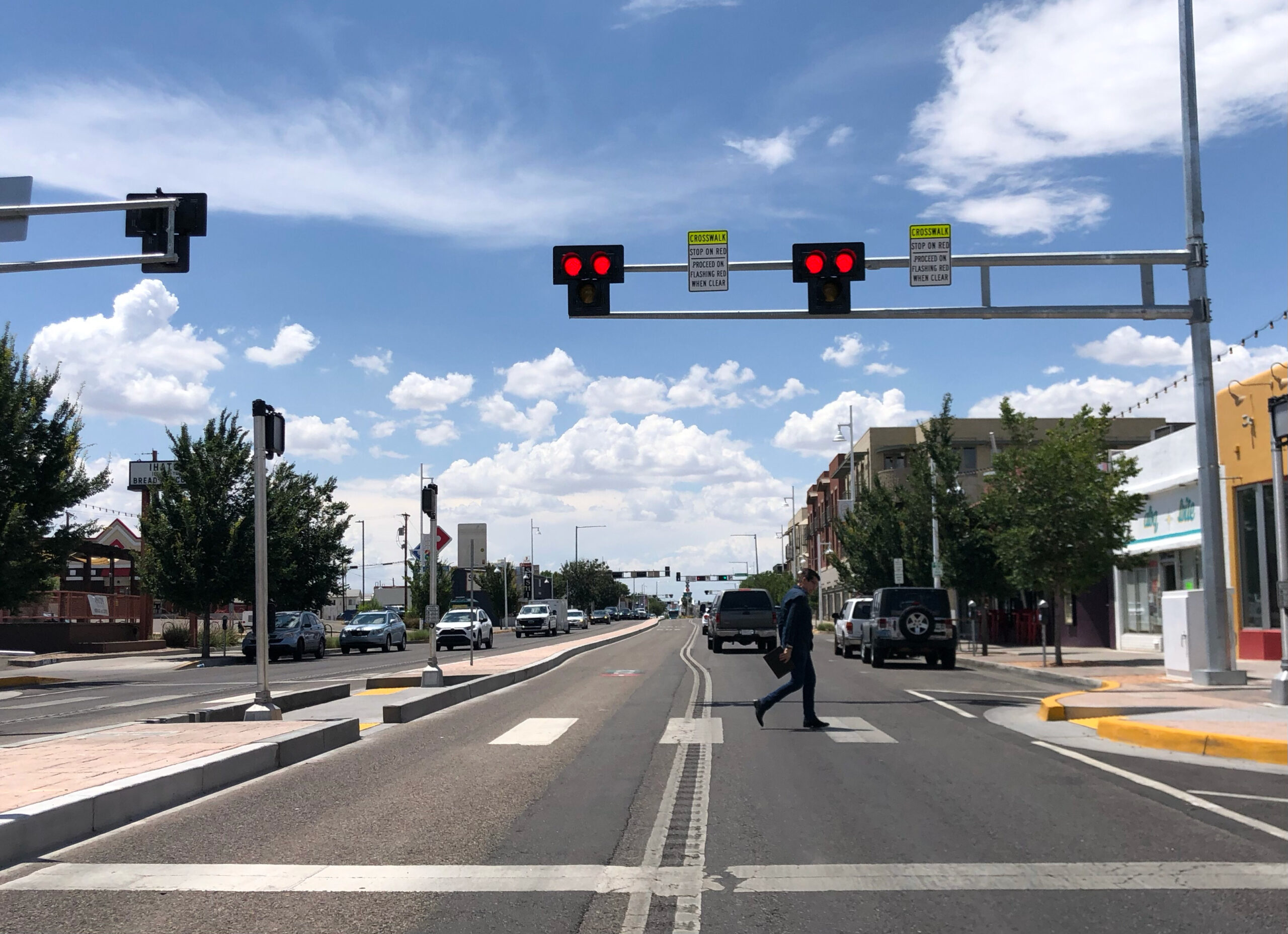
When traffic-control signals are not present or operating, New Mexico law generally requires a driver to yield to a pedestrian within a crosswalk. The law also states that a pedestrian should not suddenly leave a curb or other place of safety and enter the path of a vehicle that is too close for the driver to yield.
A driver may not pass another vehicle that has stopped at a marked crosswalk or an unmarked crosswalk at an intersection to allow a pedestrian to cross. These rules appear in N.M. Stat. § 66-7-334.
A pedestrian may still have a claim when the collision occurs outside a marked crosswalk. Relevant questions may include:
- How fast was the vehicle traveling?
- How far away was the driver when the pedestrian entered the road?
- Could the driver see the pedestrian?
- Was the driver distracted or impaired?
- Was the area adequately lit?
- Did the driver have time to slow down, stop, or move away?
- Did the road layout or another obstruction affect visibility?
A traffic citation can be useful evidence, but it does not automatically decide a civil injury claim. The complete evidence should be evaluated.
What Evidence Proves Fault After a Pedestrian Crash?
Pedestrian crashes are often disputed because the driver and pedestrian may describe the moments before impact differently.
Useful evidence may include:
- Traffic-camera, business, residential, or dashcam video
- Witness names and statements
- Photographs of the road, crosswalk, lighting, signals, and sight lines
- Vehicle speed and stopping-distance evidence
- Skid marks, debris, and the vehicle’s point of impact
- Electronic vehicle information
- Driver phone records when distraction is disputed
- Traffic-signal timing
- Police body-camera footage
- Rideshare, delivery, or employment records
- Statements made by the driver after the collision
Video can be particularly important, but it may be erased within days or weeks. Businesses, apartment buildings, residences, rideshare companies, and government agencies may each have different retention practices. Preservation requests should be made promptly.
The Albuquerque Police Department provides a process for obtaining traffic accident reports after they become available. A crash report can provide useful information, but it is only one part of the evidence and may not contain every witness, video source, or relevant fact. Visit the City of Albuquerque’s traffic accident report page for current request information.
Can I Recover Compensation If I Was Partly at Fault?
Possibly. New Mexico follows comparative-fault principles.
An injured pedestrian’s compensation may be reduced by the percentage of fault assigned to that person instead of being completely eliminated merely because the pedestrian shares some responsibility.
For example, if the total damages are $100,000 and the pedestrian is assigned 20 percent of the fault, the recoverable amount would generally be reduced to $80,000. The actual allocation depends on the evidence and cannot be determined from the accident report alone.
The insurance company’s initial fault determination is not final. An insurer may assign blame before reviewing surveillance footage, signal timing, vehicle data, witness statements, lighting conditions, or the driver’s phone activity.
Strong evidence can show whether the driver was speeding, distracted, impaired, turning without checking the crosswalk, or otherwise failed to avoid the collision.
Our New Mexico shared-fault guide explains how the statewide rule reduces compensation and how evidence can challenge an insurer’s percentage.

What Injuries Can a Pedestrian Accident Cause?
Pedestrians may suffer severe injuries because there is no vehicle frame, seat belt, or airbag between their body and the impact.
Common injuries include:
- Traumatic brain injuries and concussions
- Spinal cord, neck, and back injuries
- Broken bones and serious joint injuries
- Internal bleeding and organ damage
- Facial injuries, nerve damage, scarring, or disfigurement
- Crush injuries, amputations, and permanent mobility limitations
- Psychological trauma, sleep disruption, and reduced independence
A pedestrian may be injured during the initial impact, when thrown onto the hood or windshield, or when landing on the roadway.
Serious injuries may require surgery, hospitalization, rehabilitation, mobility equipment, home assistance, long-term pain management, and extended time away from work. Some people return to work but cannot perform the same duties, work the same number of hours, or continue along the same career path.
The full effect of an injury may not be clear immediately. Symptoms and functional limitations can become more noticeable after the person returns to work, drives, cares for children, climbs stairs, or attempts ordinary household activities.
What Compensation May Be Available?
The value of a pedestrian accident claim depends on the evidence, injury severity, insurance coverage, permanent limitations, work history, future needs, and any comparative fault.
Depending on the circumstances, compensation may include:
- Emergency care, hospitalization, surgery, and follow-up treatment
- Rehabilitation, medication, medical equipment, and future care
- Lost wages and employment benefits
- Reduced future earning capacity
- Household or personal assistance
- Transportation, accessibility, home, or vehicle modifications
- Physical pain and emotional distress
- Permanent impairment, scarring, or disfigurement
- Loss of independence and enjoyment of life
- Wrongful death damages when a pedestrian is killed
Medical and rehabilitation records may establish diagnoses, treatment, restrictions, and future recommendations. Wage statements, tax records, employer records, and work restrictions may help document income loss and reduced earning ability.
Relatives, coworkers, friends, and caregivers may help explain how the injury changed the person’s mobility, memory, independence, mood, relationships, household responsibilities, or participation in ordinary activities.
When substantial future losses are disputed, qualified medical, vocational, economic, or other professionals may be used when appropriate. Not every case requires every type of expert.
Insurance companies may offer an early settlement before the pedestrian’s recovery and future needs are understood. Accepting a settlement normally ends the claim, so the long-term medical and financial picture should be evaluated first.
What Should I Do After Being Hit by a Car in Albuquerque?
The steps taken after a pedestrian collision can affect both medical recovery and the ability to prove a claim.
- Get medical care. Call 911 or seek prompt evaluation, even when symptoms initially seem manageable.
- Report the collision. Ask law enforcement to investigate and create a crash report.
- Photograph the scene. Capture the vehicle, crosswalk, traffic signals, lighting, road conditions, visible injuries, and damaged property.
- Identify witnesses. Obtain names, phone numbers, and email addresses when possible.
- Preserve personal items. Keep damaged clothing, shoes, bags, phones, and other items connected to the crash.
- Write down what happened. Record the time, weather, direction of travel, signal sequence, driver statements, and anything else remembered.
- Be careful with recorded statements. An insurer may ask questions before the pedestrian understands the injuries or has reviewed the evidence.
- Do not rush into a settlement. Future treatment, work limitations, and permanent effects may not yet be known.
- Request the crash report. APD provides online and in-person request options after the report becomes available.
- Seek legal guidance when needed. Prompt review is especially important when injuries are serious, fault is disputed, video may exist, or a government body may be involved.
A person who was hospitalized or physically unable to gather evidence should not assume the claim is lost. An investigation may still locate witnesses, video, vehicle records, electronic information, and other proof.
How Long Do I Have to File a Pedestrian Accident Claim?
New Mexico generally provides a three-year filing period for actions involving injury to a person. The correct starting date and deadline can depend on the facts, the defendant, and the legal theory. The general rule appears in N.M. Stat. § 37-1-8.
Three years should not be treated as a reason to wait. Video may be erased, vehicles repaired, physical evidence removed, and witnesses may become difficult to locate.
Are Claims Involving a Government Body Different?
Yes. Different rules may apply when a pedestrian collision involves a public vehicle, government employee, or qualifying problem with a roadway, signal, crossing, or other public property.
A person asserting a qualifying claim under the New Mexico Tort Claims Act generally must provide written notice within 90 days after the occurrence. The correct recipient depends on whether the potential defendant is the state, a municipality, a county, a school district, or another public body. The notice requirements appear in N.M. Stat. § 41-4-16.
Qualifying Tort Claims Act lawsuits are generally subject to a separate two-year filing period. The claim must also fall within an applicable statutory waiver of governmental immunity. The filing rule appears in N.M. Stat. § 41-4-15.
A police report or crash report should not be assumed to satisfy the required notice by itself. An incident involving a City of Albuquerque vehicle, public bus, government employee, traffic-signal issue, roadway defect, or unsafe public crossing should be reviewed promptly.
Different procedures may also apply to federal defendants, tribal entities, minors, and wrongful death claims.
We’ve helped thousands of accident victims like you
we win
98%
4.9
stars
over
2,000


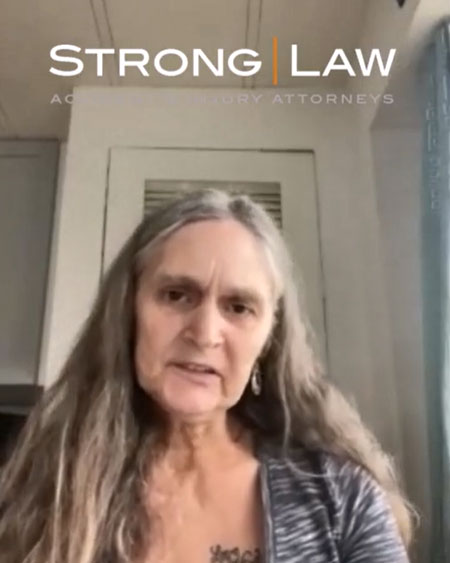
“Very professional, and treated me as an equal.”
"Just wanted to say thank you to Jed and his team at Strong Law. Not only was I happy with the outcome, but the entire process as a whole. I would definitely recommend this firm to anyone. Thanks again."
“Unbelievable work!”
"I had a claim involving my own insurance company. I tried to negotiate with them, and they completely denied my claim – two times. I then hired Strong Law, and the change was instant. The insurance company immediately began negotiating, and Jed was able to secure an unbelievably good settlement. I will never again attempt to take-on an insurance company without Strong Law in my corner. Thank you!"
“I got justice and awesome compensation.”
"I hired Strong Law after my car accident. Jed and his team worked hard on my case. They were professional and compassionate through my surgery and as I recovered, and they were awesome on communication. I got justice and awesome compensation. I would recommend Strong Law to anyone in my situation."
Get Your Free
Case Review

Why Choose Strong Law for an Albuquerque Pedestrian Accident Case?
Pedestrian cases often involve severe injuries, disputed fault, disappearing video, and pressure from insurance companies to settle before the complete effects of the injury are known. Strong Law prepares evidence-based claims addressing both why the collision occurred and how the injuries affected the pedestrian’s life.
Before founding Strong Law, attorney Jed Strong worked as an in-house attorney for GEICO. His prior insurance-side experience helps the firm recognize efforts to shift fault, challenge medical causation, minimize future losses, or pressure an injured person into an early settlement.
Strong Law has handled more than 2,000 successful cases across its offices.
Qualifying pedestrian accident cases are handled on a contingency fee basis. Clients do not pay upfront attorney fees or hourly attorney bills. Attorney fees are not owed unless compensation is recovered. The written agreement explains the percentage fee, case expenses, and responsibility for costs.
Albuquerque Office Information
Strong Law serves injured pedestrians in Albuquerque and throughout Bernalillo County. Consultations are available by phone, video, or by appointment at:
500 Marquette Avenue NW, Suite 1200 #7317
Albuquerque, NM 87102
View Strong Law’s Albuquerque office on Google Maps.
Call (505) 465-8341 or request a Free Case Review.
Frequently Asked Questions About Albuquerque Pedestrian Accident Claims
Do I need a lawyer if I was hit in a crosswalk?
Consider speaking with a lawyer when the injuries are serious, the driver disputes fault, video may exist, insurance coverage is limited, or an insurer is requesting a recorded statement or offering a quick settlement.
Can I still have a claim if I was outside a crosswalk?
Possibly. Being outside a marked crosswalk does not automatically prevent recovery. The case may depend on driver speed, visibility, lighting, road layout, distraction, traffic controls, and whether the driver had a reasonable opportunity to avoid the collision.
What if the driver says I came out of nowhere?
That is a common insurance defense. Video, witnesses, lighting conditions, vehicle speed, road design, signal timing, and driver conduct may help establish whether the driver should have seen and avoided the pedestrian.
What happens if the driver leaves the scene?
A hit-and-run should be reported to police promptly. Evidence may include surveillance video, witness descriptions, vehicle debris, license-plate information, traffic cameras, and nearby dashcams. Compensation may also be available through applicable uninsured-motorist coverage or other insurance.
Who pays my medical bills after a pedestrian accident?
Possible sources may include the at-fault driver’s liability insurance, applicable uninsured or underinsured motorist coverage, medical-payment coverage, health insurance, and other available policies. The options depend on the facts and policy language.
How much is an Albuquerque pedestrian accident case worth?
There is no reliable average value. The result depends on fault, medical treatment, permanent limitations, future care, lost income, earning capacity, pain and suffering, insurance coverage, and the strength of the evidence.
How long does a pedestrian accident case take?
The timeline varies. Some claims resolve after treatment stabilizes and damages can be documented. Others take longer because fault is disputed, injuries are severe, several insurers are involved, or litigation is necessary.
What if a public vehicle or unsafe crossing contributed to the crash?
A claim involving a government body may have specialized immunity rules, a 90-day notice requirement, and a separate filing period. The correct procedure depends on the public entity involved, so the incident should be reviewed promptly.
What if a loved one died in a pedestrian accident?
The personal representative may be able to bring a wrongful death claim for losses allowed under New Mexico law. These cases may involve medical and funeral expenses, lost financial support, and losses suffered by qualifying beneficiaries.
How much does an Albuquerque pedestrian accident lawyer cost?
Strong Law handles qualifying pedestrian accident cases on a contingency fee basis. Attorney fees are not owed unless compensation is recovered. The written agreement explains the percentage fee, case expenses, and responsibility for costs.
Speak With an Albuquerque Pedestrian Accident Lawyer
A pedestrian collision can affect a person’s health, employment, mobility, finances, and independence long after the scene has been cleared.
Strong Law Accident & Injury Attorneys can investigate what happened, preserve evidence, address insurance defenses, identify responsible parties, and document the full effect of the injuries.
Call (505) 465-8341 or contact Strong Law for a Free Case Review.
Contact us
Our team is standing by to help you.