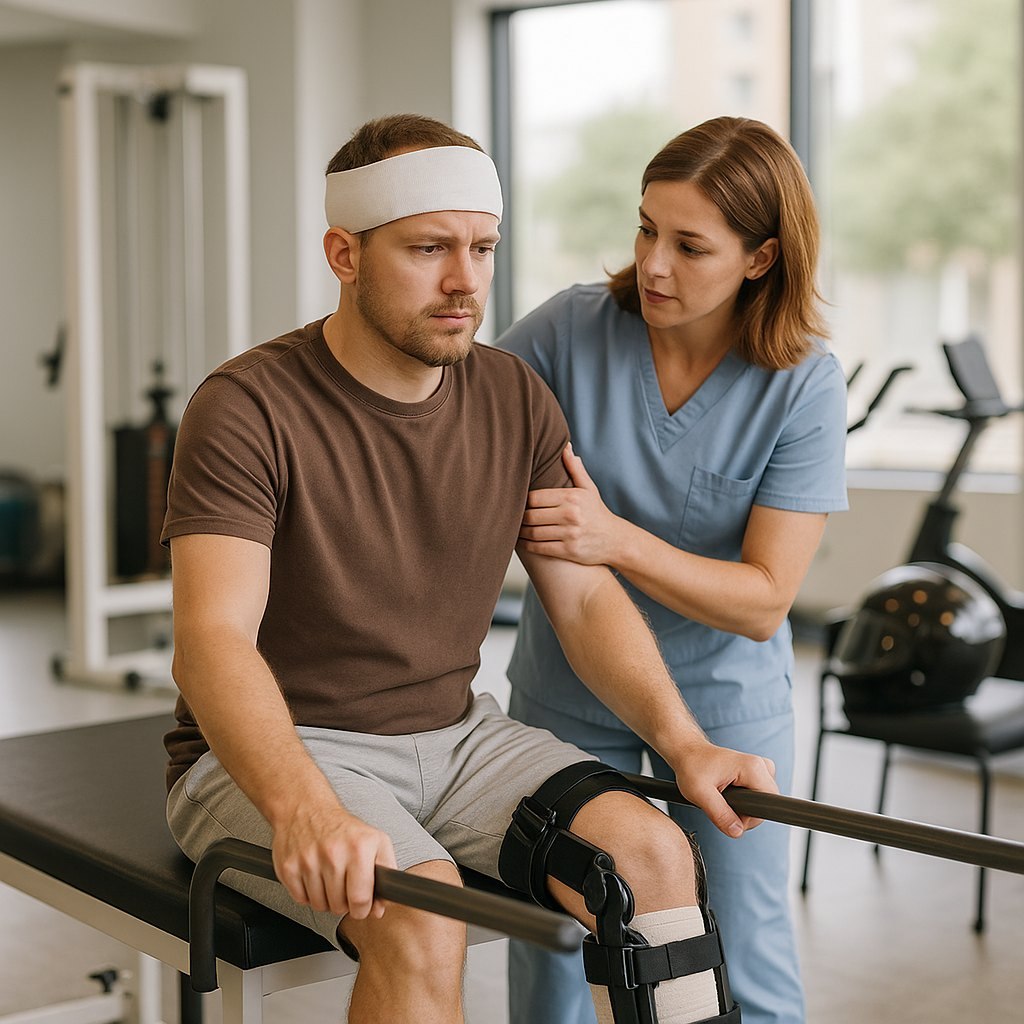
Midvale Brain Injury Lawyer for TBI Claims
A Midvale brain injury lawyer can help you understand a TBI claim while your healthcare team guides recovery. Strong Law reviews the evidence, insurance, and lasting effects of your injury.

How can a Midvale brain injury lawyer help?
A Midvale brain injury lawyer can investigate the incident, gather medical and work records, and explain which losses may be part of a legal claim. Strong Law Accident & Injury Attorneys helps people whose thinking, memory, balance, or daily routines changed after an injury caused by someone else.
Our Utah office is at 193 E Fort Union Boulevard, Midvale, UT 84047. Call 385-746-1803 or request a free consultation. You can ask about evidence and deadlines before your treatment is complete.
What matters early in a brain injury claim?
- Get medical care and follow the provider’s instructions.
- Keep records of symptoms and practical changes in daily life.
- Preserve evidence of the crash, fall, or other incident.
- Review insurance notices and requests before signing a release.
- Ask about legal deadlines while your recovery is ongoing.
Our Midvale personal injury page explains the broader practice. When an injury causes lasting disability or major care needs, our Midvale catastrophic injury page covers related planning issues.
Which local incidents may lead to a claim?
We review injuries from vehicle collisions, falls, and other preventable incidents in Midvale and Salt Lake County. A crash on I-15, a turning collision on State Street, or a fall at a business near Fort Union Boulevard will each require different evidence. The injury diagnosis does not, by itself, prove who was responsible.
For a roadway collision, see our Midvale car accident guidance and commercial truck claim page. A dangerous-property incident may involve the duties discussed on our Midvale slip and fall page.


What should you know about TBI symptoms and diagnosis?
A concussion is a type of traumatic brain injury. Symptoms may begin immediately or appear later. The CDC’s symptom guidance describes possible changes in thinking, mood, sleep, and physical comfort.
- Headaches, dizziness, or trouble with balance.
- Sensitivity to light or sound.
- Problems with memory, focus, or clear thinking.
- Changes in sleep, energy, or mood.
Seek emergency care now for danger signs after a head injury, such as a worsening headache, repeated vomiting, seizures, new weakness, slurred speech, or difficulty waking. Call 911 if needed. These examples are not a complete checklist; follow medical advice when symptoms change.
Does a normal scan rule out a concussion?
No. As the CDC explains, diagnosing a mild TBI does not always require a brain scan. A clinician may assess symptoms, memory, concentration, and other findings. Imaging may be used for other concerns, including bleeding. A lawyer cannot diagnose the injury or choose your testing.
What does mild, moderate, or severe mean for a claim?
The medical classification helps describe the injury, but it does not set a settlement amount. A claim needs evidence of the symptoms, treatment, and limits that actually affect this person. Some people recover well; others need longer support. We avoid assuming that every concussion is permanent or that a mild label means the effects are trivial.
Keep appointments and ask your healthcare team about referrals, rehabilitation, and returning to work or other activities. Legal documentation should reflect the care you need, not drive decisions about treatment.

How do we document the effects of a brain injury?
We build a record of life before the incident, the injury itself, and the changes afterward. A brief office visit may not capture trouble managing a work schedule, remembering instructions, or getting through a busy day. Specific examples can help explain the medical findings.
- Medical records: emergency notes, diagnoses, test results, referrals, and treatment plans.
- Therapy records: documented goals, progress, and remaining limits.
- Work evidence: job duties, attendance, pay records, and written restrictions.
- Daily observations: dated examples from the injured person or people who know them.
- Prior records: relevant earlier symptoms or conditions that help establish an accurate baseline.
What belongs in a symptom journal?
Use short, factual notes. Record the date, the activity, what became difficult, and any help needed. For example, note a missed task or a need for extra breaks instead of making a broad statement that nothing is possible. Include improvements as well as difficult days.
A family member may help with notes when memory or fatigue interferes. The journal supports, but does not replace, clinical care or medical records. Be honest about gaps in memory. Reconstructing events from guesses can weaken an otherwise valid account.
How are prior conditions handled?
An insurer may ask whether a symptom existed before the incident. Relevant prior records can help separate an old condition from a new injury or a worsening of that condition. Tell your lawyer about previous head injuries and treatment so the claim can be assessed fairly.
When specialist evidence is needed, the review may involve treating providers or qualified experts. We explain what question an assessment would address instead of promising that a particular test will prove a case.
How To Get Started
Step #1
Tell us what happened and what has changed since the injury. The first consultation is free.
Step #2
We review the available records, insurance, and deadlines, then explain what further evidence may be needed.
Step #3
If we accept the case, a written agreement explains attorney fees and case expenses. We keep you informed as the claim develops.
What losses can a brain injury claim include?
A brain injury claim may seek payment for supported medical expenses, lost income, and the personal effects of the injury. Future losses require careful evidence. A large estimate is not enough; the claim should explain what care is likely, why it is needed, and how its cost was assessed.
- Emergency care, medical visits, medication, and rehabilitation.
- Recommended future treatment, support, or adaptive equipment.
- Income lost during recovery and reduced future earning ability.
- Reasonable help with daily tasks when supported by the evidence.
- Pain, emotional distress, and limits on normal activities.
When does life-care planning become useful?
A life-care plan may help organize long-term needs when the medical outlook supports them. It can address the type and frequency of care, equipment, and assistance. Financial or vocational analysis may also be needed to assess future costs or the effect on earning ability.
Not every case requires every type of expert. We consider the issues in dispute and the available records before recommending additional work. Your claim should reflect your circumstances rather than an average cost assigned to a diagnosis.
Should you settle before the medical outlook is clear?
An early offer may address current bills while leaving future questions unresolved. Before accepting, review the release, expected needs, insurance limits, and any repayment claims from benefit providers. A final settlement may end your right to seek more money for the same injury.
Waiting for more medical information does not mean ignoring a legal deadline. We can preserve the claim while the evidence develops. You decide whether to settle after the terms and tradeoffs are explained.
How do fault and insurance affect a TBI claim?
We first review how the incident happened and who may have had a legal duty to act safely. Useful evidence may include photos, witness accounts, incident reports, available video, and relevant vehicle or property records. The evidence needed for a fall differs from the evidence needed for a commercial-vehicle crash.
What if the insurer says you share fault?
Under Utah’s comparative fault rule, your fault must be less than the combined fault of the other responsible parties to recover. Your share reduces the award. We review the evidence before accepting a proposed allocation of fault.
Does the same insurance rule apply to every brain injury?
No. A vehicle collision may involve personal injury protection, liability insurance, or uninsured or underinsured motorist coverage. A fall, workplace event, or other incident can involve a different coverage analysis. No-fault vehicle rules should not be applied to every TBI simply because the diagnosis is the same.
Bring policy documents, claim numbers, benefit statements, and insurer letters to the review. Ask about notices and deadlines. An insurer’s request for a recorded statement or a broad medical authorization deserves careful attention, especially when memory or concentration is affected.
Be accurate in every communication. Your lawyer can help explain the scope of a request and gather relevant records. We do not advise hiding prior treatment or exaggerating symptoms.
When should you contact a brain injury lawyer in Midvale?
Ask promptly about evidence, coverage, and time limits. Many Utah negligence injury lawsuits have a four-year filing period under section 78B-2-307. The type of claim, defendant, and injured person’s circumstances can change the deadline.
Government claims may require earlier notice and separate filing steps. Medical-malpractice and wrongful-death claims follow different rules. Do not assume that ongoing treatment or talks with an insurer pause the clock. The Utah courts’ deadline guide explains why the specific claim matters.
How can Strong Law make the process easier?
We explain the next step in plain language and identify which records are needed. Tell us if fatigue, memory problems, or travel limits affect communication. We can discuss a useful way to exchange information and the role an authorized support person may play.
Call 385-746-1803 for a free case review. For nearby claims, see our Salt Lake City brain injury page and Utah brain injury overview. Families facing a fatal injury can also review our Midvale wrongful death page.
Midvale brain injury questions
Can I seek advice before a final TBI diagnosis?
Yes. You can ask about evidence, insurance notices, and deadlines while medical evaluation continues. Your healthcare provider determines the diagnosis. A lawyer reviews the possible legal claim.
What if I do not remember the accident?
Tell us which parts you remember and which you do not. Witnesses, reports, video, and physical evidence may help reconstruct the event. Do not guess about missing details.
Can a family member help with the claim?
A family member can help organize records and request a consultation. We will discuss consent and legal authority before sharing private information or allowing someone to make decisions for the injured person.
How long does a brain injury case take?
Timing depends on the medical outlook, available evidence, disputed fault, insurance, and whether a lawsuit is needed. There is no fixed completion date. We explain important decisions and deadlines as the case develops.
What does a Midvale brain injury attorney cost?
Strong Law offers a free consultation and handles injury cases on a contingency fee basis. Attorney fees depend on a recovery. The written agreement explains the fee and how case expenses are handled.
Where can I meet with Strong Law in Utah?
Our Utah office is at 193 E Fort Union Boulevard, Midvale, UT 84047. Call 385-746-1803 to arrange a consultation and discuss any communication or travel needs related to your injury.
Contact Strong Law for a free review of your brain injury claim.
We’ve helped thousands of accident victims like you
we win
98%
4.9
stars
over
2,000


“Very professional, and treated me as an equal.”
"Just wanted to say thank you to Jed and his team at Strong Law. Not only was I happy with the outcome, but the entire process as a whole. I would definitely recommend this firm to anyone. Thanks again."
“Unbelievable work!”
"I had a claim involving my own insurance company. I tried to negotiate with them, and they completely denied my claim – two times. I then hired Strong Law, and the change was instant. The insurance company immediately began negotiating, and Jed was able to secure an unbelievably good settlement. I will never again attempt to take-on an insurance company without Strong Law in my corner. Thank you!"
“I got justice and awesome compensation.”
"I hired Strong Law after my car accident. Jed and his team worked hard on my case. They were professional and compassionate through my surgery and as I recovered, and they were awesome on communication. I got justice and awesome compensation. I would recommend Strong Law to anyone in my situation."
Get Your Free
Case Review

Contact us
Our team is standing by to help you.