


Salt Lake City Brain Injury Lawyer
A brain injury may not be obvious at the scene or on a standard scan. Strong Law helps Salt Lake City clients document TBI symptoms, preserve evidence, and pursue compensation for the injury’s full impact.

A Salt Lake City brain injury lawyer helps injured people prove how a concussion or traumatic brain injury happened, document symptoms that may not appear on a standard scan, and pursue compensation for medical care, lost income, cognitive problems, and long-term changes in daily life.
Strong Law Accident & Injury Attorneys investigates both sides of the claim. We examine who caused the incident and how the brain injury affected the person’s memory, concentration, mood, relationships, work, education, and independence.
Strong Law serves Salt Lake City and Salt Lake County from its nearby Utah office in Midvale. We offer free case reviews, and you do not pay attorney fees unless compensation is recovered.
For general information about Utah injury claims, visit our Salt Lake City personal injury lawyer page.
Do You Need a Lawyer After a Head or Brain Injury?
Legal help may be important when a head injury caused emergency treatment, continuing symptoms, missed work, neurological care, rehabilitation, or a dispute with an insurance company.
A lawyer may also be useful when symptoms appeared hours or days later, a CT scan or MRI was normal, or the injured person is having trouble working, studying, driving, or managing ordinary tasks. Insurers often challenge these claims by arguing that symptoms are exaggerated, caused by a prior condition, or unrelated to the accident.
Brain injury cases can become difficult when the injured person looks physically healthy but no longer functions the same way. Early medical care and careful documentation can help explain those changes before important evidence is lost.
What Qualifies as a Traumatic Brain Injury?
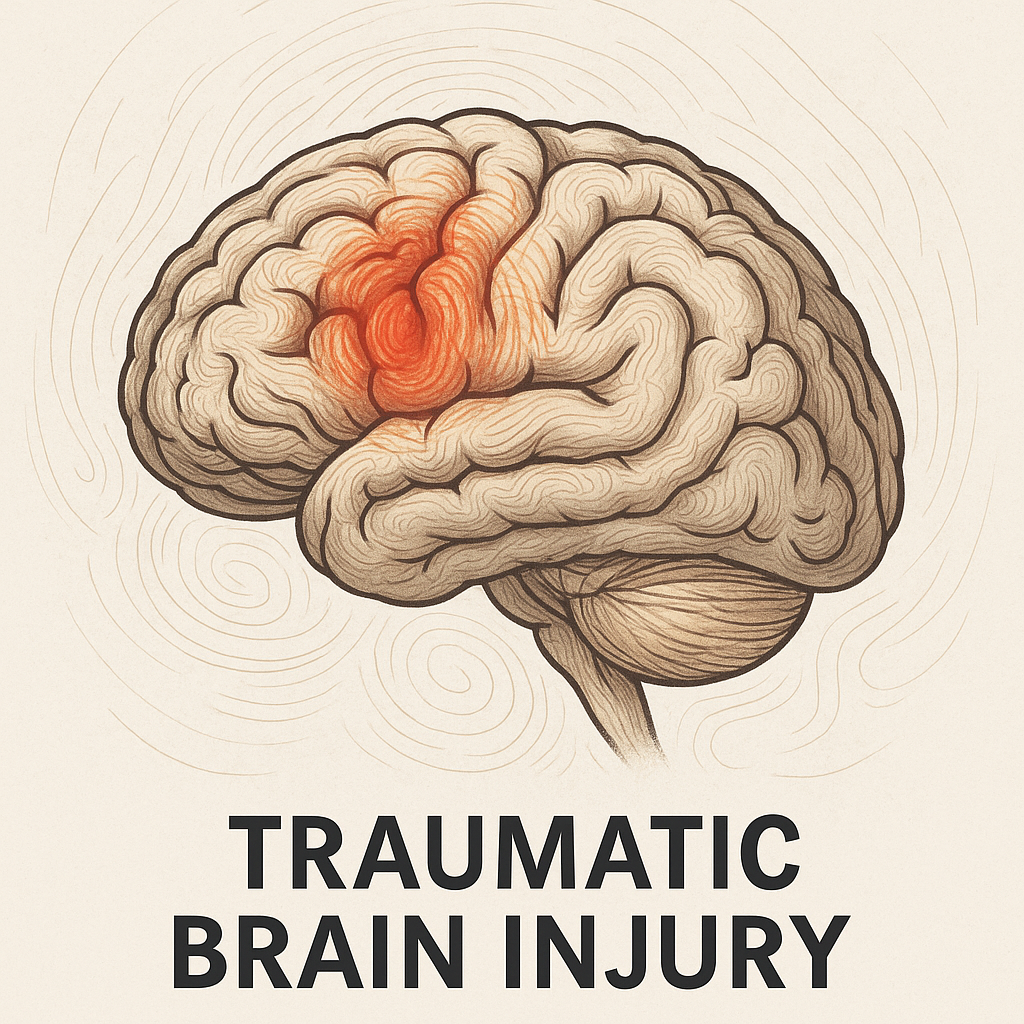
A traumatic brain injury, or TBI, occurs when a blow or sudden movement changes how the brain works. The injury may result from a direct hit to the head, rapid movement of the brain inside the skull, violent shaking, or an object penetrating the skull.
A person does not need an open wound, skull fracture, or visible bleeding to suffer a TBI.
Concussion or Mild TBI
A concussion is often called mild because it may not involve prolonged unconsciousness or an obvious structural injury. The symptoms can still interfere with work, school, sleep, communication, and daily life for weeks or months.
Brain Contusion
A contusion is bruising of brain tissue. It can occur when the brain strikes the inside of the skull and may involve bleeding or swelling.
Coup-Contrecoup Injury
This injury can happen when the brain is damaged at the point of impact and again on the opposite side as it moves within the skull.
Diffuse Axonal Injury
Fast rotation or sudden acceleration may stretch or damage nerve fibers throughout the brain. These injuries can cause widespread neurological problems and may be severe.
Penetrating Brain Injury
A penetrating injury occurs when an object breaks through the skull and damages brain tissue.
Moderate or Severe TBI
More serious brain injuries may involve extended unconsciousness, seizures, major cognitive or physical disability, communication problems, behavioral changes, or the need for long-term care.
When a TBI causes permanent disability or lifetime support needs, the claim may overlap with the issues discussed on our Salt Lake City catastrophic injury lawyer page.
What Symptoms Can a Brain Injury Cause?
Brain injury symptoms vary from person to person. They may affect the body, thinking, emotions, behavior, and sleep.
Physical symptoms can include headaches, dizziness, nausea, balance problems, blurred vision, sensitivity to light or sound, fatigue, weakness, numbness, poor coordination, or seizures.
Cognitive symptoms may include memory problems, slow thinking, trouble concentrating, confusion, poor judgment, difficulty finding words, or problems planning and multitasking.
Emotional and behavioral changes can include anxiety, depression, irritability, anger, impulsive behavior, reduced motivation, personality changes, or sudden emotional reactions.
Sleep may also change. Some people sleep more than usual, struggle to fall asleep, wake often, or feel exhausted during the day.
A person may experience only a few symptoms. The seriousness of the claim depends on the actual medical and functional effects, not the number of symptoms on a list.
Can Brain Injury Symptoms Appear Hours or Days Later?
Yes. Some people feel shaken but relatively normal immediately after an accident. Headaches, confusion, dizziness, memory trouble, fatigue, sleep changes, or emotional symptoms may become clearer later.
Stress and adrenaline can make symptoms harder to recognize at the scene. Family members or coworkers may also notice changes before the injured person does.
Delayed symptoms do not automatically mean the injury is unrelated. The medical timeline, accident details, early statements, later evaluations, and consistency of symptoms all matter.
Seek medical attention when symptoms develop or worsen. Sudden weakness, repeated vomiting, seizures, increasing confusion, severe headache, slurred speech, unequal pupils, unusual behavior, or loss of consciousness can require emergency care.
Can You Have a Brain Injury With a Normal CT Scan or MRI?
Yes. A person may have a concussion or mild traumatic brain injury even when a standard CT scan or MRI does not show an obvious abnormality.
CT scans and MRIs can identify bleeding, swelling, fractures, and certain structural injuries. A normal scan, however, does not automatically prove that normal brain function has returned.
The Centers for Disease Control and Prevention explains that a brain scan is not required to identify a mild TBI or concussion. Diagnosis may also involve symptoms, the accident history, a clinical examination, and tests of memory, attention, learning, and problem solving.
Depending on the case, useful medical evidence may include neurological evaluations, neuropsychological testing, cognitive assessments, speech and language evaluations, balance testing, therapy records, and symptom tracking.
Neuropsychological testing measures memory, attention, processing speed, problem solving, and other thinking skills. It can help explain problems that do not appear on a standard scan.
An insurer may focus on a normal image while ignoring functional evidence. A strong brain injury claim must present the full medical and real-world picture.
Can You Have a TBI Without Losing Consciousness?
Yes. Loss of consciousness is not required for a concussion or other traumatic brain injury.
A person may remain awake, speak with emergency responders, drive home, or return to work and still develop serious symptoms. Confusion, memory gaps, slowed thinking, dizziness, nausea, or difficulty concentrating can occur without the person being knocked out.
Insurance companies sometimes treat the lack of unconsciousness as proof that no meaningful injury occurred. That argument should be compared with the medical evidence and the person’s actual symptoms.

Contents
What Accidents Commonly Cause Brain Injuries?
Brain injuries can result from many kinds of preventable incidents.
Car crashes may cause the head to strike a window, headrest, steering wheel, airbag, or another object. A TBI can also result from the brain moving quickly inside the skull without a direct head impact. Our Salt Lake City car accident lawyer page explains Utah auto insurance, crash evidence, and fault disputes.
Commercial truck crashes can create greater impact forces and may involve company records, electronic data, driver logs, maintenance files, and multiple insurance policies. Learn more on our Salt Lake City truck accident lawyer page.
Motorcyclists may suffer brain injuries when they strike a vehicle, the roadway, or another object. Helmet condition, motorcycle damage, video, and impact marks can be important evidence. Our Salt Lake City motorcycle accident lawyer page explains rider-specific evidence and insurance issues.
Falls on ice, unsafe stairs, wet floors, uneven pavement, or poorly maintained property can also cause head injuries. Property-owner notice and the condition of the area often become central issues. Visit our Salt Lake City slip and fall injury lawyer page for more information.
Other causes can include pedestrian and bicycle collisions, workplace falls, falling objects, machinery incidents, unsafe equipment, and construction accidents.
What Evidence Shows Who Caused the Brain Injury?
A brain injury claim must first establish who caused the incident.
Useful liability evidence may include:
- Police, workplace, or incident reports
- Scene photographs and video
- Witness statements
- Traffic or surveillance footage
- Vehicle, phone, app, or GPS data
- Property inspection and maintenance records
- Company policies and safety documents
- Equipment or product records
- Accident reconstruction or engineering analysis
Evidence can disappear quickly. Video may be overwritten, vehicles may be repaired, unsafe property conditions may change, and witnesses may become difficult to locate.
Preservation should begin as early as possible after a serious incident.
What Evidence Shows How a TBI Changed Your Life?
Medical records are important, but brain injury claims often require more than diagnosis codes and imaging reports.
Useful evidence may include:
- Emergency, hospital, and neurology records
- CT scans, MRIs, and neuropsychological testing
- Speech, occupational, physical, and cognitive therapy records
- Medication and appointment history
- Work restrictions and failed return-to-work attempts
- Wage, employment, or school records
- Symptom calendars
- Observations from family, friends, coworkers, or teachers
People who knew the injured person before the accident may notice repeated questions, forgetfulness, irritability, exhaustion, poor judgment, trouble following conversations, or reduced independence.
These before-and-after observations can explain problems that do not appear in an X-ray or photograph.
Strong Law builds brain injury claims around the gap between what a medical scan shows and what the injured person can no longer do at work, at home, and in daily life.
What Does Brain Injury Recovery Look Like in Salt Lake City?
Recovery may involve emergency care, neurology, neuropsychology, speech therapy, occupational therapy, physical therapy, balance treatment, counseling, and help returning to work or school.
The Craig H. Neilsen Rehabilitation Hospital provides rehabilitation services for people with neurological injuries. The University of Utah Health Neuropsychology Program evaluates changes in thinking, behavior, and emotional function.
The Sugar House Traumatic Brain Injury Program offers outpatient evaluation and rehabilitation services. Community resources also include the Brain Injury Alliance of Utah and the Utah Independent Living Center.
These resources are provided for general information. They are not endorsements or a statement that every injured person needs the same treatment. Medical decisions should be made with qualified healthcare providers.
How Can a Brain Injury Affect Work and Earning Ability?
A person may be physically able to sit at a desk or report to a job but still be unable to perform at the same level.
Memory problems, slow processing, headaches, fatigue, communication trouble, and reduced concentration can make it difficult to complete a full workday. An employee may struggle to learn new tasks, manage several responsibilities, meet deadlines, or make decisions under pressure.
Some people return to work and later realize they cannot maintain the same pace, accuracy, attendance, or judgment their job requires. Others must reduce their hours, move to a lower-demand role, or leave their field entirely.
Lost earning capacity may include more than past paychecks. It can also involve lost benefits, reduced advancement, retraining, lower future wages, or an earlier exit from the workforce.
Treating providers, vocational specialists, and economists may help evaluate those losses when the facts require it.

How Do Insurance Companies Challenge Brain Injury Claims?
Brain injury claims are often disputed because many symptoms are not visible.
An insurance company may argue that:
- The CT scan or MRI was normal
- The injured person never lost consciousness
- Symptoms began too late
- The complaints are subjective
- A prior concussion or health condition caused the problems
- Returning to work proves the person recovered
- Treatment lasted too long
- Neuropsychological results are unreliable
- Social media shows normal activity
- Future care is unnecessary
- The injured person shares fault
These arguments should be answered with medical records, testing, accident evidence, work history, family observations, and other facts.
Before representing injured people, attorney Jed Strong worked as an in-house attorney for GEICO. That experience helps Strong Law recognize incomplete medical reviews, blame-shifting, broad record requests, and other strategies insurers may use to reduce brain injury claims.
What Compensation May Be Available?
Compensation depends on fault, available insurance, the severity of the injury, and its long-term effects.
A brain injury claim may include emergency treatment, hospital care, neurological evaluations, imaging, testing, rehabilitation, therapy, medication, future medical care, lost wages, and reduced earning ability.
It may also include pain, emotional distress, loss of enjoyment of life, transportation costs, and help with daily activities.
Severe cases can involve future attendant care, adaptive equipment, home changes, supported living, or other long-term needs. Those issues are addressed in greater depth on the catastrophic injury page.
If the injury results in death, the family may need separate advice about heirs, estate issues, survival claims, and death-related damages. Our Salt Lake City wrongful death lawyer page explains those issues.
How Do Utah Fault Rules Affect a Brain Injury Claim?
Utah uses comparative fault.
Under Utah Code § 78B-5-818, an injured person may recover when the combined fault assigned to the defendants and other responsible parties is greater than the injured person’s own fault. Compensation may then be reduced by the injured person’s percentage of fault.
An insurance adjuster’s decision does not settle the issue. Reports, video, witnesses, physical evidence, company records, and expert analysis may support a different conclusion.
How Long Do You Have to File a Utah Brain Injury Claim?
Many Utah negligence-based brain injury lawsuits are generally subject to a four-year filing period under Utah Code § 78B-2-307.
Different rules may apply to government claims, medical malpractice, defective products, workplace cases, fatal injuries, insurance disputes, or claims involving children.
If a city, county, public employee, public vehicle, or another governmental entity may be legally responsible, Utah Code § 63G-7-402 may require a written notice of claim within one year.
Do not assume the longest general deadline controls the case. Evidence and medical documentation should also be protected long before a filing period expires.
How Does a Salt Lake City Brain Injury Claim Move Forward?
The process may include:
- Free case review. Strong Law reviews the incident, symptoms, treatment, insurance, and available evidence.
- Evidence preservation. Video, vehicles, property records, company documents, witness information, and electronic data are identified.
- Liability investigation. The team determines who may be responsible and what insurance or assets may apply.
- Medical documentation. Records, imaging, neurological care, testing, and rehabilitation are collected and reviewed.
- Functional evidence. Work problems, family observations, cognitive changes, and daily limits are documented.
- Future-loss evaluation. Ongoing treatment, earning ability, and long-term support needs are assessed.
- Insurance demand and negotiations. The claim is presented with supporting evidence.
- Litigation when necessary. A lawsuit may be filed when the insurer disputes responsibility or does not offer a fair resolution.
The case should not be rushed before the medical and functional outlook is reasonably understood. It also should not sit while evidence disappears.

We’ve helped thousands of accident victims like you
we win
98%
4.9
stars
over
2,000


“Very professional, and treated me as an equal.”
"Just wanted to say thank you to Jed and his team at Strong Law. Not only was I happy with the outcome, but the entire process as a whole. I would definitely recommend this firm to anyone. Thanks again."
“Unbelievable work!”
"I had a claim involving my own insurance company. I tried to negotiate with them, and they completely denied my claim – two times. I then hired Strong Law, and the change was instant. The insurance company immediately began negotiating, and Jed was able to secure an unbelievably good settlement. I will never again attempt to take-on an insurance company without Strong Law in my corner. Thank you!"

“I got justice and awesome compensation.”
"I hired Strong Law after my car accident. Jed and his team worked hard on my case. They were professional and compassionate through my surgery and as I recovered, and they were awesome on communication. I got justice and awesome compensation. I would recommend Strong Law to anyone in my situation."

Why Choose Strong Law for a Salt Lake City Brain Injury Claim?
A brain injury lawyer should understand that the most serious effects may involve memory, personality, judgment, communication, fatigue, and independence rather than a visible wound.
Strong Law focuses on medical proof and real-life change. We examine how the injured person functioned before the incident, what changed afterward, how the insurer is evaluating the claim, and what evidence is needed to support future losses.
That approach helps show the difference between appearing physically recovered and actually being able to think, work, communicate, and live as before.
Strong Law has handled more than 2,000 successful cases across its offices. Our Midvale office has a 4.8-star Google rating from 162 reviews and serves clients throughout Salt Lake City and Salt Lake County.
We offer free case reviews and handle brain injury claims on a contingency fee basis. There are no upfront attorney fees or hourly bills. The exact attorney fee and any case-cost terms are explained before you hire the firm. Attorney fees are not owed unless compensation is recovered.
Frequently Asked Questions About Salt Lake City Brain Injury Claims
Can a brain injury exist with a normal CT scan or MRI?
Yes. CT scans and MRIs can identify certain structural injuries, but a concussion or mild TBI may still exist when standard imaging is normal. Symptoms, examinations, accident history, cognitive testing, and functional evidence may help support the diagnosis.
Can TBI symptoms appear days after an accident?
Yes. Headaches, dizziness, memory problems, fatigue, sleep changes, and emotional symptoms may become more noticeable after the initial stress and adrenaline wear off.
Do you have to lose consciousness to have a concussion?
No. A person can remain awake and still suffer a concussion or other brain injury. Confusion, memory gaps, dizziness, feeling dazed, and concentration problems may occur without unconsciousness.
What if my loved one cannot manage the legal claim?
Depending on the person’s condition, legal authority may need to be established through an existing power of attorney, guardianship, conservatorship, or another court-approved arrangement. The correct approach depends on the circumstances.
What evidence helps prove a brain injury?
Medical records, neurological evaluations, imaging, neuropsychological testing, therapy records, work or school changes, symptom records, and observations from family or coworkers may all be important.
What is a brain injury claim worth?
Value depends on fault, medical treatment, cognitive and emotional effects, future care, work loss, permanent limits, available insurance, and how the injury changed the person’s life. There is no reliable average value for all TBI claims.
How long does a brain injury case take?
There is no fixed timeline. The case may depend on the length of treatment, clarity of the diagnosis, future-care needs, number of responsible parties, insurance disputes, and whether a lawsuit is required.
What if I was partly at fault?
Utah comparative-fault rules may reduce compensation. Recovery may be available when the combined fault of the defendants and other responsible parties is greater than your own fault.
How long do I have to file a brain injury claim in Utah?
Many negligence-based claims generally have a four-year filing period, but government claims, medical malpractice, defective products, fatal injuries, and other specialized claims may have shorter or different requirements.
How much does a brain injury lawyer cost?
Strong Law handles brain injury cases on a contingency fee basis. There are no upfront attorney fees or hourly bills, and attorney fees are not owed unless compensation is recovered.
Where is Strong Law’s Utah office?
Strong Law’s Utah office is in Midvale. From that office, we serve clients throughout Salt Lake City, Salt Lake County, and nearby communities.
Speak With a Salt Lake City Brain Injury Lawyer
A brain injury can affect far more than a medical chart. It may change how a person thinks, works, communicates, manages daily responsibilities, and relates to family and friends.
Strong Law can investigate what happened, preserve evidence, document the medical and functional effects, handle insurance disputes, and help protect the claim.
Contact Strong Law Accident & Injury Attorneys or call 206-741-1053 for a free case review. You do not pay attorney fees unless compensation is recovered.
Get Your Free
Case Review

Insider experience
We Know How Insurance Companies Operate
Before founding Strong Law, attorney Jed worked as in-house counsel for GEICO, defending insurance companies in accident and injury claims. That experience helps our team understand how insurers evaluate claims, dispute injuries, and decide when to settle. We use that knowledge to build stronger claims for injured people.

No upfront fees
Zero Cost Unless You Win
You owe us nothing unless we recover compensation for you. There is no obligation to hire us after your consultation and no hidden attorney fees along the way.

First-Class Service
Legal Support That Goes Beyond the Basics
Our team does more than process paperwork. We answer your questions, explain your options, track important deadlines, and help you understand each step of the injury claim.

Start here
Get Your Free Case Evaluation Today
We will review your injury claim at no cost and explain your options clearly. The goal is to help you protect your health, your claim, and your financial recovery after a serious accident or injury.
Contact us
Our team is standing by to help you.