

What Is the Auto Accident Process in Utah?

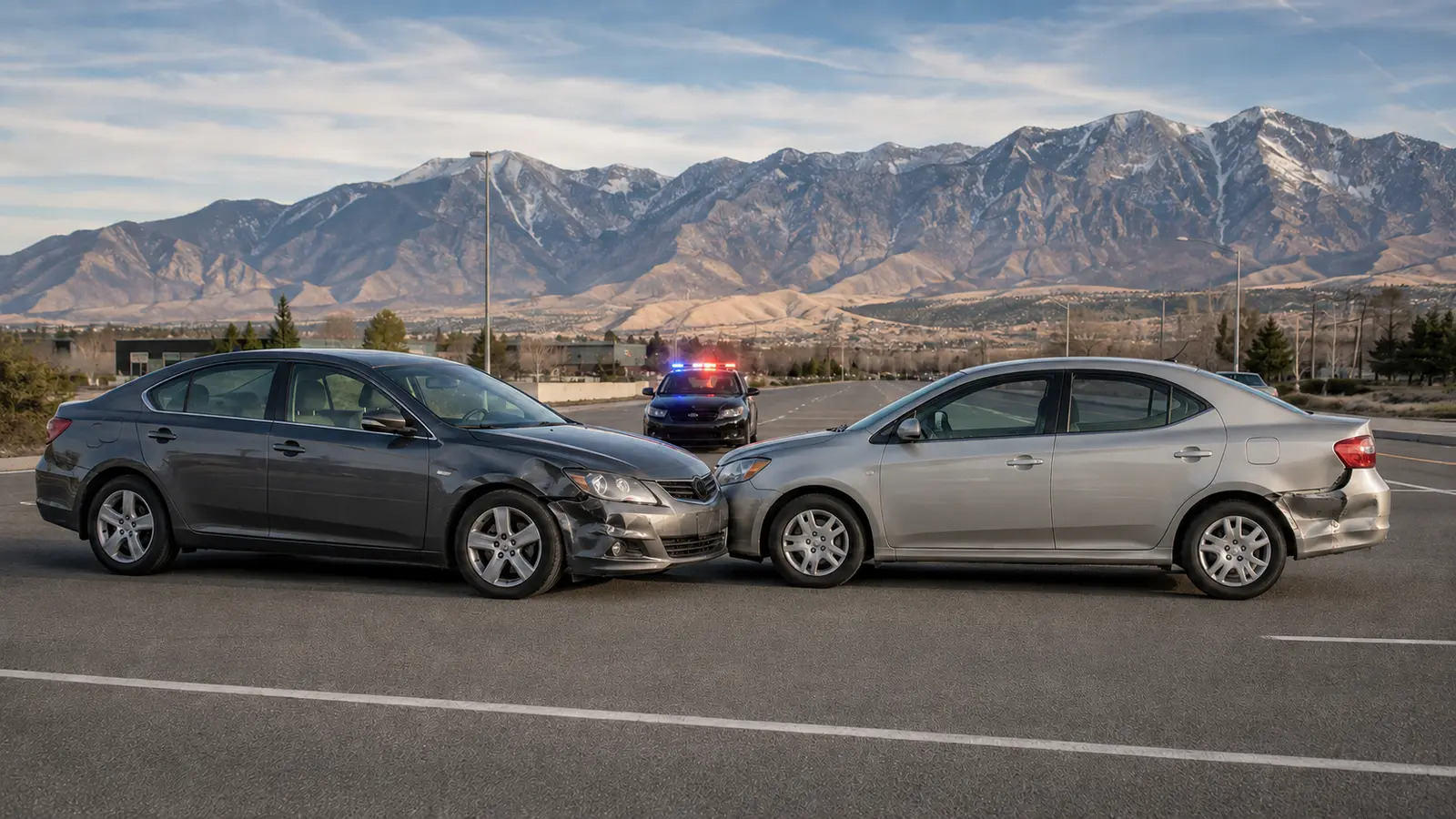
Video overview: Jed Strong explains how an auto accident claim works in Utah, including personal injury protection (PIP), comparative fault, evidence, insurance coverage, and filing deadlines. This page updates and clarifies several legal points discussed in the October 2024 recording.
Important legal update (reviewed August 2026): The video states that Utah has a three-year filing period and a six-month governmental notice deadline. Those figures do not match the Utah statutes currently linked below. Many ordinary negligence claims fall under Utah’s four-year limitations period, while a claim against a Utah governmental entity or employee generally requires a formal notice of claim within one year. Other deadlines and exceptions may apply, so do not wait to have the specific crash reviewed.
The Utah auto accident claim process usually begins with medical care, crash reporting, and insurance notice. It then moves through PIP benefits, evidence gathering, a fault investigation, documentation of damages, and a demand to the responsible insurance company. If the parties cannot agree on fault or value, the claim may proceed to mediation, arbitration, or a lawsuit.
What Is the Auto Accident Process in Utah?
Most Utah auto accident claims follow eight overlapping stages:
- Protect everyone’s safety and report the collision.
- Get appropriate medical care.
- Notify the relevant insurance companies.
- Use available PIP benefits for covered early losses.
- Preserve evidence and investigate fault.
- Document injuries, expenses, income loss, and property damage.
- Present a supported insurance demand and negotiate.
- Consider litigation or another dispute-resolution process if the claim does not resolve.
The steps are not always completed in a straight line. Medical treatment, vehicle repairs, insurance communications, and evidence collection often occur at the same time. For a broader overview that applies across multiple states, read our guide to the basics of an auto accident claim.
Step 1: Report the Crash and Preserve Evidence
Start by moving to a safe location when possible, calling 911 when the circumstances require it, and exchanging identifying and insurance information. Photograph the vehicles, roadway, traffic controls, debris, visible injuries, and surrounding conditions. Save dash-camera footage and ask nearby businesses or witnesses about video before it is overwritten.
Evidence matters because an insurance company may challenge how the collision happened. A police report can identify drivers and witnesses, but it may not contain every fact needed to establish liability. The strongest file often combines the report with photographs, video, vehicle damage, witness statements, medical documentation, and other records created close to the crash.
If the dispute concerns a traffic light, left turn, or right of way, use our Utah intersection evidence checklist to identify the original files, witness details, and insurance records to preserve.
Step 2: Get Medical Care and Connect It to the Collision
Seek care based on your symptoms and medical needs. Some injuries are obvious immediately, while others become clearer over the next several hours or days. Tell each provider how the crash occurred, describe all symptoms accurately, and follow reasonable treatment recommendations.
Consistent records help providers treat the injury and help establish whether the condition is connected to the collision. Keep copies of bills, visit summaries, work restrictions, prescriptions, mileage, and other out-of-pocket expenses.
Step 3: Open the Insurance Claims
A Utah collision can involve several coverages at once. Depending on the facts and the policies, those may include:
- Personal injury protection through an applicable Utah auto policy
- Property-damage and bodily-injury liability coverage
- Collision or comprehensive coverage
- Uninsured or underinsured motorist coverage
- Health insurance or other medical-benefit sources
Prompt notice can protect coverage, but a person does not need to guess about injuries or accept blame during the first call. Record the claim numbers, adjuster names, deadlines, and documents sent to each insurer.
Step 4: Use Utah PIP Benefits
Utah requires qualifying auto policies to include at least $3,000 per person in personal injury protection coverage. PIP may pay covered medical expenses and may provide limited benefits for lost income, household services, and certain other losses, subject to the policy and Utah law.
PIP is commonly called “no-fault” coverage because eligible benefits may be available without first proving that another driver caused the crash. That does not mean fault is irrelevant to the rest of the injury claim. Liability still matters when a person seeks compensation from another driver or another source of coverage.
For a detailed explanation, see our guide to the Utah no-fault and PIP system. The statutory minimum appears in Utah Code Section 31A-22-307.
Step 5: Investigate Fault Under Utah’s Comparative-Fault Rule
Utah uses a comparative-fault system. A claimant may recover from a defendant or group of defendants whose combined fault exceeds the claimant’s fault. Any recovery is generally reduced by the percentage of fault assigned to the claimant. If the claimant and the opposing side are each assigned 50% fault, the claimant does not recover from that side.
This rule makes disputed crashes especially evidence-sensitive. Red-light conflicts, lane-change collisions, intersection crashes, and cases involving an unidentified vehicle may turn on video, witness credibility, sight lines, vehicle data, and physical damage. Utah’s rule is stated in Utah Code Section 78B-5-818.
Step 6: Document the Full Impact of the Crash
An insurance demand should be supported by evidence rather than a single total. Depending on the case, the file may include:
- Medical records, bills, and future-care opinions
- Proof of wages, missed work, or reduced earning ability
- Vehicle repair estimates, photographs, and valuation records
- Receipts for transportation and other crash-related expenses
- Statements describing physical limitations and daily-life effects
- Evidence of each driver’s fault and each available policy
The amount that may be recovered for medical expenses or other damages can depend on the type of claim, the evidence, the parties, insurance payments, liens, and current Utah law. The video discusses broad “billed versus paid” and damage-cap concepts, but those subjects should not be treated as automatic rules for every case.
Step 7: Review Liability, UM, and UIM Coverage
The at-fault driver’s liability policy may be only one source of recovery. If that policy is missing or insufficient, uninsured or underinsured motorist coverage may become important. Whether a particular benefit is available, how limits interact, and what procedures apply depend on the policy language and Utah statutes.
The video provides a simplified UIM example. Actual UIM recoveries are policy- and fact-specific, so the policy declarations, endorsements, exclusions, prior payments, and statutory requirements should be reviewed before calculating the amount available.
Step 8: Negotiate, Resolve, or File a Lawsuit
After the injuries and losses can be evaluated, the claimant or attorney may send a written demand supported by the evidence. The insurer may accept it, reject it, or make a counteroffer. A settlement is final once the release is signed, so unresolved medical issues, liens, future care, and all available coverages should be considered first.
If the parties cannot agree, the next step may involve mediation, arbitration, or litigation. A lawsuit begins a formal process that can include written discovery, depositions, expert opinions, court motions, settlement conferences, and trial.
How Long Do You Have to Bring a Utah Auto Accident Claim?
Many ordinary Utah negligence actions fall under a four-year limitations period, but the correct deadline depends on the legal claim and the parties involved. Utah Code Section 78B-2-307 provides a four-year period for claims not otherwise covered by a different law. Contract, uninsured-motorist, wrongful-death, government, and other claims may follow different rules.
A claim involving a Utah governmental entity or employee has an additional notice process. Under Utah Code Section 63G-7-402, a qualifying claim is generally barred unless the notice of claim is properly filed within one year after the claim arises. The notice must also be directed and delivered as required by the Governmental Immunity Act. A police vehicle, public bus, road-maintenance vehicle, or dangerous public-road condition can raise this issue.
Review the current four-year statute and the governmental notice statute. Because a missed deadline can end a claim, it is safer to determine the applicable dates early rather than use the longest general period as a target.
Edited Video Transcript and Current-Law Notes
The following is an edited summary of the video. It preserves the main educational points while correcting or qualifying legal statements that should not be repeated as universal current rules.
Jed Strong introduces the Utah-specific issues that may affect an auto accident claim and recommends first understanding the general claim process. He explains that deadlines deserve immediate attention. The recording states a three-year general deadline and a six-month government notice period; however, the current Utah statutes cited above generally provide a four-year residual limitations period and a one-year governmental notice period. Other deadlines may apply to a particular claim.
The video then explains Utah PIP coverage. A qualifying Utah auto policy includes at least $3,000 in PIP benefits. Those benefits may help with covered medical expenses and may include limited wage-loss and household-service benefits. Because PIP is no-fault coverage, eligible benefits may be available even before fault is resolved.
Jed next discusses insurance layers, including liability and underinsured motorist coverage. The available amount depends on the policy and the facts, so the simplified example in the recording should not replace a review of the actual declarations and endorsements.
The video also addresses damages and medical bills. Recoverable damages, insurance write-offs, liens, reimbursement duties, and admissible evidence can vary. Those issues require a case-specific analysis rather than a universal “billed versus paid” formula.
Finally, Jed explains Utah comparative fault. A claimant must prove that the opposing side bears greater fault. If a claimant is assigned some fault but remains below the statutory bar, any recovery may be reduced by that percentage. In a disputed “he said, she said” collision, witnesses, video, vehicle damage, traffic-light timing, visibility, and other evidence can decide whether the claimant meets the burden of proof.
Frequently Asked Questions
Is Utah a no-fault state for auto accidents?
Utah requires PIP coverage on qualifying auto policies, so eligible PIP benefits may be used without first proving fault. Fault still controls whether and how much a person may recover from another driver.
What is the minimum PIP coverage in Utah?
Utah law requires at least $3,000 per person in PIP medical-expense coverage on qualifying policies. A policy may provide more, and other PIP benefits have separate statutory and policy limits.
Can I recover if I was partly at fault?
Possibly. Utah generally allows recovery when the opposing defendant or group of defendants bears more fault than the claimant. The claimant’s compensation is usually reduced by the claimant’s assigned percentage of fault.
What is the Utah deadline for an ordinary car-accident lawsuit?
Many ordinary negligence claims fall under Utah’s four-year residual limitations period, but a different statute can apply depending on the claim, policy, injury, or defendant. The date should be reviewed promptly.
What if a government vehicle or agency caused the crash?
A formal notice of claim may need to be filed with the correct governmental office within one year after the claim arises. Additional procedures and lawsuit deadlines apply, so early review is important.
How long does a Utah auto accident claim take?
There is no single timeline. A property-only claim may resolve quickly, while a serious injury claim can take months or longer because treatment, investigation, insurance limits, disputed fault, and litigation all affect the schedule.
Talk With a Utah Auto Accident Attorney
If a crash caused injuries, disputed fault, or an insurance problem, Strong Law can review the evidence, coverage, deadlines, and next steps. Learn more about working with a Utah car accident lawyer or a Salt Lake City car accident lawyer, or call 385-483-4682 for a free consultation.

See If Your Injury Claim May Qualify
Answer a few quick questions to help Strong Law understand what happened and whether your claim may qualify for a free review.
