

Blamed for a Utah Intersection Accident? Save This Evidence

An insurer or another driver may blame you for a Utah intersection crash. Save the records that can show what happened before impact. Start with original video, witness contact information, photographs, the crash report, and the insurer’s written explanation. A disagreement about a light or left turn should be checked against the available evidence.
You can ask for legal help before every record is collected. Strong Law’s Salt Lake City car accident team serves the area from our Midvale office. We can review the dispute and identify evidence that needs to be saved.
Read the video transcript
If another driver blames you for a Utah intersection crash, start with the evidence that can show what happened before impact.
I’m Jed Strong with Strong Law.
Save the original dashcam file, witness contact details, scene photos, and the insurer’s written explanation. Keep the footage before and after the collision, not just the moment of impact.
Ask witnesses what they actually saw. Seeing the crash is different from seeing your traffic light.
One Utah detail matters: UDOT says its intersection cameras provide live views but do not store footage. Nearby businesses or other drivers may have recordings, so ask promptly whether those files can be saved.
If a report is wrong, identify the exact detail and the records that support your account. A ticket or insurance decision alone does not settle every question about your injury claim.
You do not need a complete file to ask for help. Contact Strong Law for a case review, and tell us if evidence may be lost or a deadline is approaching.
What Utah car accident evidence should you save first?
Medical needs and safety come first. Do not enter traffic, approach an unsafe vehicle, or delay necessary treatment to take photographs. If you cannot collect information yourself, ask a trusted person or your attorney to help.
Once you can safely address the claim, make a short list of what exists and where it may be held. Evidence about the collision and evidence about your injuries answer different questions. You will usually need both.
| Record | What it may help explain | What to save |
|---|---|---|
| Dashcam or nearby video | Vehicle movements, signal visibility, and the sequence before impact. | The original file, recording time, camera location, and footage before and after the crash. |
| Witness information | What an independent observer actually saw. | Name, contact details, viewing position, and whether the person saw the signal or only the collision. |
| Scene and vehicle photographs | Lane layout, signs, damage, visibility, and the vehicles’ resting positions. | Original images and the date taken. Identify photographs taken after conditions changed. |
| Crash report and related records | Reported accounts, diagrams, identified witnesses, and the investigating agency. | The report number, full report, supplements, and any citation paperwork. |
| Insurance correspondence | Why the insurer assigned fault or denied payment. | Letters, emails, claim numbers, requests, and response dates. |
Ask the insurer which records it reviewed and why it blames you. Write down any facts you disagree with. That gives the next investigation a specific question to answer.
How do you show who had the green light?
Start with each driver’s direction, lane, intended movement, and view of the signal. A circular green light, a turn arrow, and a flashing indication are different facts. Write down what you remember seeing, and identify anything you do not know.
For example, a witness may have seen a northbound vehicle enter the intersection. That person may not have been able to see the driver’s signal. That witness may still provide useful information. The account should not be expanded into a statement about a light the witness never saw.
Look for video that includes the approach to the intersection. A clip beginning at impact may show the collision without showing which driver entered first. A camera facing another direction may show a different signal phase. Check the angle and timing before drawing a conclusion.
Where relevant, an attorney can investigate whether the agency responsible for the intersection maintains signal plans, maintenance records, or other useful information. A general timing plan does not necessarily prove the signal displayed at the exact moment of your crash.
Does making a left turn automatically make you at fault?
Not automatically, but a left-turning driver has a duty to yield. Under Utah Code § 41-6a-903, a driver turning left must yield to oncoming traffic close enough to pose an immediate hazard. The signal and both drivers’ actions still need to be reviewed.
Check whether the driver had a protected arrow and where the vehicles were when the turn began. Did anything block either driver’s view? Original video and independent witnesses may clarify those details.
Vehicle damage can help explain where contact occurred. It does not, by itself, show the color of a traffic light or establish a reliable speed estimate. If those issues are contested, an attorney may consider whether a qualified reconstruction expert is needed.
The same care applies to a T-bone crash. The driver whose front bumper struck another vehicle’s side is not automatically the person legally responsible. The actions leading to contact matter.
Can you get Utah traffic-camera footage?
Check who operates the camera before spending time requesting a recording. UDOT states that its intersection cameras provide live feeds and do not record or store footage. Seeing a camera on a traffic map does not mean a saved video exists.
Other sources may include a nearby business, apartment property, parking facility, doorbell camera, or a vehicle’s dashcam. Their systems, coverage, and retention periods vary. Ask promptly whether a recording exists and whether it can be preserved.
A useful request identifies the crash date, approximate time, intersection, travel directions, and the camera location. Ask the owner to retain the original recording and a reasonable period before and after the collision. Keep a copy of your request and any response.
The owner may require a formal request or legal process before releasing anything. A preservation request also does not guarantee that footage was found or saved. Do not access another person’s account or recording system without permission.
How should you preserve dashcam and phone evidence?
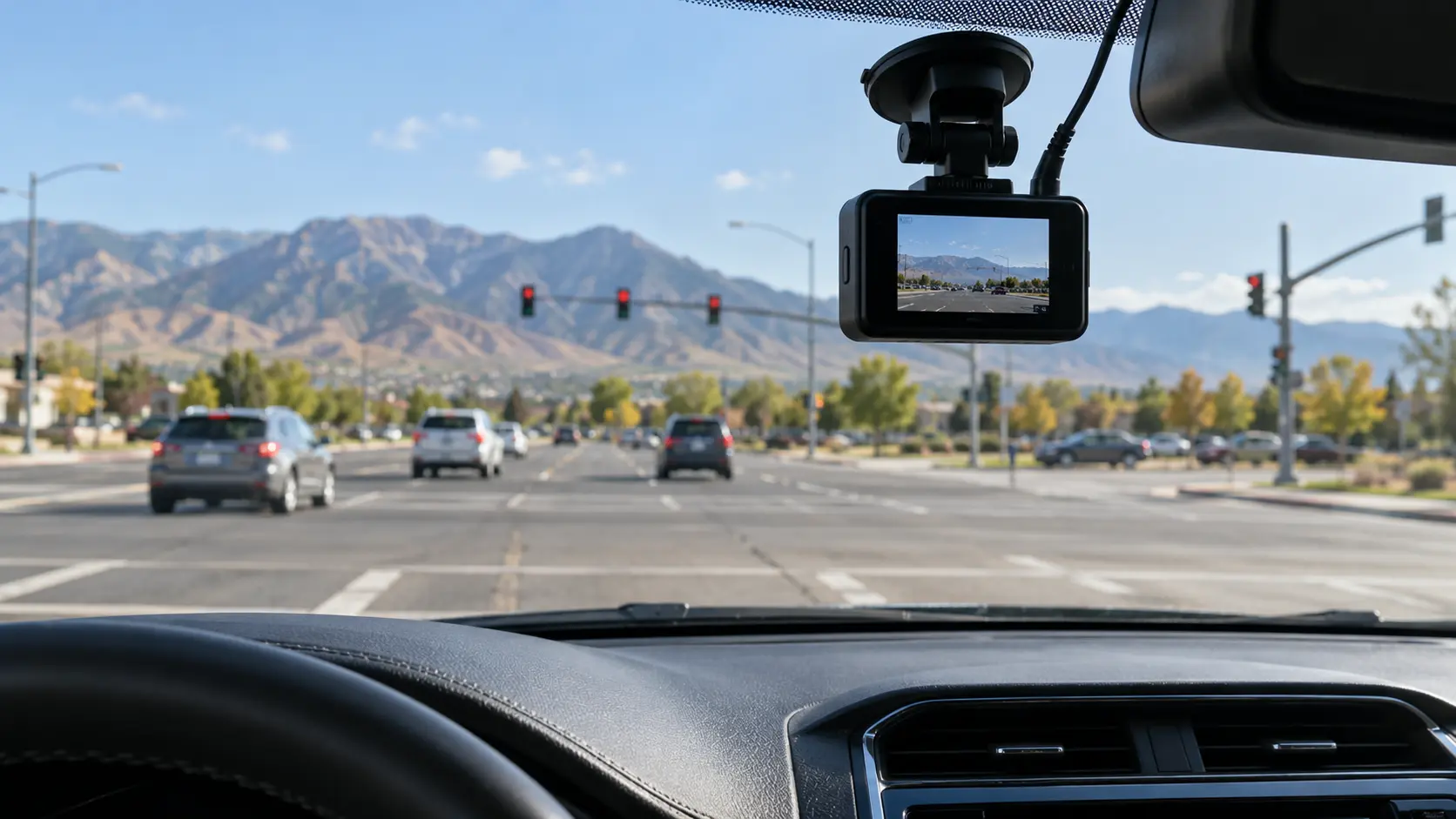
Save a separate copy of your original files before making an edited version for easier viewing. Keep the recording from before the collision, the impact itself, and the period immediately afterward when available.
Record the device’s displayed time and whether you know its clock was inaccurate. Do not change the original timestamp to make it match your recollection. Give the attorney the original file and explain the difference separately.
Preserve relevant messages, photographs, receipts, and location information already lawfully available to you. These may help establish a timeline, but their meaning needs to be checked. A message timestamp alone does not establish that someone was using a phone while driving.
If a dashcam may overwrite its memory, follow the manufacturer’s safe instructions for preserving the file. Avoid changing vehicle systems or attempting to extract crash data yourself. Tell the attorney if a damaged vehicle may soon be repaired, moved, sold, or salvaged.
If video may be overwritten or a vehicle is scheduled for salvage, request a case review and tell our team about that timing. Bring what you have; you do not have to collect everything first.
What if the police report contains a mistake?
Get the complete report and compare it with the records you have. Separate a factual error, such as an incorrect street name, from a disputed conclusion about who caused the crash. Both deserve attention, but they may require different supporting information.
If Utah Highway Patrol investigated the collision, use its official crash-report request process. UHP directs requests through a secure portal and asks for details such as the date, location, and case number if known. For a city police investigation, contact that department’s records unit instead. For request details, use our guide to getting a Utah crash report and supporting records.
Ask the investigating agency how to submit a correction request or additional information. Identify the exact statement you believe is wrong and attach the record that supports the correction. Keep the original report and any later supplement.
The agency may decline to change its conclusion. That does not eliminate the need to evaluate other evidence. An attorney can review the report alongside video, witnesses, photographs, and the applicable law.
Does a traffic ticket decide the injury claim?
Bring any traffic ticket to the review. A citation alone does not settle every question about fault or insurance payment. The charge, its outcome, and the other evidence may all matter.
Keep the citation, court notices, response dates, and any documents showing the outcome. Ask a qualified lawyer about the consequences before deciding how to respond. An injury consultation should not be mistaken for an agreement to defend a traffic or criminal charge.
Do not ignore court paperwork while discussing an insurance claim. A request to an adjuster does not handle a court deadline.
How does Utah car accident fault affect compensation?
Under Utah’s comparative-negligence rule, you generally must be less than 50% at fault to recover from another at-fault party. Your recovery is reduced by your share of fault. The Utah Insurance Department explains this rule. Ask a lawyer how it applies if several parties are involved.
For a simple two-driver example, a 20% share of fault would reduce $100,000 in proven damages to $80,000 before fees, expenses, or other deductions. This illustrates the calculation; it is not an estimate of your case’s value.
This makes the basis for an insurer’s percentage important. Ask what conduct it attributes to you and which records support that conclusion. A percentage in a claim letter is a position to evaluate, not a substitute for examining the evidence.
Bring that letter to the review even if you disagree with every sentence. An attorney needs to understand the insurer’s argument, the available response, and any missing facts.
What should you say when the insurer asks for a statement?
Identify the company and whether it represents you or another driver. Your duties under your own policy can differ from requests made by someone else’s insurer. Ask what information is needed, whether the conversation will be recorded, and whether a response date applies.
Give accurate information. Separate what you personally saw from what someone later told you. If you do not know a speed, distance, signal phase, or diagnosis, say that you do not know instead of estimating under pressure.
Do not minimize an injury or claim a diagnosis you have not received. Our guide to describing symptoms after an accident explains why an accurate account matters. Ask an attorney how to address a statement request while meeting any duties under your own policy.
What if the insurer denies the claim without reviewing your evidence?
Request the denial and its reasons in writing. Organize your response around the disputed point. For example, identify which file shows the vehicle’s approach or which witness could see the relevant signal.
Keep a simple record of what you submitted, when you sent it, and whether receipt was confirmed. Ask the adjuster to explain whether the new material changes the decision. Avoid sending an unexplained folder of files and assuming the key detail will be obvious.
If the dispute remains, a lawyer can assess the evidence, available coverage, and possible next steps. The broader Utah auto accident claim process includes options beyond an initial insurance decision. No particular record guarantees that the insurer will reverse its position.
How can you organize conflicting accounts?
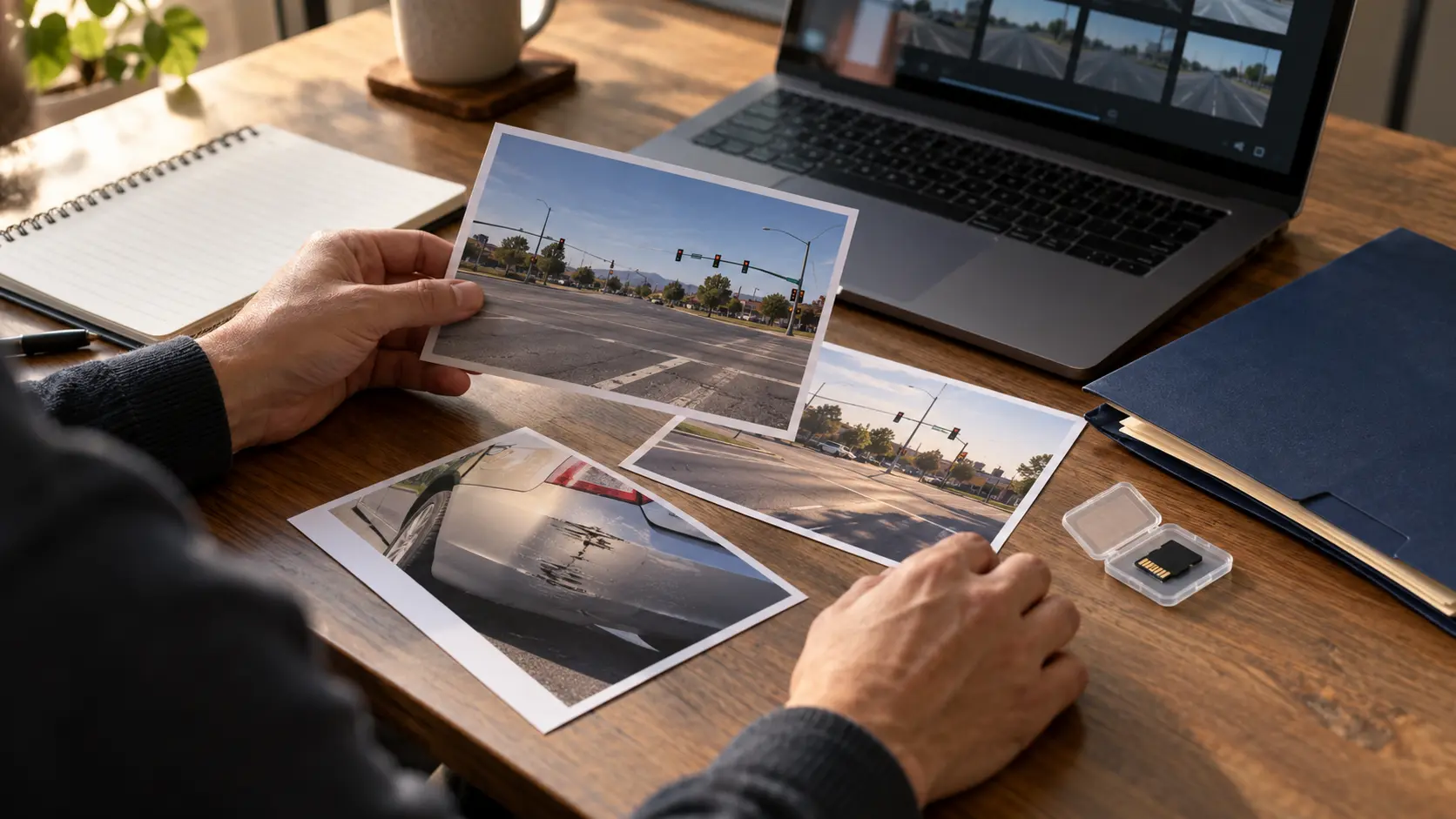
Make a short timeline with three separate parts: what you remember, what each record shows, and what is still unknown. Label an estimate as an estimate. This makes it easier to identify a real conflict without treating every difference as proof that someone is lying.
For example, suppose you remember entering on green. The other driver reports a green arrow, and a nearby camera shows only the impact. The next question is whether another recording or witness can establish the approach and signal. Repeating either account more forcefully does not answer that question.
Keep a document list with a brief description of each file and where it came from. Note whether the file is complete and whether the time displayed is reliable. If someone gives you a clip, ask whether the original recording is still available. Give the attorney conflicting material as well as helpful material; both can affect the investigation.
What should you bring to a disputed-fault case review?
Start with the crash date and location, your account, and the insurer’s letter. Add the report, original photographs or video, witness contacts, insurance information, and any ticket or court notice. Include treatment information and missed-work records if you were injured.
Use a short checklist to show what still needs to be found:
- Which fact is disputed: signal, turn, lane, speed, or another issue?
- Which record might answer that question?
- Who holds the record, and have you asked for preservation?
- Is a vehicle, recording, or other evidence at risk of being lost?
- Does any letter, policy, or court document list a deadline?
You do not need to solve the dispute before contacting the firm. Our Midvale car accident team serves people in Midvale, Salt Lake City, and surrounding Utah communities. Request a free case review and tell us what the insurer says happened.
Ongoing treatment, a report request, or continued negotiations do not automatically extend legal deadlines. Have the dates checked for your circumstances. If an offer arrives during the dispute, our settlement-offer guide explains the documents and timing questions to review before agreeing.
This article provides general information. Responsibility, available claims, and deadlines depend on the evidence and applicable law.

See If Your Injury Claim May Qualify
Answer a few quick questions to help Strong Law understand what happened and whether your claim may qualify for a free review.
