

How to Get a Utah Crash Report, Photos, Video, and Other Evidence

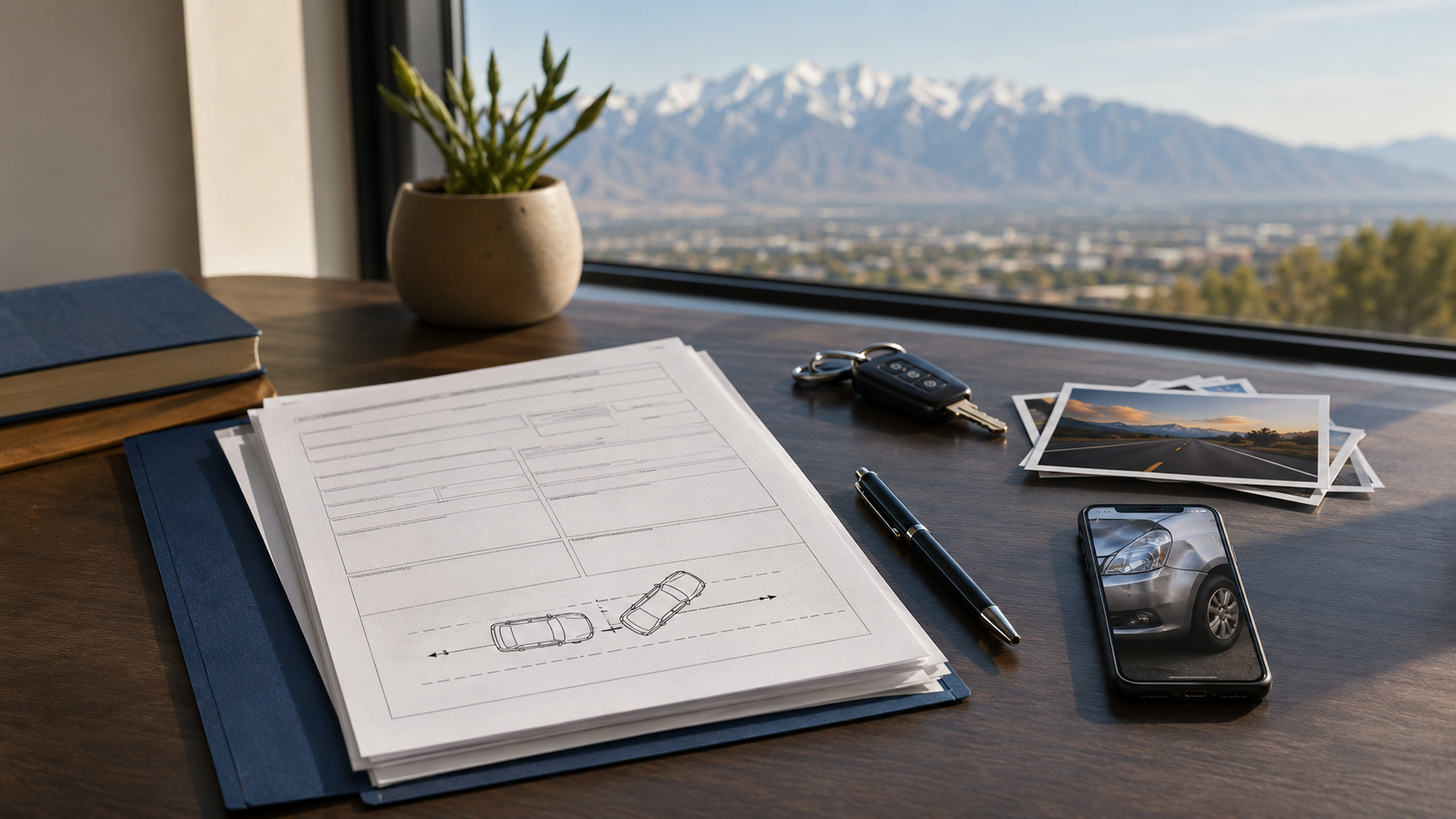
To get a Utah crash report, identify the law enforcement agency that investigated the collision and submit that agency’s records request. Ask specifically for the report and any photos, video, witness statements, diagrams, field notes, or supplements you need. Utah limits access to eligible people and their agents, so be prepared to verify your identity and connection to the crash.
Which agency has your Utah crash report?
Utah does not have one crash-report portal for every collision. UHP uses GovQA, while city police departments, county sheriffs, and other agencies may use their own records or GRAMA systems.
The agency whose officer investigated the collision usually holds the report and related records. Start with the agency name on the exchange-of-information form, citation, case card, or other paperwork you received at the scene.
If you have no paperwork, contact a likely agency or dispatch center with the date, approximate time, and exact location. Do not assume that every freeway crash belongs to the same agency. The responding agency depends on the location and circumstances.
Before requesting records, gather the date, time, location, involved names, case number if known, photo identification, and proof of your connection to the collision.
Utah law does not give everyone access to an unredacted report. Eligible requesters include involved people, people who suffered injury or loss, and qualifying agents, parents, guardians, agencies, officers, and investigators.
How do you request a Utah Highway Patrol crash report?
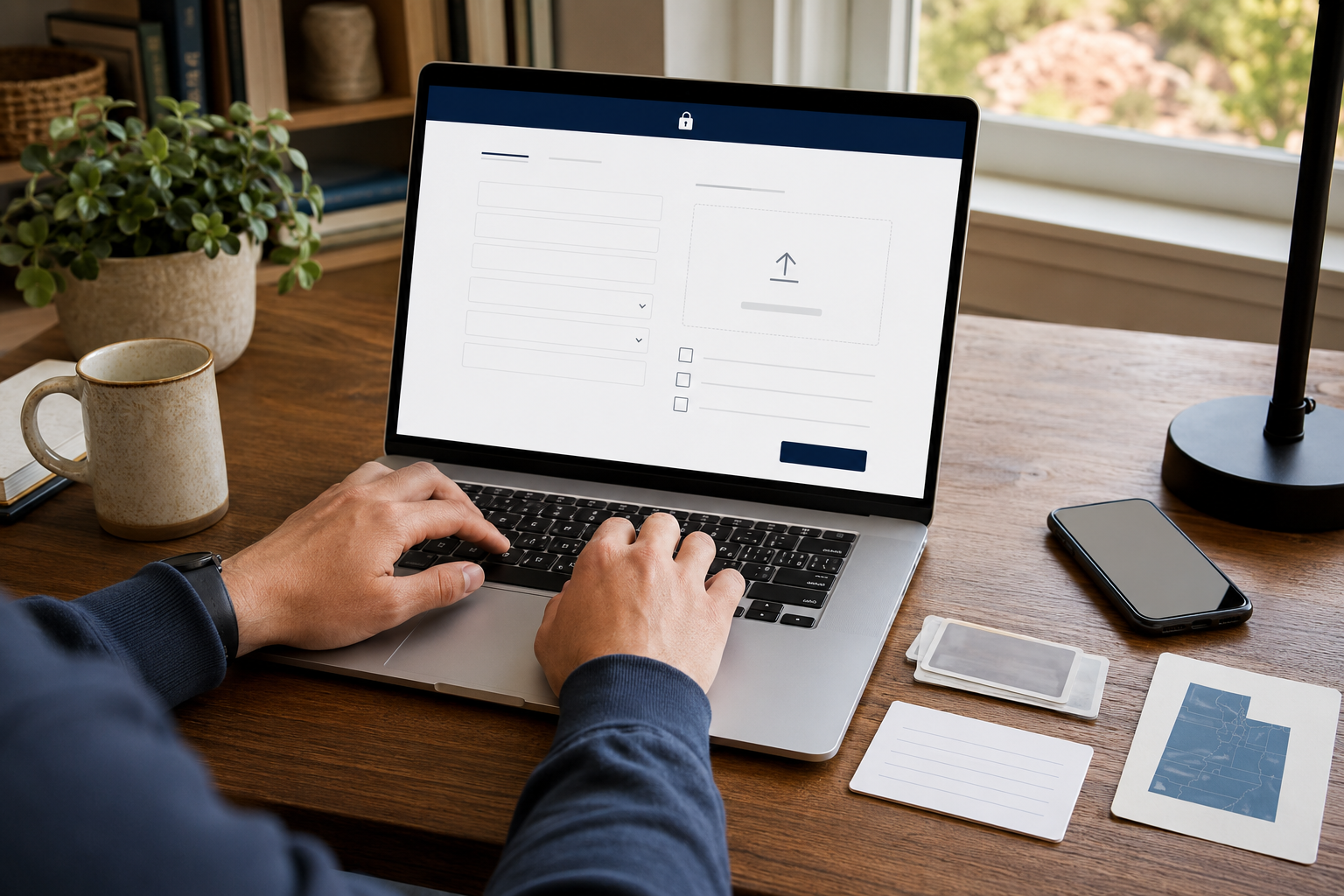
Request Utah Highway Patrol crash reports through UHP’s secure GovQA portal. UHP requires a GovQA account and identity verification before a requester can view police records.
The process is:
- Open the Utah Highway Patrol report-request page and follow its link to GovQA.
- Create an account if you have not used the system before.
- Complete identity verification.
- Enter the crash date and location, plus the case number if you know it.
- Describe the records you want. List supporting materials separately instead of asking only for the basic report.
- Watch for an email telling you when the records are ready to download.
If you lack the case number, submit the other details. UHP treats it as optional when unknown.
How do you request a report from a city, county, or sheriff?
Use the agency’s current records or GRAMA procedure. Fees, identification, portals, and delivery vary, so check its official website.
For example, the Salt Lake City Police Department records page offers online and in-person requests. Its posted fees include $15 for a traffic accident report of up to 50 pages, $12.25 for photographs, and $33 for a body-camera video request. Additional charges may apply.
The Utah County Sheriff’s Office requires a written request, photo ID, and fee. It tells requesters to specify items such as the report, witness statements, and photographs. These examples are not statewide rules.
What additional crash evidence can you request?
Ask for each evidence category. Requesting “the report” may not produce every associated record, and some materials may not exist.
Utah Code § 41-6a-404 recognizes these possible report materials:
| Record category | Examples to identify in the request |
|---|---|
| Basic report | Narrative, vehicle and party information, diagram, listed witnesses, supplements |
| Photos and video | Scene photographs, surveillance video gathered by police, body-camera video, dash-camera video |
| Witness material | Witness identity and available contact information, statements, audio or video recordings |
| Investigative material | Diagrams, field notes, later supplements, other recordings or drawings generated in the investigation |

Name each requested category clearly. For example: “Please provide the accident report and accompanying data, including photographs, witness statements, body-camera and dash-camera video, diagrams, field notes, and supplemental reports.” You may also ask whether dispatch audio or call records exist.
The agency may charge fees or redact information. It may withhold material when disclosure would jeopardize an ongoing criminal investigation or prosecution.
How do you read a Utah crash report?
Read the report as one part of the evidence, not as a final verdict. Compare it with your photographs, video, medical records, and recollection.
Check these areas:
- People, vehicles, insurance, and location
- Narrative, sequence, and diagram
- Witnesses and attributed statements
- Citations or reported violations
- Road, weather, lighting, and traffic controls
- References to photos, video, measurements, or supplements
For an example of how these fields can be analyzed across many records, Strong Law’s Salt Lake County crash-data report compares roadway type, lighting, time, city, route, and road-user classifications across 366 fatal crashes.
If a code or abbreviation is unclear, ask the agency what it means. Confirm whether your copy includes later supplements.
What should you do if the report is incomplete or incorrect?
Contact the investigating agency, identify the disputed item precisely, and provide documents that support your position. Utah does not publish one universal correction form for every law enforcement agency, and an officer is not necessarily required to adopt your requested change.
Separate objective errors from disagreements about interpretation. A wrong license plate or misspelled name can be documented. A dispute about speed, right of way, or fault may require additional evidence instead of an administrative correction.
Send a concise written request with the case number, crash date, location of the disputed information, requested correction, supporting proof, and a request to submit supplemental material.
Keep the original report, your submission, proof of delivery, and the response. Do not alter the report itself.
Does a Utah crash report determine fault?
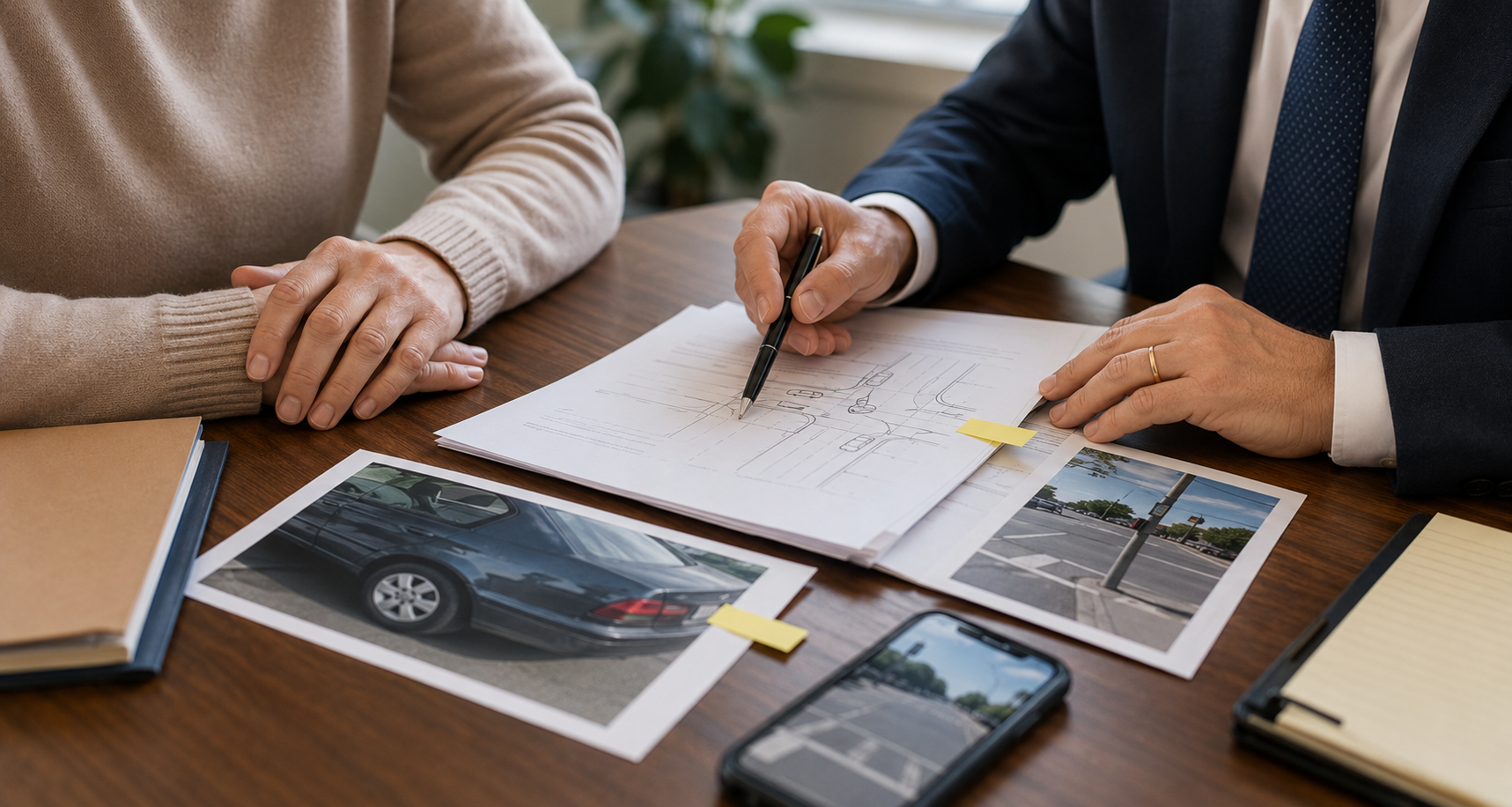
No. A Utah crash report can influence an insurance investigation, but it does not conclusively determine civil fault. Insurers may consider the narrative, diagram, citations, witness information, and contributing circumstances while also reviewing photographs, recorded statements, vehicle damage, video, and other evidence.
Insurers may assign responsibility among drivers to reduce what they pay. An incomplete narrative or missing witness does not erase stronger independent proof.
If the crash caused injuries, learn how Utah’s first layer of benefits works in Strong Law’s guide to Utah no-fault PIP coverage and when you can sue. If the insurer is blaming you or disregarding evidence, a Salt Lake City car accident lawyer can review the report in the context of the entire claim.
Can a Utah crash report be used in court?
Utah Code § 41-6a-404 generally prohibits using accident reports filed under that section as evidence in a civil or criminal trial arising from the collision. Limited statutory exceptions include a department certificate with specified basic information and prosecution involving knowingly false report information.
That does not make every underlying fact or separate item inadmissible. Witness testimony, authenticated photos, video, physical evidence, and independent records raise different evidentiary questions. A lawyer can evaluate what may be used.
What evidence should you preserve beyond the report?
Preserve independent evidence promptly because video can be overwritten, vehicles repaired, and witnesses lost. Do not wait for the report before saving available material.
Keep:
- Original photos and video with metadata
- Dashcam and nearby surveillance files
- Witness contact information and communications
- Vehicle photos, estimates, repairs, and damaged parts when practical
- Medical records, bills, instructions, and injury photos
- Insurance communications, receipts, and wage records
Commercial-vehicle collisions can involve electronic logging data, onboard vehicle data, maintenance records, dispatch information, cargo documents, and multiple companies. Strong Law’s Salt Lake City truck accident lawyers explain why early evidence preservation is particularly important in those cases.
When should an injured person speak with a lawyer?
Consider legal help when injuries, disputed fault, missing evidence, or insurance pressure put the claim at risk. Early review is especially useful with serious injuries, fatalities, commercial vehicles, multiple parties, disappearing video, or insurer blame-shifting.
For an eligible client, a formally engaged lawyer can request records as an authorized agent, send preservation demands, compare the report with independent evidence, and communicate with insurers. Strong Law’s Utah car accident lawyers assist injured people statewide, while the firm’s Salt Lake City personal injury team serves clients from the Midvale office.
Strong Law Accident & Injury Attorneys serves injured people in Salt Lake City and throughout Utah from its Utah office in Midvale. A consultation can help you determine what evidence exists, what may be missing, and what steps can protect your claim.
Utah crash-report FAQs
How long does it take to receive a Utah crash report?
For an eligible written request, the agency must disclose the report and accompanying data within 10 business days. It may withhold material if disclosure would jeopardize an ongoing criminal investigation or prosecution.
How much does a Utah crash report cost?
There is no single statewide price. Utah law permits reasonable fees, and local agencies publish their own charges. Check the current fee schedule.
Can I get photos or bodycam video with the report?
Possibly. Utah law recognizes photographs, bodycam, dashcam, surveillance, and other video as potential report material. The material must exist, and fees, redactions, or lawful withholding may apply.
What if I do not know the case number?
Provide the crash date, location, approximate time, and names of the involved people. UHP’s GovQA instructions request the case number only if it is known.
Can I correct an inaccurate police report?
Ask the agency to review the issue, but there is no statewide correction form or guarantee of a change. Identify the disputed information, provide support, and ask to submit supplemental information.
Does the police report decide who caused the crash?
No. Insurers may consider it, but civil fault depends on the full evidence. Photos, video, witnesses, and vehicle damage may support or contradict the report.
Can an attorney request the report for me?
Generally, yes, if you qualify for access and formally engage the attorney for a matter related to the crash. Additional requirements apply when an attorney requests protected records in unredacted form, including a written request, a representation letter, and applicable fees.
Official Utah crash-report resources

See If Your Injury Claim May Qualify
Answer a few quick questions to help Strong Law understand what happened and whether your claim may qualify for a free review.
