

How New Mexico Comparative Fault Affects Injury Compensation

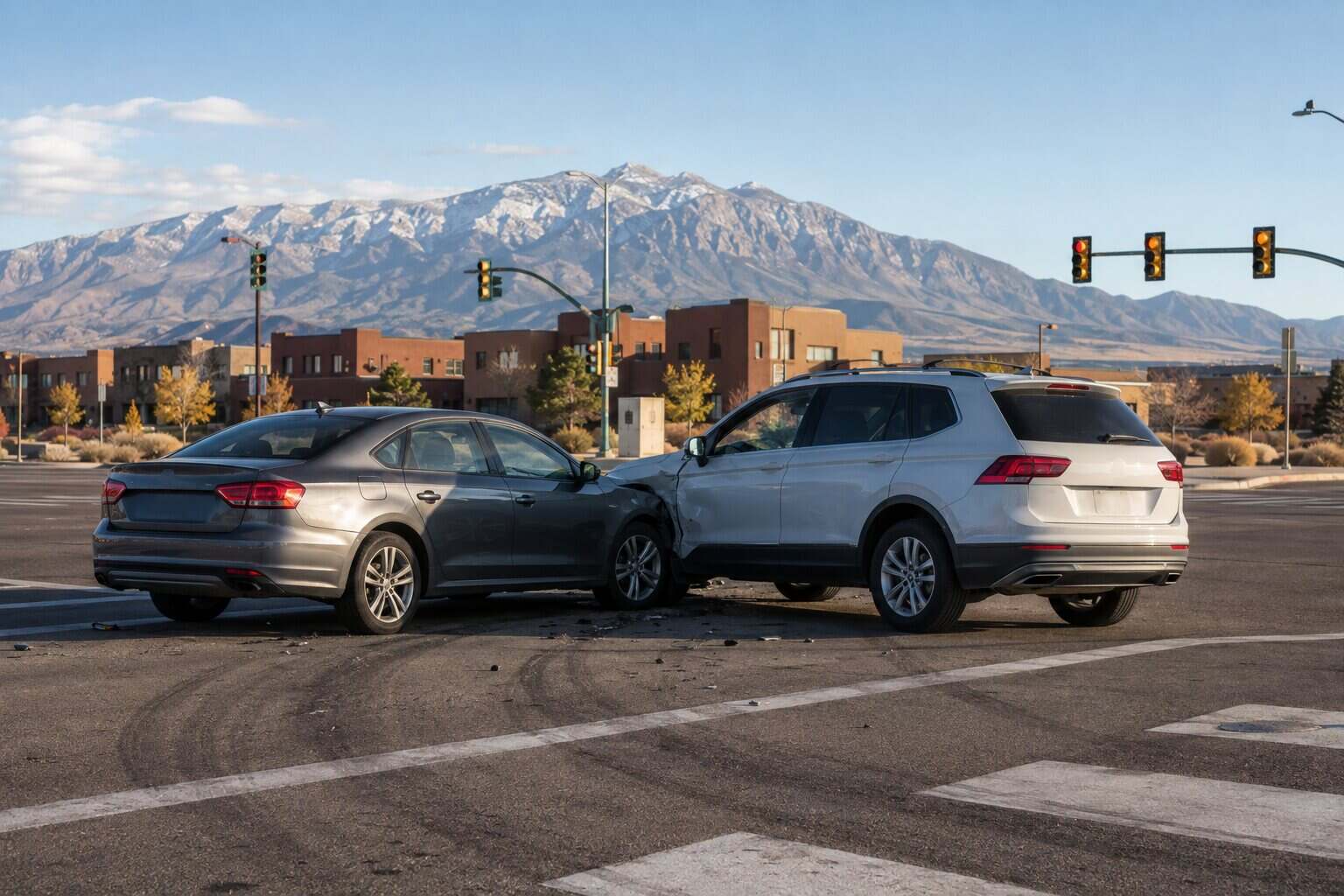
New Mexico uses pure comparative fault. An injured person may still recover compensation when partly responsible, but the award is reduced by that person’s percentage of fault. If total damages are $100,000 and the injured person is assigned 20% of the fault, the potential recovery becomes $80,000.
By Strong Law Team
Last updated: August 25, 2026
Shared fault can affect car crashes, truck collisions, pedestrian and bicycle accidents, unsafe-property claims, and other negligence cases. The percentage matters because every point of fault assigned to the injured person can reduce the amount available for medical bills, lost income, pain and suffering, and other losses.
The rule applies statewide. Our New Mexico personal injury lawyer page explains the broader claim framework, while the sections below focus on how fault percentages change compensation and how evidence can challenge an unsupported allocation.
An insurance company’s first fault decision is not final. The outcome depends on the evidence, the applicable law, negotiations between the parties, and, if a lawsuit proceeds to trial, the percentages assigned by the factfinder. A personal injury lawyer in Albuquerque can investigate competing accounts before an adjuster’s position becomes the accepted version of events.
What Is Pure Comparative Fault in New Mexico?
Comparative fault is a method for dividing responsibility when more than one person or organization contributed to an injury. New Mexico follows the pure form of the rule. Partial responsibility does not automatically eliminate an injured person’s claim. Instead, that person’s compensation is generally reduced in proportion to the fault assigned to them.
The New Mexico Supreme Court adopted comparative negligence in Scott v. Rizzo, 1981-NMSC-021, 96 N.M. 682, 634 P.2d 1234. The Legislature later addressed allocation among multiple responsible parties in N.M. Stat. § 41-3A-1. Current statutes and appellate decisions are also available through the New Mexico Compilation Commission, the state’s official legal publisher.
Because New Mexico uses a pure rule, an injured person may still pursue the portion of damages caused by someone else even when the injured person receives a high percentage of fault. That is different from a modified comparative-fault state, where reaching a 50% or 51% threshold may bar recovery entirely.
How Does Comparative Fault Change Compensation?
The calculation starts with the total proven damages, not merely the bills an insurer chooses to accept. Those damages may include past and future medical expenses, lost wages, reduced earning capacity, property damage, pain and suffering, disability, disfigurement, and loss of enjoyment of life when supported by the facts and law.
After the total is determined, the injured person’s percentage of fault reduces the recovery.
- Total proven damages: $100,000
- Fault assigned to the injured person: 20%
- Reduction: $20,000
- Potential recovery after the reduction: $80,000
This example illustrates the rule, not the expected value of a particular case. Available insurance, disputed damages, liens, multiple responsible parties, legal defenses, and the strength of the evidence can all affect the final result.
Who Decides the Percentages of Fault?
An insurance adjuster may assign percentages while evaluating or negotiating a claim, but the insurer does not have unilateral authority to make a binding final decision. The parties may agree on an allocation through settlement. If they do not agree and the case goes to trial, the judge or jury evaluates the evidence and assigns fault under the court’s instructions.
A police report can be useful, but it does not automatically control a civil injury claim. An officer may not have witnessed the event, may have spoken to only some of the people involved, or may not have had access to later-discovered video, electronic data, medical evidence, or expert analysis.
What Evidence Can Protect an Injury Claim?
Comparative-fault disputes are often evidence disputes. The strongest proof depends on how the injury happened, but an investigation may include:
- Scene photographs, video, measurements, debris, tire marks, and vehicle resting positions
- Traffic-camera, business-surveillance, doorbell-camera, or dash-camera footage
- Witness statements and emergency-call recordings
- Vehicle inspections, event data recorder information, and phone records when legally obtainable
- Traffic-signal timing, roadway design, lighting, weather, and construction records
- Medical records showing when symptoms began and how the injury is connected to the event
- Work records, tax documents, and expert analysis supporting lost income or reduced earning ability
- Company records, maintenance files, dispatch data, and electronic logs in commercial-vehicle cases
Evidence can disappear quickly. Video may be overwritten, vehicles repaired, road conditions changed, and witnesses harder to locate. Early preservation is especially important when a carrier disputes responsibility in an Albuquerque truck accident claim.
How Insurance Companies Use Shared-Fault Arguments
Every percentage shifted to an injured person may reduce the insurer’s exposure. An adjuster may argue that a driver was speeding, distracted, following too closely, or reacting too slowly. In other cases, the insurer may say a pedestrian entered outside a crosswalk, a cyclist was difficult to see, or a visitor failed to notice an unsafe condition.
Those claims should be tested against the complete record. For example, a driver’s statement that a pedestrian “came out of nowhere” may be inconsistent with crosswalk video, signal timing, sight distance, vehicle speed, or phone activity. Our Albuquerque pedestrian accident guide explains how those facts can affect a crossing-related claim.
A similar issue arises when a motorist blames a bicycle rider without examining lane position, lighting, passing distance, roadway markings, and nearby video. The New Mexico bicycle accident page covers evidence and compensation issues specific to injured cyclists.
How Does Shared Fault Work in a Car Accident?
Intersection crashes, lane-change collisions, rear-end crashes, and multi-vehicle pileups can produce conflicting accounts. One driver may have failed to yield while another was speeding. A driver may have entered an intersection on a green light while another claims the signal had already changed. Physical evidence can help reconstruct timing and movement.
New Mexico’s rule allows the factfinder to assign responsibility to each person whose conduct contributed to the collision. The New Mexico car accident lawyer page explains the broader claim process, insurance issues, and damages that may follow a serious crash.
What If Several People or Companies Share Responsibility?
Multi-party cases involve two related questions: how much fault belongs to each participant, and which losses each participant legally caused. Under N.M. Stat. § 41-3A-1, several liability is the general rule in comparative-fault cases. A defendant is generally responsible for the portion of damages corresponding to that defendant’s share of fault.
The statute contains exceptions, including certain intentional conduct, vicarious-liability relationships, product-liability situations, and circumstances supported by public policy. Multi-party allocation can become particularly important in trucking, defective-product, construction, government, and wrongful-death cases. The correct analysis depends on the claims, relationships, and evidence involved.
What Should You Do When Fault Is Disputed?
- Get necessary medical care. Protect your health and make sure symptoms, diagnoses, and treatment recommendations are documented.
- Preserve the scene evidence. Save photographs, video, witness information, damaged property, clothing, devices, and correspondence.
- Do not guess about responsibility. Give accurate facts, but avoid speculating about speed, distance, timing, or fault when you do not know.
- Be careful with recorded statements. An insurer may ask questions before all evidence or medical information is available.
- Identify every potentially responsible party. Employers, vehicle owners, contractors, manufacturers, property owners, and government entities may have different duties and insurance.
- Review deadlines promptly. Many New Mexico personal injury actions generally have a three-year filing period under N.M. Stat. § 37-1-8. A qualifying Tort Claims Act claim against the state or a local public body may require written notice within 90 days under N.M. Stat. § 41-4-16. Government and other specialized claims may also have different filing deadlines.
Frequently Asked Questions About New Mexico Comparative Fault
Can I recover compensation if I was more than 50% at fault?
Potentially, yes. New Mexico uses pure comparative fault rather than a 50% or 51% cutoff. Compensation is reduced by the injured person’s assigned percentage of fault. A high percentage can greatly reduce the practical value of a claim, and the other elements of liability and damages still must be proven.
Does the police report determine fault?
No. A report may contain useful observations, statements, measurements, citations, or diagrams, but it does not automatically decide a civil claim. Video, physical evidence, witnesses, electronic records, expert analysis, and admissibility rules may affect the final allocation.
Can an insurance company change its fault decision?
Yes. An insurer may revise its position when additional evidence becomes available or during negotiations. If the parties cannot agree, a lawsuit may be necessary and the factfinder may assign percentages that differ from the insurer’s initial assessment.
What happens when more than one defendant caused the injury?
Fault may be divided among the injured person, defendants, and other responsible participants. New Mexico generally uses several liability, which means each defendant is ordinarily responsible for the share of damages tied to that defendant’s fault. Statutory exceptions and causation issues can change the analysis.
Is admitting partial fault the same as losing the claim?
No. Partial responsibility does not automatically end a New Mexico injury claim. However, casual statements made before the evidence is collected may be used to argue for a larger reduction. Provide accurate facts without guessing or accepting a percentage before the investigation is complete.
How long do I have to bring a New Mexico injury claim?
Many actions involving injury to a person generally must be filed within three years under N.M. Stat. § 37-1-8. A qualifying claim against the state or a local public body may require written notice within 90 days under the New Mexico Tort Claims Act, while wrongful-death notice under that statute may follow a different period. Other rules can apply to medical malpractice, minors, tribal matters, federal claims, and additional circumstances. Evidence should be preserved well before any deadline approaches.
Talk With Strong Law About a Disputed-Fault Claim
When an insurer is trying to shift blame, the percentage assigned to you can materially affect your compensation. Strong Law can investigate the incident, preserve evidence, identify responsible parties and coverage, document damages, and challenge unsupported fault allegations.
Call 505-465-8341 or request a free case review. Consultations are available for injured people in Albuquerque and throughout New Mexico. Qualifying cases are handled on a contingency-fee basis. The written fee agreement explains the attorney fee and responsibility for case expenses, and no attorney fee is owed unless compensation is recovered.
This article provides general information and is not legal advice. The law and filing deadlines can depend on the facts, parties, court, and type of claim.

See If Your Injury Claim May Qualify
Answer a few quick questions to help Strong Law understand what happened and whether your claim may qualify for a free review.
