image

Tacoma Slip and Fall Lawyer for Unsafe Property Injuries

Tacoma slip and fall attorneys fight for justice and maximum compensation for injured victims across Pierce County.

A fall can leave you with a fracture, a head injury or pain that makes work and daily tasks difficult. If an unsafe property condition caused it, a Tacoma slip and fall lawyer can investigate what happened and help you respond when a business or insurer blames you.

Strong Law helps people hurt at stores, restaurants, apartments, walkways and other properties in Tacoma and Pierce County. Our Tacoma personal injury team reviews the hazard, the property’s responsibilities and the effect on your life.

The case review is free. You pay no attorney fee unless we recover compensation in an accepted contingency fee case. The written agreement explains the fee and case expenses.

98%
win rate
Google rating: 4.9 stars from more than 550 reviews

Contents

Person losing balance near outdoor steps

What a Tacoma Slip and Fall Attorney Can Do for You

You should not have to track down camera footage or argue with a property insurer while healing. We can request relevant records, take over insurance communications and investigate who controlled the area where you fell.

We look at photos, witnesses, inspection and cleaning records, incident reports and available video. The question is how the hazard developed, who created or knew about it and what reasonable steps should have been taken.

We also connect the fall to your medical records, missed work and future needs. That gives you a basis for weighing an offer. If fault or compensation remains disputed, we explain your options and prepare the claim for litigation when needed.

The Hardest Part of a Slip and Fall Claim Is Proving Notice

Slip and fall cases are often harder than they look. It is not always enough to show that you fell or that a dangerous condition existed. In many cases, the claim must also show that the property owner knew or should have known about the hazard and failed to fix it, clean it, block it off, or warn people.

This is called notice.

Notice may be proven with evidence such as:

  • surveillance footage
  • incident reports
  • cleaning logs
  • maintenance records
  • inspection records
  • witness statements
  • photos of the hazard
  • prior complaints
  • employee reports
  • weather records
  • repair requests
  • proof the hazard existed long enough to be found and fixed

Property owners and insurance companies may say the hazard appeared moments before the fall or that no one had time to fix it. That argument should be tested against the evidence, not accepted automatically.

Notice is important in many cases, but it is not a single rule that resolves every fall. Washington recognizes a reasonable-foreseeability exception in appropriate business-invitee cases. Who created the condition and how the business operated can also matter. We assess those facts before accepting an insurer’s claim that nobody knew about the hazard.

Common Slip and Fall Hazards in Tacoma

Slip and fall accidents can happen when a property is not maintained, inspected, cleaned, repaired, or marked properly.

Common hazards include:

  • wet grocery store floors
  • spilled drinks or food
  • slick restaurant floors
  • loose entrance mats
  • uneven flooring
  • broken tiles
  • unsafe stairs
  • missing or loose handrails
  • poor lighting in stairwells
  • icy sidewalks
  • cracked pavement
  • potholes in parking lots
  • debris in walkways
  • extension cords
  • cluttered aisles
  • unsafe construction areas
  • poorly maintained apartment walkways
  • slippery lobby floors
  • leaking pipes or roof water
  • unmarked floor-level changes

A dangerous condition does not always look dramatic. A small spill, loose mat, dim stairwell, or uneven walkway can cause a serious fall.

Where Slip and Fall Accidents Happen in Tacoma

Slip and fall accidents in Tacoma often happen in places where people are moving through busy public or shared spaces.

Common locations include:

  • grocery stores
  • restaurants
  • bars
  • hotels
  • apartment complexes
  • parking lots
  • sidewalks
  • office buildings
  • retail stores
  • shopping centers
  • medical offices
  • schools
  • gyms
  • stadiums or event spaces
  • public buildings
  • stairwells
  • workplaces
  • construction areas

Tacoma-specific context may matter if the fall happened near Tacoma Mall, downtown Tacoma, the Stadium District, Pacific Avenue, South Tacoma Way, apartment communities, commercial parking lots, public sidewalks, or busy business corridors.

The location matters because it affects who controlled the property, what maintenance rules applied, whether there may be camera footage, and who may be responsible for the hazard.

Store, Restaurant, and Apartment Slip and Fall Claims

Different types of properties create different evidence issues.

Store Falls

Falls in stores may involve spilled liquids, loose mats, cluttered aisles, leaking refrigerators, poor cleanup procedures, or employees who failed to inspect the floor. Evidence may include incident reports, cleaning logs, employee statements, surveillance video, and prior complaints.

Restaurant Falls

Restaurant falls may involve spilled drinks, greasy floors, crowded walkways, poor lighting, unsafe steps, loose mats, or failure to warn customers. These cases often depend on whether staff knew or should have known about the hazard.

Apartment Complex Falls

Apartment falls may involve unsafe stairs, broken handrails, poor lighting, icy walkways, uneven pavement, parking lot hazards, or ignored maintenance requests. A landlord or property manager may be responsible if the hazard should have been repaired or warned about.

Parking Lot and Sidewalk Falls

Parking lot and sidewalk falls may involve potholes, uneven pavement, ice, poor lighting, drainage problems, debris, or construction hazards. Responsibility may depend on who owned, controlled, maintained, or created the unsafe condition.

What Evidence Helps Prove a Slip and Fall Claim?

Courtroom prepared for civil legal proceedings

A slip and fall claim depends on evidence. The goal is to show what caused the fall, who controlled the property, whether the hazard should have been fixed, and how the injury changed your life.

Helpful evidence may include:

  • photos of the hazard
  • photos of your injuries
  • surveillance footage
  • incident reports
  • witness statements
  • cleaning logs
  • inspection records
  • maintenance records
  • repair requests
  • prior complaints
  • employee notes
  • weather records
  • shoes and clothing worn during the fall
  • medical records
  • EMS records
  • emergency room records
  • work records
  • expert review when needed

Try to report the fall before leaving the property. Ask for a copy of the incident report if one is created. Take photos before the hazard is cleaned, moved, repaired, or blocked off.

The first days after a fall can matter. Video footage may be erased. Employees may forget details. A hazard may be fixed. Witnesses may become harder to reach. Early action helps protect evidence.

Our guide to key evidence in an injury claim explains why photos, witnesses and records should be saved early.

When a Government Entity May Be Liable

Some slip and fall claims involve public property, public sidewalks, city-maintained walkways, public buildings, parking areas, or government-controlled spaces.

A government entity may be involved if the fall was caused by:

  • broken public sidewalks
  • unsafe public stairs
  • poor lighting on public property
  • dangerous walkways
  • ice or snow conditions on public property
  • unsafe public parking lots
  • missing warning signs
  • construction hazards
  • poor maintenance by a public agency
  • unsafe drainage or pavement conditions

Local-government claims can require a formal claim presentation and a 60-day waiting period under RCW 4.96.020. The correct entity, filing procedure and lawsuit deadline need separate review. If your fall happened on public property, a public sidewalk, a city-controlled area, or a government-managed space, speak with a lawyer quickly.

How Property Owners and Insurers Blame Injured People

Property owners and insurance companies often try to shift blame after a fall.

Our guide explains why a warning sign does not automatically resolve a property owner’s liability.

Common arguments include:

  • “You should have watched where you were going.”
  • “The hazard was open and obvious.”
  • “There was a warning sign.”
  • “You were distracted.”
  • “Your shoes caused the fall.”
  • “You were moving too fast.”
  • “The hazard had just happened.”
  • “No one complained before.”
  • “The property owner did not know about it.”
  • “Your injuries are not that serious.”
  • “Your pain is from a prior condition.”

These arguments should be tested against the evidence. The claim should look at the hazard, the lighting, the property layout, inspection procedures, witness statements, camera footage, and whether the property owner acted reasonably.

Fault should be based on facts, not assumptions.

Injuries After a Slip and Fall Accident

Slip and fall accidents can cause serious injuries, especially when someone falls on hard flooring, concrete, stairs, pavement, or ice.

Common injuries include:

  • broken wrists
  • broken arms
  • hip injuries
  • knee injuries
  • ankle injuries
  • shoulder injuries
  • head injuries
  • concussions
  • traumatic brain injuries
  • neck injuries
  • back injuries
  • spinal cord injuries
  • herniated discs
  • nerve damage
  • soft-tissue injuries
  • cuts and bruising
  • chronic pain
  • permanent disability

If the fall caused headaches, dizziness, memory issues, confusion, or other brain-related symptoms, our Tacoma brain injury lawyer page explains how those claims are documented.

If the fall caused back trauma, neck trauma, spinal cord damage, nerve symptoms, or mobility loss, our Tacoma spinal injury lawyer page may be more specific.

If the injuries are permanent or life-changing, our Tacoma catastrophic injury lawyer page explains how future care, lost earning capacity, and long-term damages are evaluated.

Compensation in a Tacoma Slip and Fall Claim

A slip and fall claim should account for both financial losses and personal losses.

Economic damages are measurable financial losses. These may include:

  • ambulance bills
  • emergency medical care
  • hospital bills
  • surgery
  • physical therapy
  • specialist care
  • medication
  • future medical treatment
  • lost wages
  • reduced earning capacity
  • transportation costs
  • mobility devices
  • home care or daily support
  • damaged personal property

Non-economic damages address the personal impact of the fall. These may include:

  • pain and suffering
  • emotional distress
  • anxiety
  • depression
  • trauma after the fall
  • scarring
  • disability
  • loss of independence
  • loss of enjoyment of life
  • long-term physical limits

Some losses are obvious right away. Others take time to understand. A quick settlement may not include future surgery, therapy, long-term pain, reduced earning capacity, or the full effect of the injury on daily life.

Washington Comparative Fault in Slip and Fall Claims

Washington follows a comparative fault rule. This means you may still recover compensation even if you are found partly responsible for the fall.

If you are assigned a percentage of fault, your compensation may be reduced by that percentage. For example, if damages are valued at $100,000 and you are found 20% at fault, the recovery may be reduced by 20%.

Insurance companies may use this rule to argue that you should have avoided the hazard, watched your step, used a different path, or noticed a warning sign. The key is whether the evidence supports that claim.

Washington Deadlines for Slip and Fall Claims

Many negligence-based injury lawsuits have a three-year filing period under RCW 4.16.080. The precise deadline depends on the claim and facts. An ongoing insurance discussion does not necessarily preserve your time to sue.

A public-property case may require an additional claim-presentment procedure and waiting period. Have the applicable rules checked early. Camera footage, cleaning logs and witness memories can also disappear long before the lawsuit deadline.

What to Do After a Slip and Fall in Tacoma

After a slip and fall, your health comes first. Once you are safe, the next steps can help protect your legal claim.

Read our answers to common slip and fall questions for more on evidence, potential defendants, and damages.

Important steps include:

  1. Get medical care as soon as possible.
  2. Report the fall to the property owner, manager, landlord, or business.
  3. Ask for an incident report.
  4. Take photos of the hazard, floor, stairs, sidewalk, lighting, warning signs, and surrounding area.
  5. Get names and phone numbers for witnesses.
  6. Save the shoes and clothing you wore.
  7. Write down what happened while the details are fresh.
  8. Save medical records, bills, discharge papers, and insurance letters.
  9. Do not give a recorded statement before understanding your rights.
  10. Do not sign insurance paperwork or accept a quick settlement before the full medical picture is clear.

One of the biggest mistakes people make after a fall is assuming the insurance company is simply trying to help. Insurance adjusters may sound friendly, but their job is to protect the insurer.

When a Slip and Fall Causes Life-Changing or Fatal Injuries

Some slip and fall injuries are severe. A fall may cause a brain injury, spinal injury, hip fracture, surgery, chronic pain, permanent disability, or long-term loss of independence.

If a fall causes permanent harm, our Tacoma catastrophic injury lawyer page explains how life-changing injury claims are handled.

If a fall leads to death, the family may have a wrongful death claim. Our Tacoma wrongful death lawyer page explains who may be able to bring a claim and what damages may be available under Washington law.

Strong Law attorney speaking with a prospective client by phone

Why Choose Strong Law for a Tacoma Slip and Fall Claim

Strong Law helps injured people in Tacoma, Pierce County, and Washington after falls caused by unsafe property conditions. The firm focuses on evidence, property-owner notice, insurance strategy, medical documentation, and the full impact of the injury.

Slip and fall cases often involve serious injuries and unfair blame. Strong Law works to preserve evidence, protect clients from insurance pressure, and build claims around what actually happened.

Strong Law also works on a contingency fee basis. That means there is no upfront attorney fee, and you pay no attorney fee unless compensation is recovered for you.

Our Tacoma office is located at:

Strong Law Accident & Injury Attorneys
1120 Pacific Avenue, Suite 110
Tacoma, WA 98402

Talk With a Tacoma Slip and Fall Lawyer Today

Tell us where you fell, what caused it and what treatment you have needed. Save any incident report, photos, receipts or insurer letters. You do not need all the evidence in hand to ask for help.

Call 206-737-1421 or request a free case review. We can identify the property, coverage and deadline questions your claim needs.

Frequently Asked Questions About Tacoma Slip and Fall Claims

What should I do after a slip and fall in Tacoma?

Get medical care, report the fall to the property owner or manager, ask for an incident report, take photos of the hazard, collect witness information, save your shoes and clothing, and avoid giving a recorded statement before understanding your rights.

Do I need proof the property owner knew about the hazard?

Notice matters in many cases: whether the responsible party knew or should have known about the hazard. The rules can differ where the condition was created by the responsible party or was reasonably foreseeable from the business’s operation. The facts need review.

What if there was no warning sign?

The lack of a warning sign can help your claim, especially if the property owner knew or should have known about the hazard. The claim still depends on the facts, including how the hazard happened and how long it existed.

Can I recover compensation if I was partly at fault?

Possibly. Washington follows comparative fault. Your compensation may be reduced by your share of fault, but partial fault does not automatically stop your claim.

What evidence helps prove a slip and fall claim?

Helpful evidence may include photos, surveillance footage, incident reports, witness statements, cleaning logs, maintenance records, inspection records, prior complaints, medical records, and proof of how the fall affected your life.

Who can be liable for a slip and fall in Tacoma?

Liable parties may include property owners, businesses, landlords, property managers, maintenance companies, contractors, government entities, or another party responsible for the unsafe condition.
What if I fell at a store, restaurant, or apartment complex?

A store, restaurant, landlord, or property manager may be responsible if they knew or should have known about the hazard and failed to fix it, clean it, block it off, or warn people.

What if I fell on a sidewalk or public property?

Sidewalk and public property falls may involve a city, county, state agency, property owner, contractor, or another party. These claims can have strict notice rules, so it is important to act quickly.

How long do I have to file a slip and fall lawsuit in Washington?

Many negligence-based injury lawsuits have a three-year filing period. The exact deadline depends on the claim and facts. Government claims may involve additional procedures and a waiting period, so have the requirements checked early.

How much is a Tacoma slip and fall case worth?

The value depends on the severity of the injuries, medical treatment, future care needs, lost income, pain and suffering, available insurance, property evidence, and the strength of the liability claim.

What injuries are common after slip and fall accidents?

Common injuries include broken wrists, hip injuries, knee injuries, shoulder injuries, head injuries, concussions, spinal injuries, herniated discs, nerve damage, soft-tissue injuries, chronic pain, and permanent disability.

How much does it cost to hire Strong Law?

The consultation is free. You pay no attorney fee unless compensation is recovered in an accepted contingency fee case. The written agreement explains the fee and case expenses.

Older adult fall injury in Tacoma involving unsafe walkways and premises liability concerns.

Get Your Free
Case Review

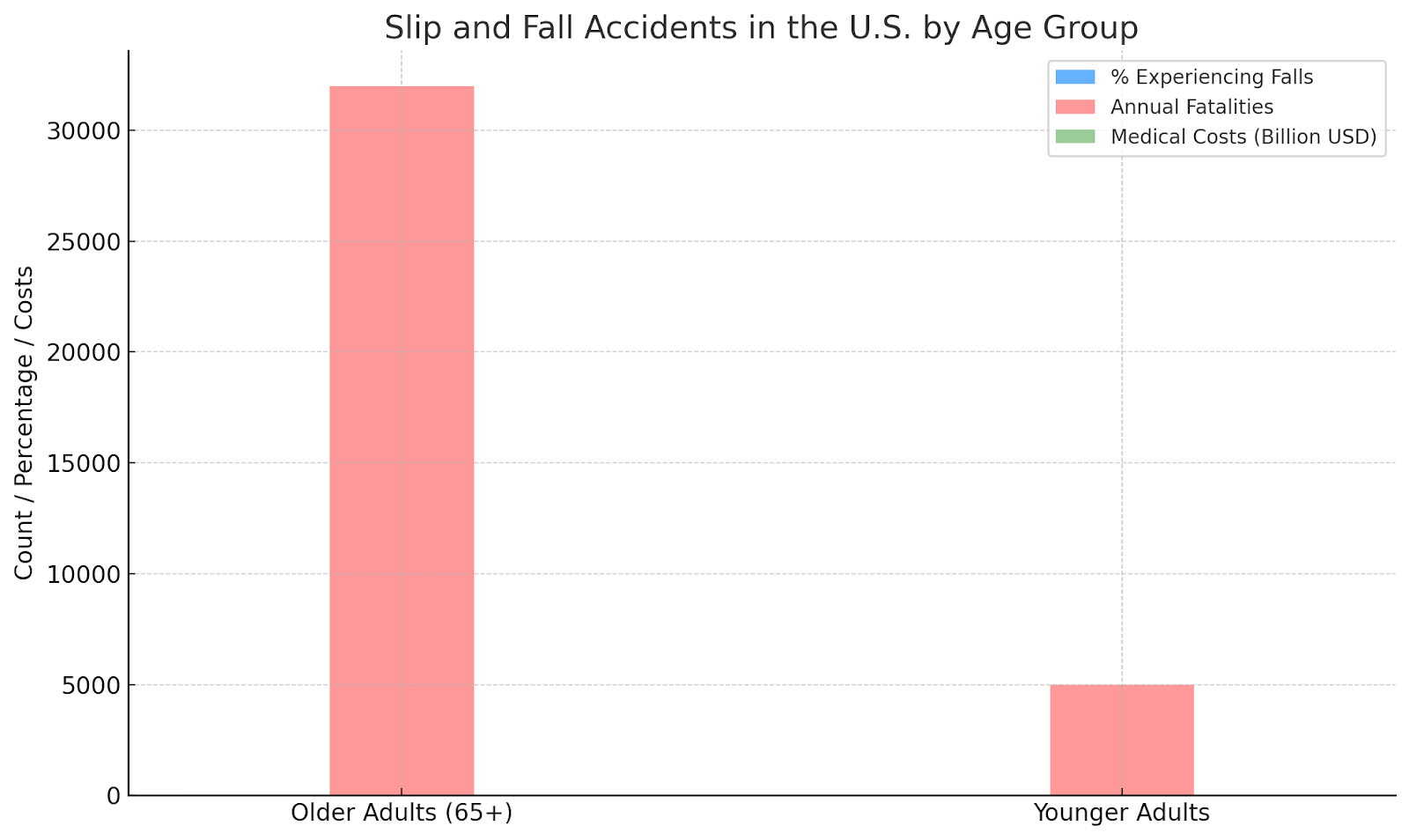
Slip and Fall Accidents in the U.S. by Age Group

We’ve helped thousands of accident victims like you

we win
98%

win rate in court

4.9
stars

on Google reviews

over
2,000

successful cases
Strong Law client sharing her experience in a video testimonial
play button
"I would definitely recommend them."
Lindsey - Washington
Wistia video thumbnail
stars

“Very professional, and treated me as an equal.”

"Just wanted to say thank you to Jed and his team at Strong Law. Not only was I happy with the outcome, but the entire process as a whole. I would definitely recommend this firm to anyone. Thanks again."

Nick S.
Utah
stars

“Unbelievable work!”

"I had a claim involving my own insurance company. I tried to negotiate with them, and they completely denied my claim – two times. I then hired Strong Law, and the change was instant. The insurance company immediately began negotiating, and Jed was able to secure an unbelievably good settlement. I will never again attempt to take-on an insurance company without Strong Law in my corner. Thank you!"

Jonathon
Washington
Strong Law attorney speaking by phone at an office desk
play button
A welcome from Jed Strong
Wistia video thumbnail
Strong Law client discussing her experience in a video testimonial
play button
"They've always been there for me."
Marsha - Washington
Wistia video thumbnail
stars

“I got justice and awesome compensation.”

"I hired Strong Law after my car accident. Jed and his team worked hard on my case. They were professional and compassionate through my surgery and as I recovered, and they were awesome on communication. I got justice and awesome compensation. I would recommend Strong Law to anyone in my situation."

Rick R.
Colorado
Empty courtroom used for civil legal proceedings

Get Your Free
Case Review

Slip and fall lawyer in Tacoma, WA faqs

Contact us

Our team is standing by to help you.

How did you hear about us?
Privacy & Terms Agreement
I agree to Strong Law Accident & Injury Attorneys’
Privacy Policy and Terms & Conditions
SMS/Text Message Consent
By checking this box, I consent to receive SMS/text messages from Strong Law Accident & Injury Attorneys about my inquiry, consultations, appointment reminders, intake follow-up, case-related communications, and legal services. Message frequency varies. Message and data rates may apply. Reply STOP to opt out or HELP for help. Consent is not a condition of hiring our firm or receiving legal services. View our Terms & Conditions and Privacy Policy.
Strong Law attorney speaking with a prospective client by phone