image

Sandy Brain Injury Lawyer for Lasting Injury Claims

A Sandy brain injury lawyer helps connect the cause of an accident with the medical evidence and lasting effects of a traumatic brain injury. Strong Law Accident & Injury Attorneys reviews concussion and other serious head-injury claims. Our Sandy personal injury services are provided from Midvale. A free case review can address responsibility, rehabilitation records, lost earnings, and supported future care.

A Sandy brain injury attorney can help organize the accident evidence and explain how documented changes affect a claim. The review should reflect the person’s actual condition, including progress, setbacks, and the care still recommended.

  • Medical needs come first, including urgent care for danger signs.
  • Save treatment records and specific examples of changed daily function.
  • Review future needs and decision-making authority before resolving the case.

98%
win rate
Google rating: 4.9 stars from more than 550 reviews

Contents

Clinician reviewing brain scan images with an older patient

Why Can a Brain Injury Be Difficult to Document?

Clinician reviewing brain scan images with an older patient

A concussion can affect memory, concentration, balance, sleep, and mood even when the injury is not visible. Symptoms may appear immediately or later. The CDC’s concussion guidance explains that diagnosis is not dependent on a routine brain scan showing an injury. A healthcare provider decides which examination or testing is appropriate.

The legal claim still needs reliable evidence. We build a timeline of the incident, early symptoms, treatment, and changes in daily function. Specific examples from family, teachers, or coworkers can help explain the difference between life before and after the event. A record of missed tasks is more useful than a general statement that everything is harder.

When Should Someone Seek Urgent Medical Care?

Medical needs come first. The CDC lists head-injury danger signs that require immediate emergency care, including worsening persistent headache, repeated vomiting, seizures, slurred speech, increasing confusion, or difficulty waking. Call 911 or seek emergency care when danger signs occur. Do not wait for a legal consultation.

For other concerns after head trauma, contact a healthcare provider promptly. Keep discharge instructions, referral information, and follow-up appointments. A lawyer handles the claim; treating professionals direct diagnosis, treatment, and activity restrictions.

How Do We Investigate the Incident That Caused the Injury?

A brain injury can follow a Sandy car accident, a bicycle or pedestrian collision, a fall, or a workplace incident. Each cause requires its own liability evidence. Crash claims may involve video, vehicle data, witness accounts, and road conditions. A fall may require inspection records, maintenance history, and proof of the hazard.

We evaluate how the injury occurred and which parties had a legal responsibility. A serious diagnosis does not by itself prove another person was negligent. If the claim involves clinical care or a work injury, special filing procedures may apply. Preserving incident evidence early helps keep those options open.

Which Records Show Cognitive Changes and Recovery Needs?

Save emergency notes, imaging reports, specialist evaluations, rehabilitation records, and provider recommendations. When performed, neuropsychological testing can help assess cognitive effects. Records from occupational, speech, or vestibular therapy may explain difficulties that a brief office note does not capture.

Keep a dated symptom and activity record with concrete examples: forgetting appointments, needing breaks, struggling with screens, or requiring help managing bills. Record work accommodations, school changes, and assistance from family. Do not diagnose yourself or change the description to fit a claim. Accurate records support both care and the legal evaluation.

How Are Future Care and Lost Earning Capacity Evaluated?

The claim may include treatment expenses, rehabilitation, lost earnings, and the effect of the injury on daily life. Continuing care, supervision, or reduced ability to work should be supported by treating professionals and appropriate financial or vocational evidence. Needs can change as recovery develops.

An early settlement may not account for unresolved limitations or future recommendations. We review the medical course, insurance, responsibility, and reimbursement claims before evaluating an offer. A life-care plan or expert opinion may be useful in a severe case, but it should explain actual supported needs rather than assume the most expensive outcome.

Organized vehicle and medical claim records on a desk

How Can a Family Build a Clear Before-and-After Timeline?

Start with the date, location, and type of incident. Identify the first medical visit and the symptoms reported at that time. Add later evaluations, referrals, and changes in activity. Keep the source of each detail clear so a personal observation is not mistaken for a medical conclusion.

For an incident in Sandy, note the exact roadway, property, or workplace. Keep any report number and the name of the agency or business that received the report. Treatment may take place in several communities. List each provider rather than assuming all records are held by one hospital.

  • Before the event: Record work duties, school demands, household tasks, and relevant health history.
  • Early changes: Note what the person or witnesses observed and when it was first reported.
  • Care: List appointments, evaluations, therapy, and written recommendations in date order.
  • Daily effects: Describe specific missed tasks, added breaks, or help needed.
  • Progress: Include activities resumed, restrictions changed, and improvements reported.

Use plain descriptions. For example, forgetting two scheduled appointments says more than a broad claim that memory is gone. Include the dates and context without exaggerating. A provider can evaluate symptoms and their possible causes; family notes do not replace that assessment.

Which Records Can Explain Changes at Work or School?

Save the job description, schedule, pay statements, and written restrictions. Record missed hours and changes in duties. A return to work does not by itself explain whether the person returned to the same tasks, pace, hours, or income.

If an employer provides extra breaks, a quieter work area, shorter shifts, or help with certain tasks, keep the relevant messages. Note when the arrangement began and whether it changed. Do not describe an accommodation as a permanent limitation unless the evidence supports that conclusion.

For a student, keep attendance information, relevant teacher observations, and approved changes to schoolwork or testing. Avoid sharing a child’s private records more widely than needed. The person authorized to obtain or disclose the records should be identified before requests are made.

Future earning-loss analysis needs more than the fact that a person missed work. The review may need medical restrictions, education and work history, job demands, and evidence about realistic work options. Any estimate should explain its assumptions and the information still missing.

How Should Families Record Help Needed at Home?

Describe the task, who helped, how often, and how long the help took. Examples may include managing appointments, preparing meals, organizing bills, or providing transportation when advised. Keep provider recommendations separate from help a relative chose to offer.

Save receipts for paid assistance and records of related expenses. Note whether the need is temporary, ongoing, or still being evaluated. Do not assume that all family time is legally recoverable or that a specific hourly rate applies without review.

Record changes over time. A person may resume some tasks while still needing help with others. A dated account can show that distinction and help the legal team ask the right questions about future care. The goal is an accurate description, not a prediction of the worst possible outcome.

What Should a Future-Care Recommendation Explain?

A useful recommendation identifies the service or assistance, why it is needed, its expected frequency, and its likely duration. A suggestion to consider therapy is different from a supported plan with a provider, schedule, and estimated cost.

Keep earlier and updated recommendations. If a plan changes after reassessment, the claim should use the current evidence and explain the change. A life-care planner or other professional may help organize supported needs in a serious case, but the plan must fit the individual.

  • What treatment or assistance has actually been recommended?
  • Which limitations support that recommendation?
  • How often is the service expected to be needed?
  • What evidence supports the cost and duration?
  • Which questions remain uncertain or need reassessment?

Discuss unresolved care questions before accepting a settlement. A release can end claims even when recovery is incomplete. The review should also consider insurance, legal responsibility, expenses, and any repayment claim that may affect the amount received.

How Can the Legal Process Be Easier to Follow?

Tell the legal team if long calls, screens, or many documents are difficult. Ask for shorter meetings, written summaries, or a clear list of the next tasks. A communication plan should suit the person while preserving their role in decisions.

A trusted family contact may help organize appointments and documents with consent. That role is different from legal authority to sign an agreement or make a decision. Bring any existing power of attorney or court documents so the appropriate authority can be reviewed.

Keep one organized set of claim correspondence and a calendar of important dates. Save the full document when an insurer requests information or makes an offer. If a deadline or request is unclear, ask for an explanation before acting. Do not assume a family conversation or an open insurance claim satisfies a formal legal requirement.

At the first review, ask which issues the firm proposes to handle, what evidence needs attention, and how updates will be shared. You should understand the written fee and expense terms before choosing representation. The consultation can begin with the records you have now.

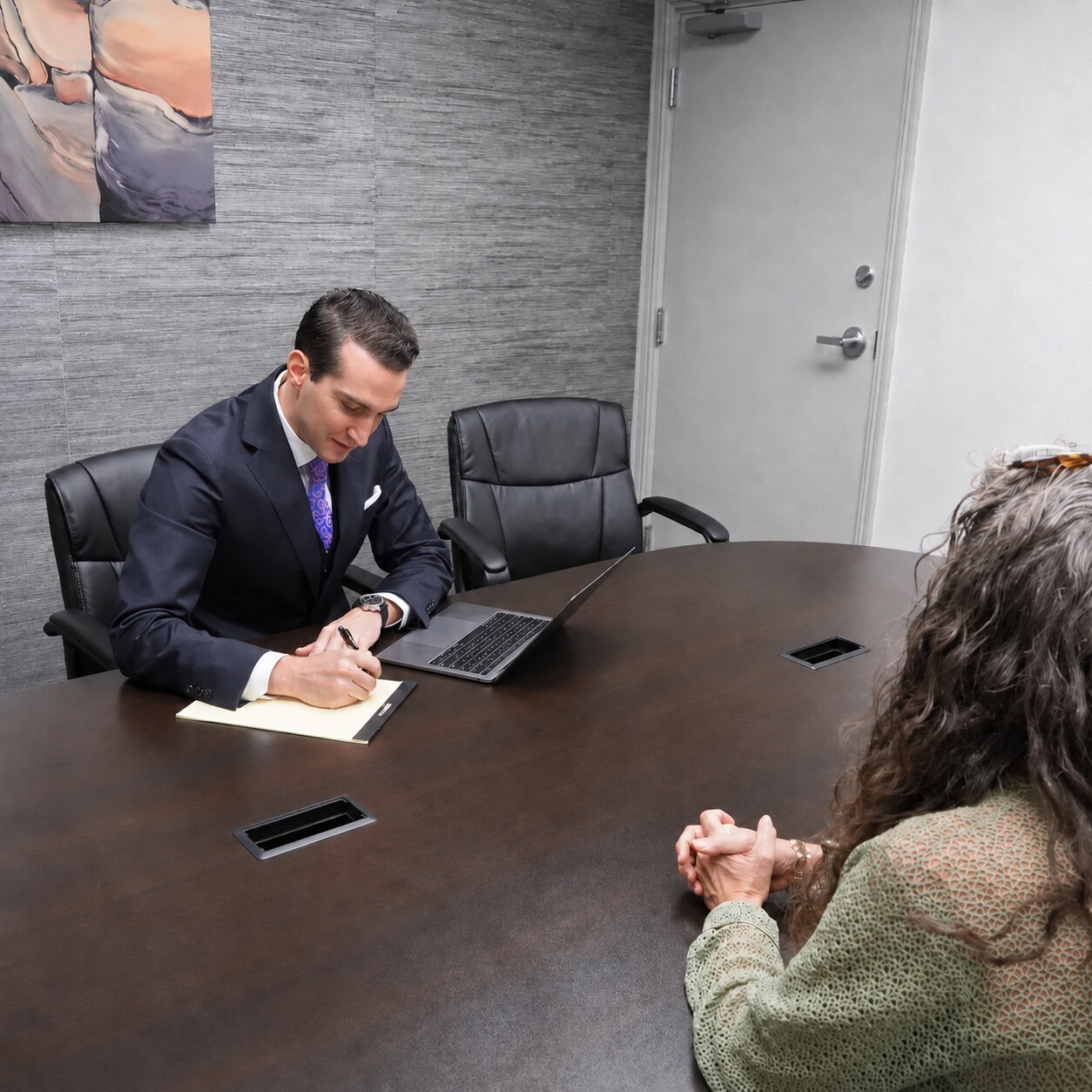
Jed Strong taking notes during a client meeting

How Strong Law Prepares Your Claim

Brain injury claims need patient documentation and clear explanations of everyday changes. Our team can help organize incident and medical records, evaluate future-loss evidence, and explain insurance or settlement questions. We also discuss a practical communication plan when fatigue or cognitive symptoms make the legal process harder.

Strong Law’s firm background includes insurance-defense experience. That perspective informs preparation, but each case depends on its own law and evidence. Before representation, we explain the written terms for fees and case expenses.

“I want to thank Jed and Tory of Strong Law for their outstanding help with my case. The attention to details and keeping me informed at all times made for a positive outcome. Thank you again for your help, determination, and hard work. I would not hesitate to recommend you to anyone in need of an excellent lawyer.” – Jaretta O.

Past results do not guarantee the outcome of another case.

What Questions Do Sandy Families Ask About Brain Injuries?

Can I Have a Brain Injury Claim With a Normal CT Scan?

A normal scan does not by itself rule out a concussion. The CDC explains that a scan is not needed to identify a mild TBI and may be used for other concerns, such as bleeding risk. A claim needs appropriate medical assessment, evidence of the incident, and support for the resulting losses.

What if Symptoms Were Not Obvious Immediately?

Record when symptoms appeared and tell a healthcare provider about the incident and any changes. Preserve the first treatment records and later evaluations. The timing needs review, but later-recognized symptoms do not justify assuming that an injury could not have occurred.

Can a Family Member Help With the Claim?

Family members can preserve records and describe observed changes in daily function. Authority to make legal decisions or sign documents is a separate issue. We can review whether consent, a power of attorney, or another arrangement is needed for the injured person’s circumstances.

Will Future Therapy and Help at Home Be Included?

Those needs may be part of a supported damages claim when they result from the injury and are legally recoverable. Recommendations, care hours, expected duration, and costs need evidence. A diagnosis alone does not establish every future expense.

What Deadline Applies to a Brain Injury Case?

The cause of the injury determines the legal process. Negligence, medical malpractice, government, and workplace matters can have different rules. The Utah Courts deadline guidance explains why the limit and starting date need a case-specific review. Do not assume ongoing treatment pauses the deadline.

What if an Earlier Condition Affected Memory or Concentration?

Tell the provider and lawyer about earlier symptoms, diagnoses, and treatment. A claim should explain what changed after this event. Prior records can help clarify the starting point. Do not leave out relevant history or assume every current difficulty has the same cause.

Do I Need to Wait Until Recovery Ends to Ask for Help?

No. A review can address evidence preservation and legal deadlines while care continues. The full effect of an injury may still be uncertain. Keep the legal team informed of updated recommendations instead of delaying the first conversation until every question is resolved.

How Can You Contact a Sandy Brain Injury Attorney?

Strong Law serves Sandy from our Utah office at 193 E Fort Union Boulevard, Midvale, UT 84047. Call 385-746-1803 or request a free case review. We can discuss the available records, important deadlines, and whether representation fits your matter.

Why Experience Matters In Brain Injury Cases
brain injury lawyer in Sandy, UT

We’ve helped thousands of accident victims like you

we win
98%

win rate in court

4.9
stars

on Google reviews

over
2,000

successful cases
Strong Law client sharing her experience in a video testimonial
play button
"I would definitely recommend them."
Lindsey - Washington
Wistia video thumbnail
stars

“Very professional, and treated me as an equal.”

"Just wanted to say thank you to Jed and his team at Strong Law. Not only was I happy with the outcome, but the entire process as a whole. I would definitely recommend this firm to anyone. Thanks again."

Nick S.
Utah
stars

“Unbelievable work!”

"I had a claim involving my own insurance company. I tried to negotiate with them, and they completely denied my claim – two times. I then hired Strong Law, and the change was instant. The insurance company immediately began negotiating, and Jed was able to secure an unbelievably good settlement. I will never again attempt to take-on an insurance company without Strong Law in my corner. Thank you!"

Jonathon
Washington
Strong Law attorney speaking by phone at an office desk
play button
A welcome from Jed Strong
Wistia video thumbnail
Strong Law client discussing her experience in a video testimonial
play button
"They've always been there for me."
Marsha - Washington
Wistia video thumbnail
stars

“I got justice and awesome compensation.”

"I hired Strong Law after my car accident. Jed and his team worked hard on my case. They were professional and compassionate through my surgery and as I recovered, and they were awesome on communication. I got justice and awesome compensation. I would recommend Strong Law to anyone in my situation."

Rick R.
Colorado
Empty courtroom used for civil legal proceedings

Get Your Free
Case Review

Contact us

Our team is standing by to help you.

How did you hear about us?
Privacy & Terms Agreement
I agree to Strong Law Accident & Injury Attorneys’
Privacy Policy and Terms & Conditions
SMS/Text Message Consent
By checking this box, I consent to receive SMS/text messages from Strong Law Accident & Injury Attorneys about my inquiry, consultations, appointment reminders, intake follow-up, case-related communications, and legal services. Message frequency varies. Message and data rates may apply. Reply STOP to opt out or HELP for help. Consent is not a condition of hiring our firm or receiving legal services. View our Terms & Conditions and Privacy Policy.
Strong Law attorney speaking with a prospective client by phone