
Anchorage Premises Liability Lawyer for Unsafe Property Injuries
An Anchorage premises liability lawyer can preserve time-sensitive evidence, identify every responsible party, and pursue compensation after an unsafe property injury.

If you were injured because a store, apartment complex, hotel, parking lot, office, or other property was not kept reasonably safe, an Anchorage premises liability lawyer can help. Strong Law Accident & Injury Attorneys investigates hazards, identifies responsible parties, and pursues compensation for people hurt throughout Anchorage and Southcentral Alaska. Our Anchorage personal injury team can also help if you are unsure which claim fits your situation.
Property-injury cases often turn on evidence that can disappear quickly. Surveillance video may be erased, snow or ice can melt, a spill can be cleaned, and a broken fixture may be repaired. Our team moves quickly to document the condition, preserve records, and deal with the insurance company while you focus on recovery.
Strong Law reports a 98% win rate in court and more than 2,000 successful cases. Past results do not guarantee a similar outcome. You pay no attorney fee unless we recover compensation for you. Request a free consultation or call 206-741-1053.
What Is Premises Liability in Alaska?
Premises liability applies when a dangerous condition on someone else’s property causes an injury. A claim may arise when the person or business responsible for the property fails to inspect, repair, warn, or take another reasonable safety step.
Alaska does not treat a property owner as an automatic insurer of every visitor. The key question is whether the owner or occupier acted reasonably. In Webb v. City and Borough of Sitka, the Alaska Supreme Court rejected rigid visitor categories as the only basis for duty and applied the usual rules of negligence.
The visit still matters. Courts may consider whether the person’s presence was foreseeable, how serious the danger was, and how hard it was to prevent the harm.
What Must You Prove in an Alaska Premises Liability Case?
You may have a claim if someone responsible for the property failed to use reasonable care, caused your injury, and left you with measurable losses. Four points generally must be shown:
- Duty: The defendant was responsible for using reasonable care under the circumstances.
- Breach: The defendant failed to inspect, repair, warn about, or otherwise address an unreasonable danger.
- Causation: The unsafe condition caused the incident and resulting injury.
- Damages: You suffered measurable losses such as medical expenses, lost income, pain, or disability.
Notice is often disputed, but Alaska does not make it a separate element in every premises case. In Edenshaw v. Safeway, Inc., the Alaska Supreme Court held that notice is one factor in deciding whether a grocery store acted reasonably. Evidence may show that the defendant created the condition, knew about it, or should have found it through reasonable inspection and maintenance.

Contents
What Types of Unsafe Property Cases Do We Handle?
Premises liability is broader than a simple fall. Strong Law evaluates claims involving:
- Snow or ice on walkways, stairs, entrances, and parking areas.
- Water, food, grease, or merchandise on store floors.
- Broken steps, loose handrails, weak balconies, or damaged flooring.
- Uneven sidewalks, potholes, hidden drop-offs, and unmarked changes in elevation.
- Poor lighting in stairwells, hallways, garages, and exterior areas.
- Negligent security, broken locks, missing gates, or foreseeable criminal activity.
- Falling merchandise, unsecured fixtures, and construction debris.
- Unsafe elevators, escalators, pools, decks, and recreational areas.
- Hazards in rental homes, apartment buildings, hotels, and short-term rentals.
- Dog attacks and other animal-related injuries on private or commercial property.
Negligent-security claims may involve broken locks, missing gates, poor lighting, or ignored warning signs. Police-call records, earlier complaints, and security plans may help show whether criminal conduct was foreseeable.
Many winter falls require a focused investigation of weather, maintenance, and notice. Learn more on our Anchorage slip-and-fall page. If an animal caused the injury, our Anchorage dog-bite lawyers can explain the evidence that may matter.
Who May Be Responsible for an Unsafe Property?
The property owner is not always the only defendant. Responsibility depends on who controlled the area, agreed to maintain it, or created the danger. A claim may involve:
- A commercial or residential property owner.
- A tenant or business operating on the property.
- A landlord, apartment manager, or property-management company.
- A snow-removal, cleaning, repair, or maintenance contractor.
- A security company or event operator.
- A builder, installer, manufacturer, or repair company.
- A municipality, state agency, or other government entity.
Contracts, leases, work orders, and maintenance records can show who controlled the area. Strong Law reviews each relationship before directing a claim.
If you were hurt while working on someone else’s property, you may have an Anchorage workers’ compensation claim and, in some cases, a separate claim against a third party.

How Do Anchorage Snow and Ice Rules Affect a Claim?
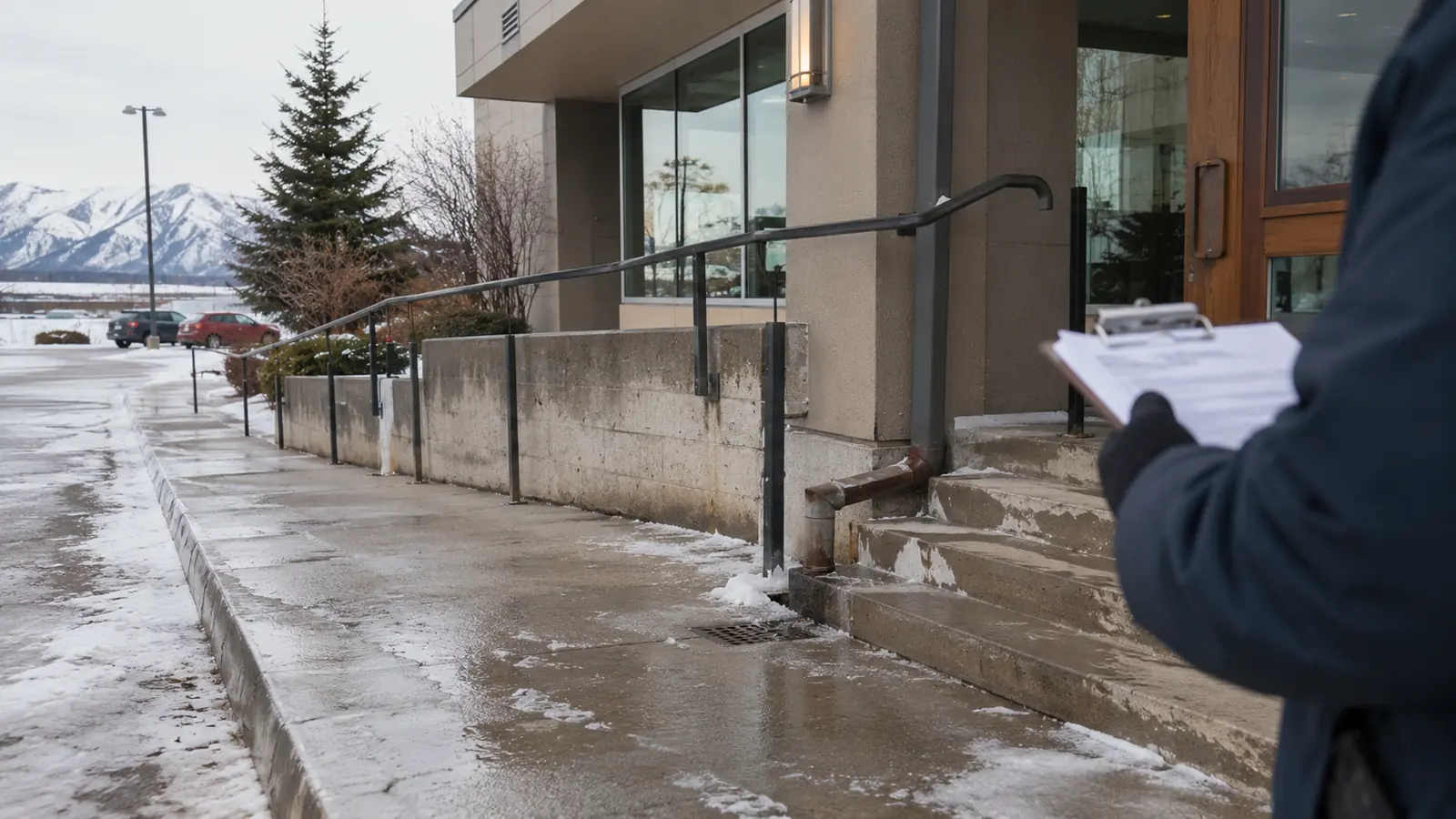
From Downtown hotels and Midtown stores to Spenard apartments, Anchorage property claims can involve snow, ice, poor lighting, broken surfaces, and delayed maintenance. Meltwater can refreeze near entrances, while snow can hide damaged pavement.
Anchorage Municipal Code § 24.80.090 covers certain public sidewalks and accessible parking spaces. Between 8:00 a.m. and 6:00 p.m., occupants must remove snow and remove or treat ice from covered areas. Two inches of snow, one inch of ice, a combined depth of two inches, or any untreated ice creates a rebuttable presumption of a code violation. That means a violation is presumed unless evidence shows otherwise. Section 24.80.100 limits “public sidewalk” to improved walkways in specified zoning districts.
The ordinance may help identify maintenance responsibilities and inform the standard of care. A violation does not by itself create a premises liability claim or automatically establish negligence. The facts still control, including the exact location, weather, timing, inspections, warnings, maintenance work, and whether reasonable measures could have reduced the risk.
Useful evidence may include weather data, security video, snow-removal contracts, salt or sand logs, photos of drainage and refreezing, and witness statements.
What Should You Do After an Injury on Unsafe Property?
Your health comes first. Once immediate medical needs are addressed, the following steps can protect important evidence:
- Report the incident. Tell the owner, manager, landlord, or employee and request the incident report.
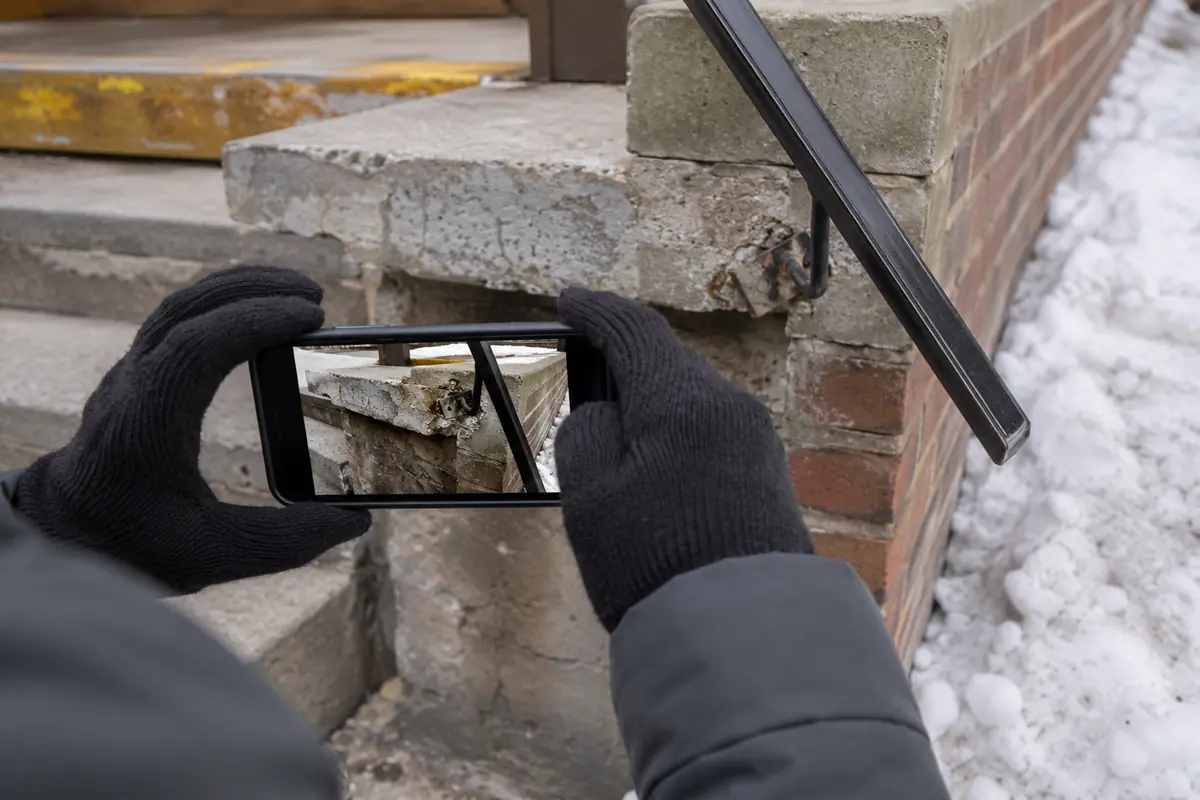
- Photograph the condition. Take close and wide views, including lighting, warnings, and surrounding walkways.
- Identify witnesses. Save contact information for anyone who saw the danger or the incident.
- Preserve physical evidence. Keep your shoes, clothing, and damaged items without cleaning or altering them.
- Get medical care. Explain how the injury happened and report all symptoms.
- Track your losses. Keep bills, receipts, wage records, travel costs, and notes about daily limits.
- Use care with insurers. A recorded statement or broad medical release may be used to minimize the claim.
- Get legal help early. A lawyer can seek video, logs, and other records before they disappear.
What Evidence Can Strengthen a Premises Liability Claim?
The strongest cases connect the dangerous condition to the defendant’s opportunity to prevent the injury. Depending on the property and accident, our investigation may seek:
- Surveillance, phone, dash-camera, or doorbell video.
- Incident reports and witness statements.
- Inspection schedules and cleaning logs.
- Repair requests, work orders, and maintenance records.
- Prior complaints or reports of similar incidents.
- Snow-removal, security, or property-management contracts.
- Building-code, permit, or enforcement records.
- Weather reports and photographs of changing conditions.
- Medical records connecting the accident to the injury.
- Expert analysis when engineering, security, or medical issues are disputed.
Property hazards can cause fractures, spinal damage, or traumatic brain injuries. Our Anchorage brain-injury team and Anchorage catastrophic-injury lawyer can evaluate long-term medical and financial needs.
Request a free premises liability case review or call 206-741-1053.

Can You Recover If the Hazard Was Visible or You Were Partly at Fault?
It depends. An Alaska property owner may have no duty to warn about an open and obvious condition or a risk created by the injured person’s own conduct. But visibility does not decide every case. Courts also ask whether the property posed an unreasonable danger, whether harm was foreseeable, and whether reasonable steps could have reduced the risk.
If duty and breach are shown, Alaska follows pure comparative fault under Alaska Stat. § 09.17.060. A person’s share of fault reduces compensation but does not always end the claim. If damages were $100,000 and the injured person was 25% at fault, recovery would generally fall to $75,000.
Insurers may argue that ice was obvious, a warning was present, or the injured person was distracted. The full evidence matters. A sign may have been blocked, lighting may have been poor, or no safe route may have existed.
What Compensation Is Available After a Property Injury?
Compensation depends on the evidence, injury, insurance, and each party’s share of fault. A claim may seek payment for:
- Emergency care, hospital bills, surgery, medication, and rehabilitation.
- Reasonably necessary future medical treatment.
- Lost wages and a reduced ability to earn money in the future.
- Out-of-pocket expenses related to the injury.
- Physical pain and emotional distress.
- Disability, disfigurement, and loss of enjoyment of life.
- Other losses supported by Alaska law and the facts of the case.
Alaska Stat. § 09.17.010 limits noneconomic damages. In most cases, the limit is the greater of $400,000 or life expectancy in years multiplied by $8,000. For severe permanent physical impairment or severe disfigurement, it is the greater of $1 million or life expectancy multiplied by $25,000. The limits do not apply to medical bills, lost earnings, or other economic losses.
No lawyer can value a claim from the accident type alone. Treatment, prognosis, missed work, proof of fault, and insurance all matter.
How Long Do You Have to File an Alaska Premises Liability Lawsuit?
Most Alaska personal injury lawsuits must be filed within two years. Alaska Stat. § 09.10.070 generally sets a two-year deadline for an action involving injury to a person. Missing the applicable deadline can prevent recovery, even when the underlying claim is strong.
Do not assume every case follows the same calendar. The date the period begins, rules that pause or extend the deadline, a claimant’s age or capacity, the defendant’s identity, and other facts can change the analysis.
Public-property claims depend on the government entity involved. The Municipality of Anchorage publishes a Notice of Claim Packet. State claims are subject to Alaska Stat. § 09.50.250 and immunity defenses. A federal tort claim generally must be presented in writing to the correct agency within two years. A lawsuit generally must follow within six months after the agency mails a final denial. An ordinary insurance claim may not preserve the right to sue, so prompt review matters.
How Long Does a Premises Liability Case Take?
A straightforward claim may resolve in several months. A disputed or serious-injury case can take a year or longer. Timing depends on medical care, notice, the number of defendants, disputed fault, and whether a lawsuit or trial is needed.
An early settlement can leave future care or lost income unpaid. The goal is to document the claim and pursue a fair result without needless delay.
What Does an Anchorage Premises Liability Lawyer Do?
An Anchorage premises liability lawyer identifies who controlled the property, preserves evidence, documents losses, and handles negotiations or litigation. Legal help is especially useful when injuries are serious, fault is disputed, several companies share control, or government property is involved.
Why Choose Strong Law for an Anchorage Property Injury?
Premises cases require proof connecting the unsafe condition to a responsible person or company. Key facts include who created it, what could be discovered, and which reasonable steps could have prevented harm.
Strong Law Accident & Injury Attorneys offers:
- A local Anchorage office serving injured people across Southcentral Alaska.
- Early investigation and preservation of time-sensitive evidence.
- Experience addressing insurer blame-shifting and low-value tactics.
- Insight from attorney Jed Strong’s prior work as in-house counsel for GEICO, including how insurers evaluate and dispute injury claims.
- A claim strategy connecting property evidence to medical records, lost income, and daily limitations.
- No attorney fee unless we recover compensation for you.
We explain the process, keep you informed, and prepare every claim with the evidence needed for negotiation or litigation.
Frequently Asked Questions
What is a premises liability lawsuit?
A premises liability lawsuit alleges that an owner, occupier, manager, contractor, or other responsible party failed to use reasonable care. The injured person must connect that failure to the accident, injuries, and losses.
What are examples of premises liability cases?
Examples include falls on ice, spills, broken stairs, uneven pavement, poor lighting, falling merchandise, unsafe balconies, negligent security, pool hazards, elevator incidents, and some dog attacks. The issue is whether an unsafe property condition caused injury and a responsible party failed to use reasonable care.
Does the property owner have to know about the hazard?
Not necessarily. In an Alaska grocery-store case, actual or constructive notice is relevant but is not a separate element of the injured person’s initial case. Evidence may show that the business created the condition, knew about it, or should have found it through reasonable inspection. Different rules may apply to public property.
Can I recover if the danger was open and obvious?
Potentially, but an open and obvious condition can defeat a duty-to-warn theory in Alaska. An owner also may not have to protect someone from a risk created by that person’s conduct. Other cases turn on whether the property posed an unreasonable risk and whether harm was foreseeable. If liability exists, comparative fault may reduce recovery.
Can I make a claim for an injury on government property?
Potentially, but municipal, state, and federal claims can follow different rules. Special forms, procedures, defenses, and deadlines may apply. Get prompt advice instead of relying only on the general two-year period.
How much does an Anchorage premises liability lawyer cost?
Strong Law handles personal injury cases on a contingency-fee basis. You pay no attorney fee unless we recover compensation for you. The initial consultation is free.
How long do I have to file a premises liability lawsuit in Alaska?
Alaska generally allows two years to file a personal injury lawsuit, but exceptions and special public-entity rules may apply. Evidence can disappear much sooner, so early investigation matters.
Talk With an Anchorage Premises Liability Attorney
If unsafe property caused your injury, Strong Law can review what happened, explain your options, and begin preserving the evidence. Your consultation is free, and you pay no attorney fee unless we recover compensation for you.
Contact Strong Law Accident & Injury Attorneys for a free case review or call 206-741-1053.
We’ve helped thousands of accident victims like you
we win
98%
4.9
stars
over
2,000


“Very professional, and treated me as an equal.”
"Just wanted to say thank you to Jed and his team at Strong Law. Not only was I happy with the outcome, but the entire process as a whole. I would definitely recommend this firm to anyone. Thanks again."
“Unbelievable work!”
"I had a claim involving my own insurance company. I tried to negotiate with them, and they completely denied my claim – two times. I then hired Strong Law, and the change was instant. The insurance company immediately began negotiating, and Jed was able to secure an unbelievably good settlement. I will never again attempt to take-on an insurance company without Strong Law in my corner. Thank you!"
“I got justice and awesome compensation.”
"I hired Strong Law after my car accident. Jed and his team worked hard on my case. They were professional and compassionate through my surgery and as I recovered, and they were awesome on communication. I got justice and awesome compensation. I would recommend Strong Law to anyone in my situation."
Get Your Free
Case Review

Contact us
Our team is standing by to help you.