


Denver Car Accident Lawyers
Evidence-focused help for injured people facing fault, insurance, and recovery disputes after a Denver crash.

If you were hurt in a Denver collision, a car accident lawyer can help you preserve evidence, identify available insurance, and pursue compensation from the responsible parties. At Strong Law Accident & Injury Attorneys, we represent people injured on I-25, I-70, US 6, Speer Boulevard, and streets throughout Denver. Our founding attorney, Jed Strong, previously worked as in-house counsel for GEICO. He now uses that insurer-side experience to advocate for injured clients.
Video may be overwritten, vehicles may be repaired, and witnesses can become harder to locate while injuries and financial losses are still developing. We investigate the collision, handle insurance communications, and document both current and future losses.
We handle qualifying cases on a contingency-fee basis. You pay no upfront attorney fee, and you owe no attorney fee unless we recover compensation for you, subject to the written agreement. Call 720-738-4913 for a Free Case Review.
What Should You Do After a Car Accident in Denver?
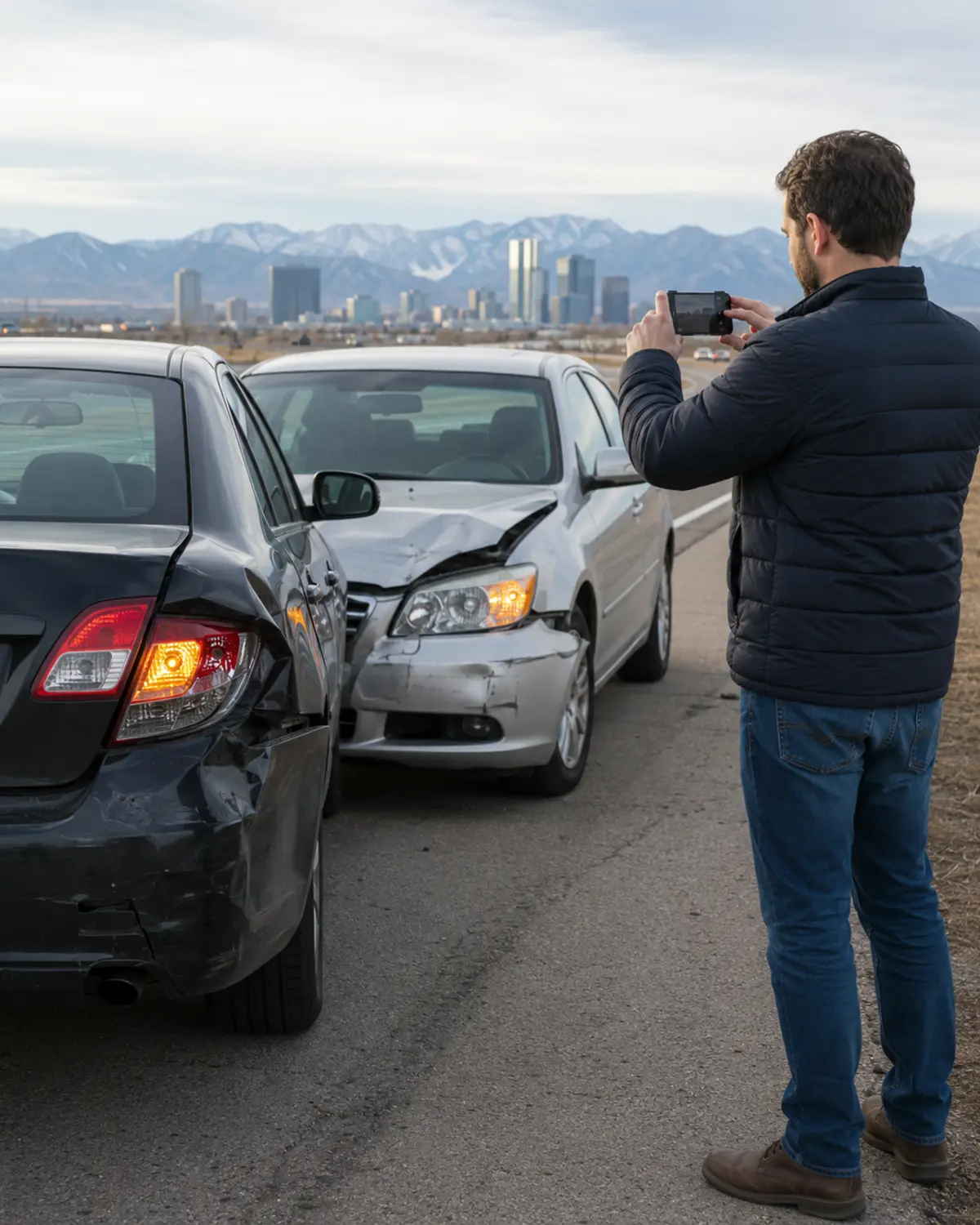
After a Denver crash, get away from immediate danger, call 911 when needed, exchange information, document the scene, and seek appropriate medical care. Preserve the vehicle and digital evidence, report the collision, and avoid guessing about fault or signing a broad release before the facts and coverage are clear.
If you can act safely:
- Check for injuries and follow the dispatcher’s or responding officer’s directions.
- Photograph the vehicles, plates, impact points, road, signals, lane markings, debris, weather, and visible injuries.
- Exchange names, driver’s-license details, registration, and insurance information.
- Ask witnesses for their names and contact information.
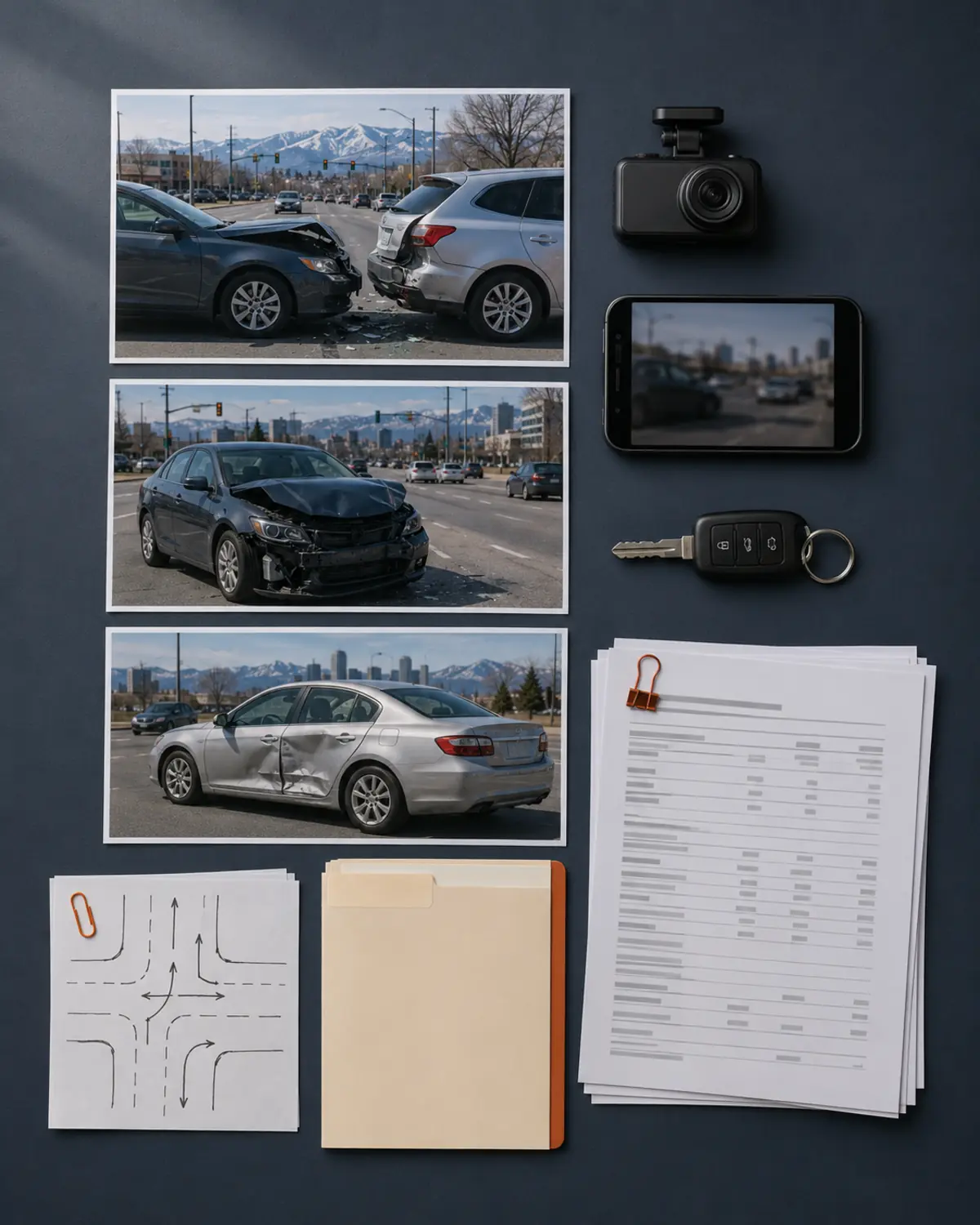
- Save the case number, tow location, dashcam files, phone photographs, and insurer claim numbers.
- Do not authorize disposal of a seriously damaged vehicle before important physical evidence has been documented.
Some symptoms become more noticeable after the initial shock fades. Seek prompt evaluation for pain, stiffness, headache, dizziness, confusion, weakness, numbness, breathing trouble, abdominal pain, or another concerning change. Follow the clinician’s instructions and accurately report how the symptoms develop.
A crash can cause whiplash, a concussion, broken bones, spinal injuries, or internal injuries. Some serious injuries are not obvious at the scene. Seek prompt care for new or worsening symptoms, and call 911 for an emergency.
For the complete reporting, medical, insurance, towing, and recordkeeping sequence, follow our step-by-step guide to what to do after a car accident in Denver.

Contents
How Do You Report a Denver Crash and Obtain the Report?
Denver Police says drivers generally must stop, exchange required information, and report a crash. Call 911 for injuries, a dangerous location, suspected impairment, a hit-and-run, major damage, or another urgent risk. During an Accident Alert, call 911 and follow the dispatcher’s instructions because an officer may not be sent to every collision.
The correct record depends on how the crash was reported:
- Officer-created Denver crash report: Request it from the Denver Police Records Unit after it closes. Denver says a standard report typically becomes available five to seven days later, while an active investigation may take longer.
- Driver-filed online report: Obtain it through the Colorado crash-record system, not Denver Police.
- Investigation Report: Denver uses this path for fatal or serious-injury crashes and certain juvenile, city-vehicle, active, or sealed cases.
Save the case or counter-report number and everything submitted. A report can identify people, vehicles, insurance, and initial observations, but it does not settle civil fault. Current request options are on the Denver Police Records page.
Who May Be Responsible and Which Insurance May Apply?
The at-fault driver is often the first party to examine. The facts may also point to a vehicle owner, employer, rideshare company, commercial carrier, repair shop, manufacturer, contractor, or public entity. Each may have a separate policy or source of payment.
The available sources of payment may include:
- Liability coverage: The at-fault driver’s insurer may pay covered losses. Colorado’s required minimums are $25,000 for one person’s bodily injury or death, $50,000 for everyone injured or killed in one crash, and $15,000 for property damage. These are minimum limits, not a measure of claim value, and serious injuries can exceed them.
- Medical payments coverage: MedPay is coverage under your own auto policy for medically necessary, accident-related care. C.R.S. § 10-4-635 generally requires Colorado auto policies to include $5,000 in MedPay unless the person named on the policy rejects it. The policy and rejection records must be checked.
- Health insurance: Health insurance may pay for care under the plan. Deductibles and copayments may apply, and the plan may seek repayment from a later recovery.
- Uninsured or underinsured motorist coverage: UM/UIM may cover bodily-injury losses when the responsible driver has no insurance or too little coverage. C.R.S. § 10-4-609 generally requires Colorado auto policies to include UM/UIM coverage unless the person named on the policy rejects it in writing. That person may also choose limits below the policy’s bodily-injury liability limits.
- Collision or other property coverage: Collision coverage may address damage to the insured vehicle, usually subject to a deductible. Bodily-injury UM/UIM should not be assumed to pay vehicle damage.
- Employer, rideshare, commercial, or umbrella coverage: Additional policies may apply when a driver was working, using a rideshare app, operating someone else’s vehicle, or covered by a higher-limit policy.
Coverage depends on the policy and the facts. Not every source will apply, and they may not pay in the same order. We review policy records, household coverage, vehicle ownership, employment, and app status before advising a client about a release. Commercial crashes may require the added evidence and coverage review described on our Denver truck accident lawyer page.
What Commonly Causes Denver Car Accidents?
Most claims turn on what each driver did, what the road required, and whether that conduct caused the collision. Common factors include speeding, following too closely, distraction, impairment, fatigue, unsafe turns or lane changes, failure to yield, and driving too fast for visibility or road conditions.
I-25 and I-70 can involve high-speed impacts, sudden slowdowns, and several vehicles. Downtown streets and Speer Boulevard add intersections, construction, and changing lane movements. These are conditions to investigate, not proof of negligence.
Snow and ice do not excuse unsafe driving. Tire condition, traction devices, active restrictions, visibility, and speed may matter. Our Colorado traction-law guide for Denver and I-70 drivers explains the current rules without treating a violation as automatic proof of fault.
Different evidence and insurance issues may apply to Denver motorcycle crashes and Denver pedestrian collisions.

What Evidence Can Prove Fault?
Evidence of fault should show how the collision happened, what a careful driver should have done, and how the unsafe conduct caused the impact. The strongest cases usually combine physical, digital, documentary, and witness evidence rather than relying on one person’s memory.
Useful proof may include:
- Scene photographs, vehicle positions, damage, debris, tire marks, lane markings, signals, lighting, weather, and sight lines.
- The crash report, 911 audio, officer video, citations, witnesses, and statements made at the scene.
- Dashcam, business, home, transit, traffic, or police-camera video.
- Vehicle event data, infotainment records, onboard cameras, repair scans, and inspection findings.
- Phone, navigation, delivery, rideshare, or other app records when legally obtainable and relevant.
- Road, signal, maintenance, or construction records when a roadway condition is genuinely at issue.
- Reconstruction or engineering analysis in a serious or disputed crash.
Video can be especially valuable at an intersection or when drivers give conflicting accounts, but availability and retention vary. Record the exact location, direction of travel, and narrow time window. Because public and private recordings may be overwritten quickly, act promptly to request and preserve Denver traffic-camera footage.
A citation or crash-report opinion may be relevant, but neither necessarily decides a civil claim. All available evidence should be compared before fault is assigned.
What Evidence Can Prove Your Injuries and Losses?
Damages evidence should connect the crash to the injury and show how the injury changed the person’s health, work, finances, and daily life. A medical bill shows a charge. It may not explain future care, lasting limits, or why the treatment was needed.
Important records may include:
- Emergency, hospital, specialist, therapy, imaging, pharmacy, and rehabilitation records.
- Medical bills, benefit statements, mileage, medication costs, and assistive-device expenses.
- Employer verification, wage statements, work restrictions, attendance records, and leave records.
- Tax returns, business records, contracts, and expert analysis for self-employed or long-term earning claims.
- Treating-provider opinions about diagnosis, causation, impairment, future care, and restrictions.
- Photographs, calendars, and a factual recovery log showing symptoms and missed activities.
- Repair estimates, total-loss valuations, towing and storage bills, rental agreements, and damaged-property records.
Traumatic brain injury, spinal injury, amputation, or another permanent impairment may require life-care, vocational, or economic analysis. Our Denver pages on brain injury claims and catastrophic injuries explain the additional proof that may be needed.
Need help preserving evidence or identifying coverage? Call 720-738-4913 for a Free Case Review. We can review the crash, available policy information, and urgent deadlines before time-sensitive evidence disappears.
What If the Insurance Company Blames You?
Colorado uses modified comparative negligence. Under C.R.S. § 13-21-111, your damages are reduced by your percentage of fault. For example, 20% fault would reduce the damages by 20%. A person who is 50% or more at fault generally cannot recover.
An insurer may claim that you were speeding, following too closely, distracted, entering on a changing light, or failing to react. That claim is not a final decision. Video, witnesses, vehicle data, signal timing, damage patterns, and reconstruction can support or contradict it.
More than one person can share fault. In some cases, a court or jury may assign a share to a person or company that is not named as a defendant. C.R.S. § 13-21-111.5 sets rules for these designated nonparties. A chain-reaction crash can therefore require an investigation of every vehicle and source of evidence.
What Compensation Can a Denver Car-Accident Claim Include?
A claim may include the losses that the evidence connects to the crash. There is no reliable average settlement because injury severity, treatment, fault, insurance, future effects, and the quality of proof differ from case to case.
Recoverable losses may include:
- Past and future medical care, rehabilitation, medication, and equipment.
- Lost income, used leave, and reduced future earning ability.
- Vehicle and personal-property damage, towing, storage, rental, and loss-of-use expenses.
- Physical pain, emotional distress, impairment, disfigurement, and reduced ability to perform normal activities.
- Household services or support made necessary by the injury.
Under C.R.S. § 13-21-102, exemplary damages may be available in limited cases involving fraud, malice, or willful and wanton conduct. They are not available in an ordinary negligence claim simply because a crash was serious. If the collision caused a death, surviving family members may have a separate claim with different rules. Our Denver wrongful death lawyer page explains that process.
How Long Do You Have to File a Denver Car-Accident Claim?
C.R.S. § 13-80-101(1)(n) generally gives three years to bring a bodily-injury or property-damage action arising from the use or operation of a motor vehicle. That rule does not set the deadline for every claim.
Other deadlines may apply to wrongful-death, insurance, product, or public-entity claims. If Denver, Colorado, or another public body may be responsible, C.R.S. § 24-10-109 may require written notice to the correct office within 182 days after the injury is discovered. Denver’s claim instructions explain how to file that notice with the City and County of Denver.
Sending notice is not the same as filing a lawsuit and does not replace the lawsuit deadline. A government vehicle’s involvement also does not by itself prove fault or overcome immunity. The correct deadline depends on the parties, claims, and facts. Evidence often disappears much sooner. Video can be overwritten, vehicles repaired, and road conditions changed.
How We Handle a Denver Car-Accident Case
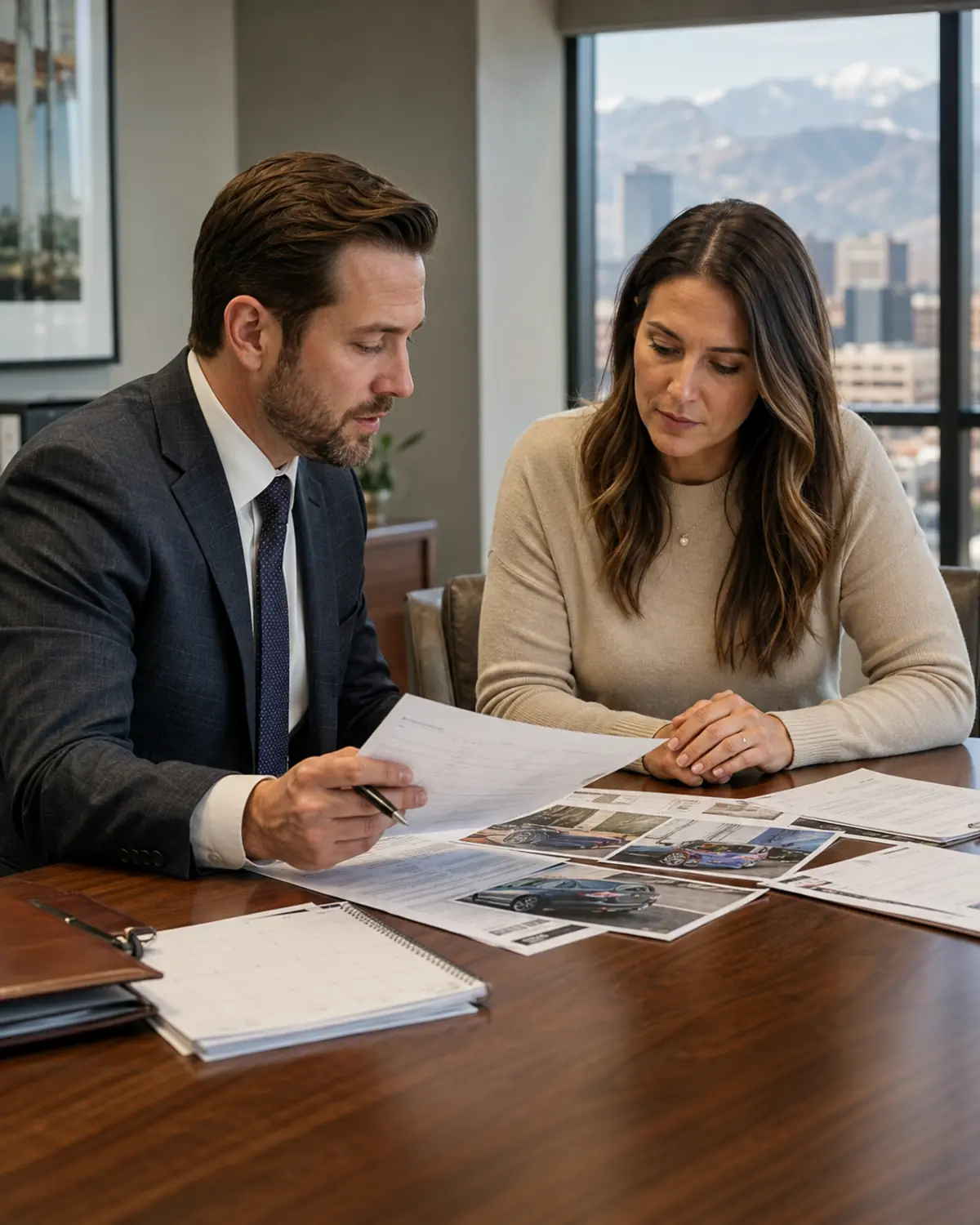
We start by identifying the medical, evidence, and insurance issues that need immediate attention. From there, we may:
- Review the crash facts, vehicle ownership, employment, household policies, and available coverage.
- Send preservation requests for video, vehicles, electronic data, and business or government records.
- Obtain reports, interview witnesses, inspect the scene, and consult qualified experts when needed.
- Organize medical evidence, income loss, future-care information, and daily-life limitations.
- Present a supported demand after the injuries and damages can be responsibly evaluated.
- Negotiate with insurers and file suit when litigation is appropriate.
The process is not identical in every case. A straightforward rear-end claim may turn on medical causation and damages. A multi-vehicle, rideshare, commercial, hit-and-run, or government crash may require several coverage and liability investigations at once.
We keep you informed, explain major decisions, and handle insurer communications so you can focus on treatment and recovery.
Why Choose Strong Law After a Denver Crash?
Our Denver office is at 2806 Speer Blvd, Denver, CO 80211. We offer Free Case Reviews and handle qualifying cases on a contingency-fee basis. You owe no attorney fee unless we recover compensation for you, subject to the written agreement.
Colorado client Rick R. said after his car-accident case: “They were professional and compassionate through my surgery and as I recovered, and they were awesome on communication.”
We do not promise a result or rely on an average settlement to value your case. We build each claim around its evidence, the applicable law, available insurance, and documented losses.
For negligence claims that do not arise from a vehicle collision, visit our broader Denver personal injury lawyer page.
Frequently Asked Questions
Do I Have to Report a Car Accident in Denver?
Generally, yes. Denver says drivers must stop, exchange required information, and report a crash, though an Accident Alert may change the response. Call 911 for injuries, danger, suspected impairment, a hit-and-run, or another urgent risk, and follow the dispatcher’s instructions.
How Can I Obtain a Denver Crash Report?
Request an officer-created report through Denver Police Records after it closes. If you filed online, obtain it through Colorado’s crash-reporting system. Fatal, serious-injury, juvenile, city-vehicle, active, or sealed cases may require an Investigation Report.
Can I Recover Compensation If I Was Partly at Fault?
Possibly. Colorado reduces damages by your fault percentage. For example, 20% fault would reduce the damages by 20%. A person who is 50% or more at fault generally cannot recover. An insurer’s claim about fault is not a final decision.
What Does MedPay Cover After a Colorado Car Accident?
MedPay is coverage under your own auto policy for medically necessary, accident-related care. It may pay before fault is decided. The amount available depends on the policy limit and whether the person named on the policy rejected the coverage.
What If the Other Driver Was Uninsured or Underinsured?
UM/UIM may cover bodily-injury losses when the responsible driver has no insurance or too little coverage. The policy, limits, rejection records, and facts determine whether it applies. Vehicle damage may require collision or another type of property coverage.
Should I Give an Insurance Adjuster a Recorded Statement?
You may have a contractual duty to cooperate with your own insurer, but that does not mean every requested recorded statement or release should be given immediately. Ask who is requesting it, what the policy requires, and what effect it may have. Give accurate information and do not guess about fault, speed, distance, or injuries.
Should I Repair or Dispose of My Vehicle After the Crash?
Do not dispose of a seriously damaged vehicle before photographs and important physical or electronic evidence are preserved. Track the tow location and storage charges. Repairs may proceed after evidence, inspection, and ownership issues are addressed.
How Much Is a Denver Car-Accident Claim Worth?
There is no dependable average. Value depends on fault evidence, injury severity, treatment, future needs, lost income, lasting impairment, property loss, and available insurance. Documented future effects should be evaluated before a full release is signed.
Speak With a Denver Car Accident Lawyer
If you were injured in a Denver collision, we can investigate fault, preserve time-sensitive evidence, identify available insurance, and document the full effect of the crash.
Our Denver office is located at 2806 Speer Blvd, Denver, CO 80211. Call 720-738-4913 or contact us online for a Free Case Review.
Contact us
Our team is standing by to help you.