

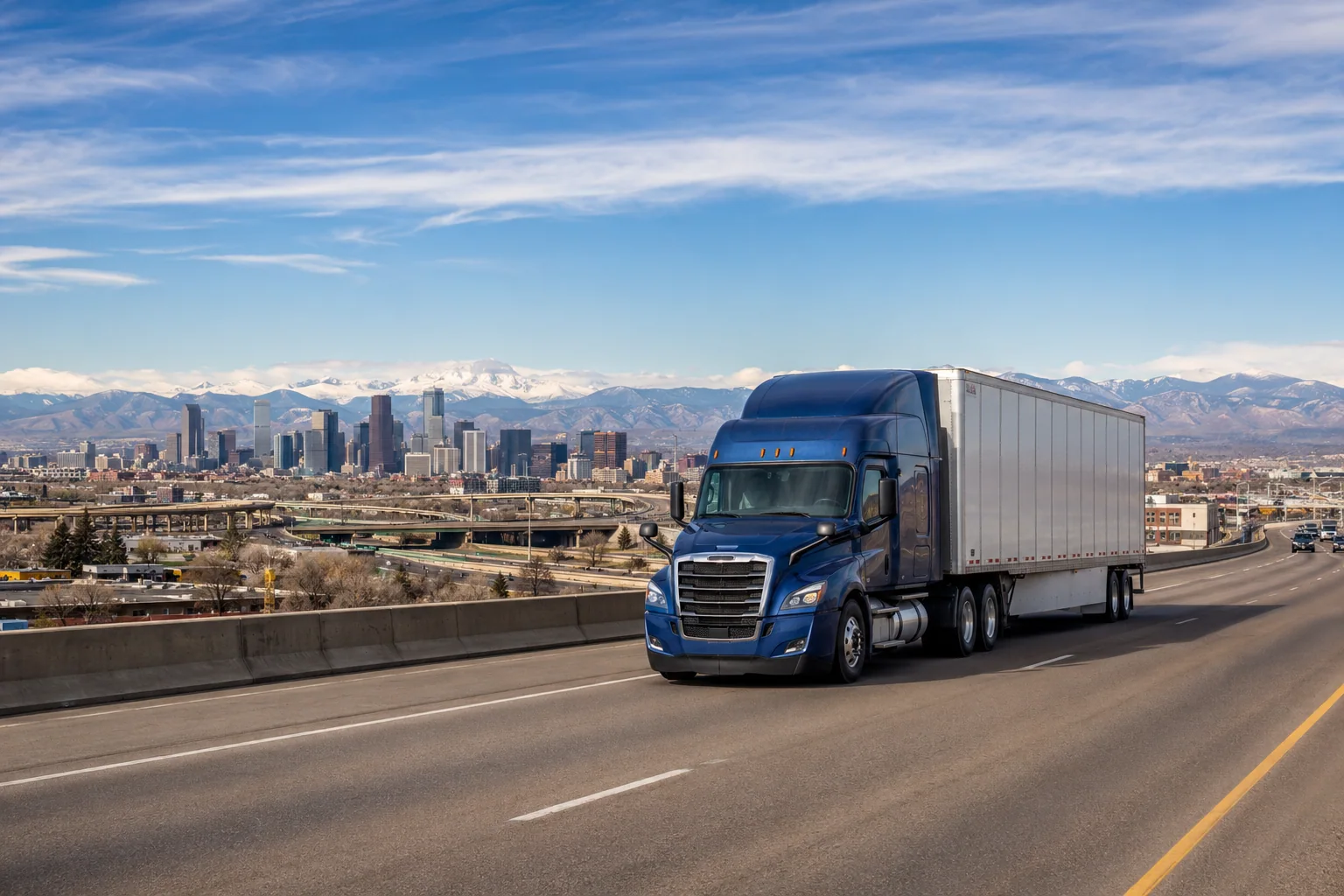
Denver Truck Accident Lawyer
Injured in a Denver truck crash? We move quickly to preserve evidence, identify responsible parties, and protect your claim.

If you were injured in a Denver crash involving a semi, tractor-trailer, delivery truck, or other commercial vehicle, focus first on medical care and protecting evidence. Our Denver truck accident lawyers identify who controls the truck and who may hold its electronic records, cargo documents, and insurance information. We move quickly to preserve available evidence before the vehicle is repaired or records are overwritten or lost.
We represent people hurt in commercial crashes on I-25, I-70, I-76, and streets throughout Denver. We investigate the businesses involved, manage insurance communications, and document how the collision affected your health, work, and daily life.
Request a Free Case Review or call 720-738-4913. For qualifying matters, you pay no attorney fee upfront. We collect a fee only if we recover compensation for you. The written representation agreement explains attorney fees, case costs, and who is responsible for those costs.
What Should You Do After a Denver Truck Crash?
Call 911, get medical help, and move away from traffic if you can do so safely. A commercial-truck scene can change quickly, so gather truck-specific information without putting yourself or anyone else at risk.
When possible:
- Photograph the tractor and trailer license plates separately.
- Capture the carrier name, owner markings, USDOT or MC number, and unit numbers.
- Photograph cargo, company logos, placards, and hazardous-material markings from a safe distance.
- Get the driver’s name, license, insurance information, employer, and contact details.
- Record witness names and contact information before people leave.
- Photograph the vehicles, debris, skid marks, traffic controls, road surface, weather, and sight lines.
- Note visible dashcams and nearby business, traffic, or security cameras.
- Find out where the truck and your vehicle will be towed or stored.
Seek prompt medical care even if pain or concussion symptoms are not obvious at the scene. Report the crash to your insurer, but do not guess about fault or minimize your injuries. Before giving a recorded statement, confirm who is requesting it and what your own policy requires of you.
Our Denver after-crash guide explains the broader reporting, medical, insurance, and documentation steps that follow a collision.
Why Is a Truck Claim Different From a Car-Accident Claim?
A passenger-vehicle claim often centers on two drivers. A commercial-truck claim may involve the driver, motor carrier, tractor owner, trailer owner, maintenance provider, shipper, cargo loader, dispatcher, and other businesses.
The most important proof may be held by companies that were not at the scene. Electronic logs, dispatch messages, maintenance records, telematics, cargo documents, and several insurance policies can affect the case. Federal rules may apply to some carriers and trips, while different state requirements or exceptions may control others.
Not every commercial crash raises the same issues. A local delivery-van case may involve different records and rules than an interstate tractor-trailer case. If your crash involved only passenger vehicles, learn more about how our Denver car accident lawyers handle those claims. If the truck struck someone on a motorcycle, our Denver motorcycle accident lawyers page explains rider-specific injury, insurance, and evidence issues.

Contents
What Evidence Can Prove What Happened?
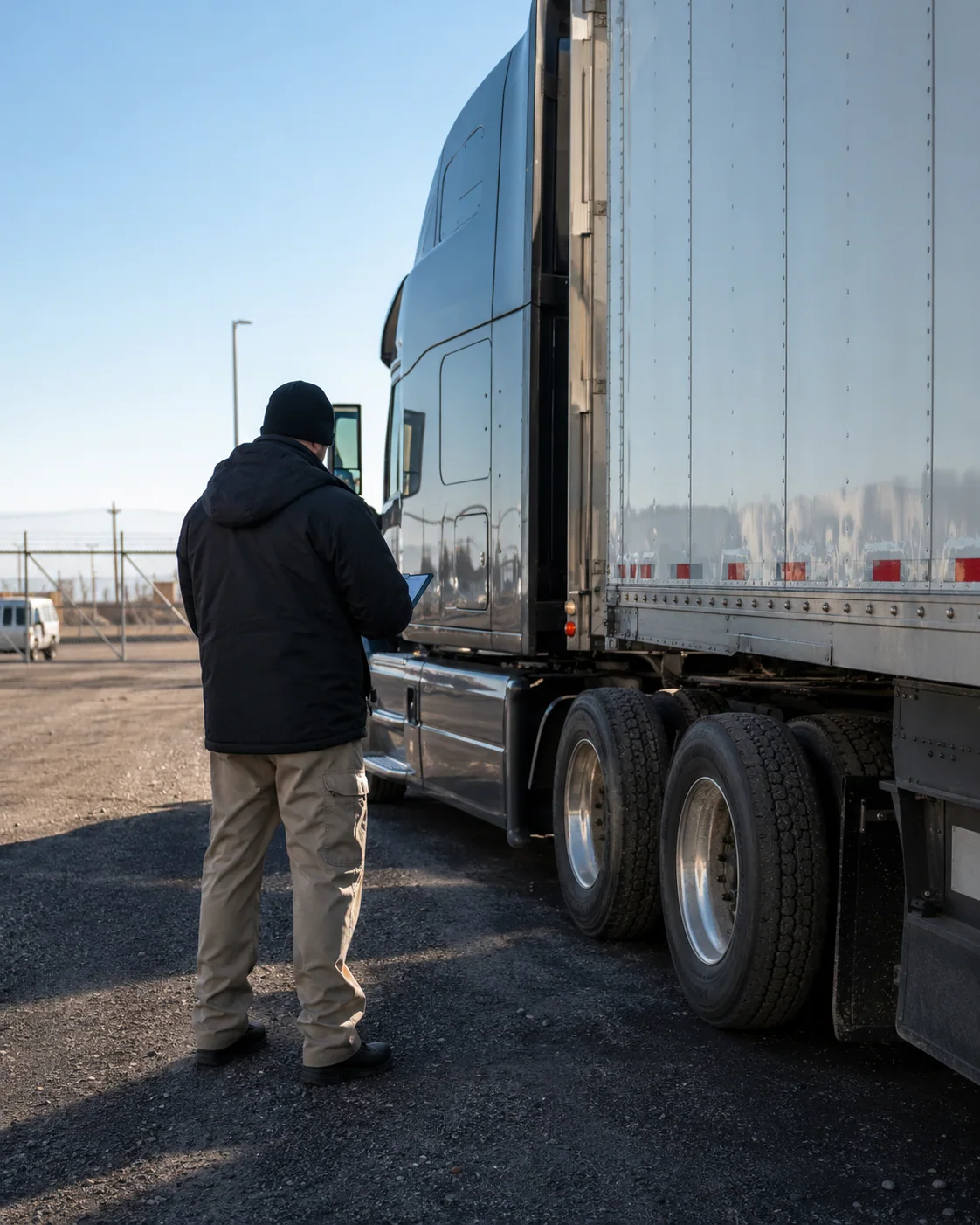
The right evidence depends on the vehicle, carrier, cargo, route, and cause of the crash. We identify what may exist, who controls it, and what it could prove.
| Evidence | Likely custodian | What it may help establish |
|---|---|---|
| EvidenceElectronic logs, edits, and unassigned driving time | Likely custodianMotor carrier or electronic logging device (ELD) provider | What it may help establishDuty status, edits, and possible hours-of-service issues |
| EvidenceEngine-control, event-data, and telematics information | Likely custodianCarrier, owner, or technology provider | What it may help establishSpeed, braking, location, or vehicle operation |
| EvidenceDispatch, trip, and GPS data | Likely custodianCarrier, dispatcher, or platform provider | What it may help establishRoute, timing, instructions, stops, and communications |
| EvidenceDriver qualification file and training records | Likely custodianMotor carrier | What it may help establishLicensing, qualifications, record review, and training |
| EvidenceInspection, repair, and maintenance records | Likely custodianCarrier, owner, repair shop, or contractor | What it may help establishVehicle condition, defects, repair history, and notice |
| EvidenceBills of lading, weight tickets, and loading records | Likely custodianShipper, loader, broker, or carrier | What it may help establishCargo weight, securement, loading decisions, and control |
| EvidenceDashcam, traffic, and nearby surveillance video | Likely custodianCarrier, public agency, or property owner | What it may help establishCrash sequence, visibility, signals, and vehicle movement |
| EvidenceTow, storage, inspection, and salvage records | Likely custodianTow yard, owner, insurer, or repair facility | What it may help establishVehicle location, condition, repair, and possible disposal |
A preservation notice should identify the records and physical evidence tied to the crash. No single retention period covers all trucking evidence. For carriers covered by the logging rule, 49 C.F.R. § 395.8 generally requires duty-status records and supporting documents to be kept for six months. 49 C.F.R. § 390.15 requires a motor carrier to keep an accident register for three years after a crash that meets the federal accident definition. That definition does not include every minor collision. Video, telematics, phone, dispatch, and vehicle-system data may be kept for different lengths of time or overwritten sooner.
Video can matter when a crash occurs near a Denver intersection, business, public building, or managed roadway. Our guide to obtaining Denver traffic-camera footage after a crash explains how to identify the camera owner and act quickly.
Talk with our team about preserving evidence in a Free Case Review.
Who May Be Responsible for a Truck Crash?
The truck driver may be responsible for speeding, distraction, impairment, unsafe lane changes, following too closely, or driving while fatigued. The investigation should not stop with the driver.
Depending on the facts, responsibility may also involve:
- A motor carrier that controlled the driver, route, schedule, safety program, or vehicle.
- A tractor or trailer owner that failed to address a known mechanical problem.
- A maintenance or repair provider that performed inadequate work.
- A shipper or loading company that controlled unsafe loading or securement.
- A manufacturer or seller responsible for a defective vehicle or component.
- Another driver whose conduct contributed to a chain-reaction crash.
- A public agency or contractor whose vehicle or road work contributed to the crash.
A logo or business contract does not by itself make a company liable. We look at who controlled the work, what each party did, and which rules apply. This matters when brokers, shippers, or independent contractors are involved.
When a commercial crash causes a death, different rules govern who may bring the claim, what damages are available, and when it must be filed. Our Denver wrongful death lawyer page explains those claims.

How Do Federal and Colorado Trucking Rules Affect a Claim?
Federal and Colorado trucking rules may set safety duties and recordkeeping requirements. A violation may support a claim if it helped cause the crash, but it does not prove fault by itself. The rules that apply depend on the vehicle, weight, cargo, route, carrier, and any exceptions.
Important examples include:
- Hours of service: For covered property-carrying operations, 49 C.F.R. § 395.3 limits how long a driver may drive, requires time off duty, and caps on-duty time over seven or eight days. Exceptions may apply. ELD data, dispatch records, fuel receipts, and location history can help show whether the driver’s log matches the trip.
- Driver qualification: Under 49 C.F.R. § 391.51, a covered carrier must keep a qualification file for each driver it employs. The file may show the driver’s license, driving history, medical qualification, and the carrier’s review.
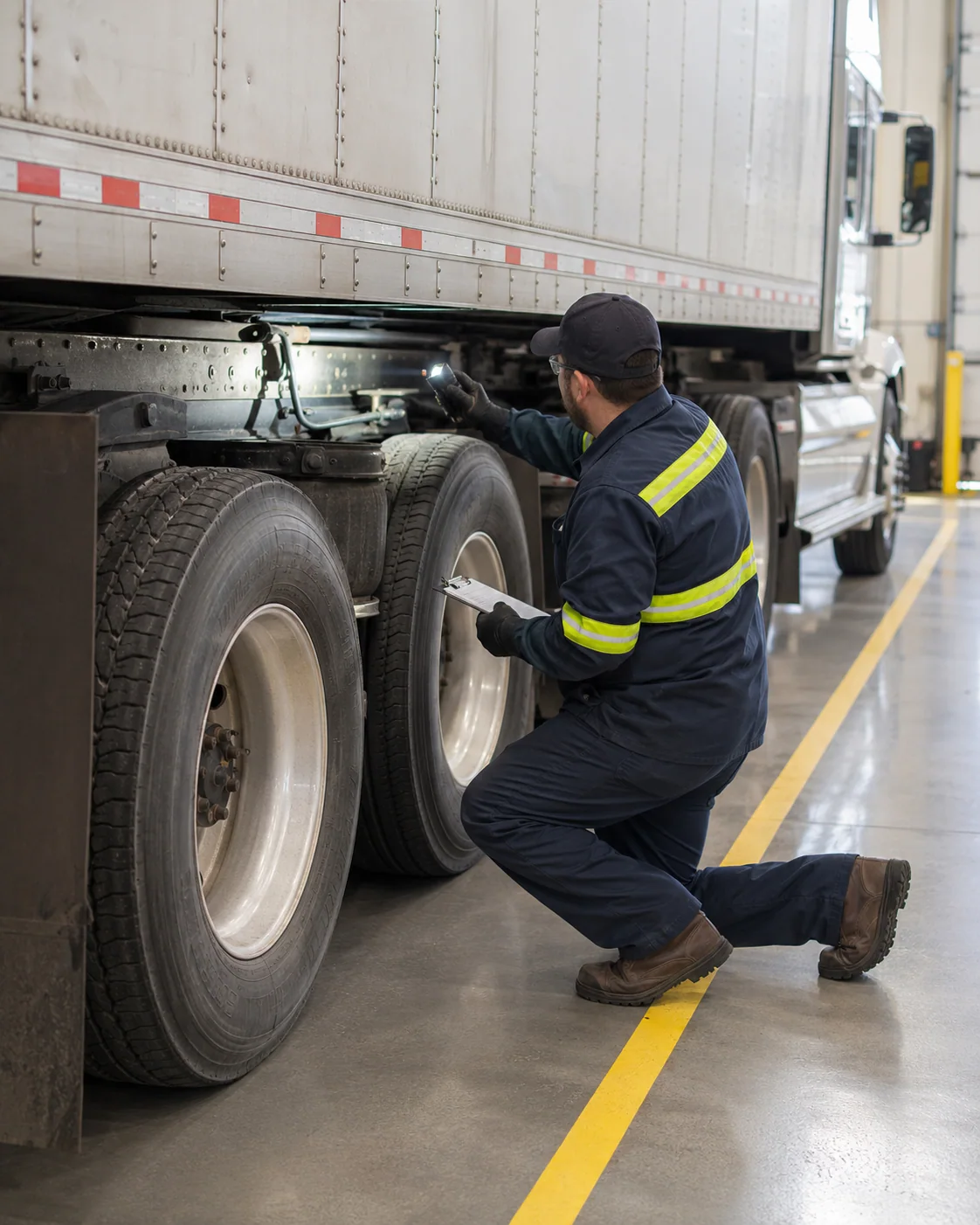
- Inspection and maintenance: Under 49 C.F.R. § 396.3, a covered motor carrier must inspect, repair, and maintain vehicles under its control and keep certain records. Those records may help show whether a defect was known or should have been found before the crash.
- Financial responsibility: 49 C.F.R. § 387.3 explains when federal financial-responsibility rules apply. For covered carriers and operations, 49 C.F.R. § 387.9 sets different minimums based on the operation and cargo. Insurance filings, policies, and endorsements may show how the carrier met those requirements. A federal minimum is not always the policy limit or the amount available for one crash.
The Colorado Department of Transportation’s commercial-vehicle page summarizes state safety, permit, weight, and chain requirements.
Weather and steep grades can affect fault. Our Colorado traction-law guide covers passenger and commercial-vehicle requirements. The Colorado I-70 pileup near the Eisenhower Tunnel shows why multi-vehicle crashes may require separate evidence for each driver.
What Insurance May Cover a Denver Truck-Accident Claim?
The motor carrier’s liability coverage or other permitted financial-responsibility arrangement is often a starting point, but not the only possible recovery source. We may also review policies covering the tractor owner, trailer owner, contractor, shipper, loader, or another company. We look for umbrella or excess policies too.
Your own insurance can matter too. Medical payments coverage, often called MedPay, may help with covered medical expenses regardless of fault. Uninsured or underinsured motorist (UM/UIM) coverage may be relevant when an at-fault party lacks enough applicable coverage. Health insurance may pay treatment costs while a liability claim is pending, subject to plan terms and possible reimbursement rights.
A high policy limit does not guarantee payment. The amount available can depend on coverage exclusions, liability disputes, competing claims, and how many people were hurt. We review each policy and the role of every person or company it covers instead of assuming one large policy will resolve the claim.
How Do We Document Injuries and Financial Losses?
We use medical records to show how the crash relates to your symptoms, diagnosis, treatment, and recovery. Truck crashes can cause concussions and other brain injuries, spinal trauma, fractures, internal injuries, burns, crush injuries, and psychological harm. Follow-up care is important when symptoms change or an injury was not found during the first emergency visit.
We also document lost wages, reduced ability to earn, damaged property, help needed at home, travel for treatment, and changes in daily life. Family accounts, work records, photos, and a brief symptom journal can show losses that medical bills alone cannot.
For paralysis, amputation, severe brain injury, or another permanent condition, future medical care and support may become central. Our Denver catastrophic injury lawyer page addresses severe, long-term claims, and our life-care planning guide explains how future needs may be evaluated.

Can You Recover If You Were Partly at Fault?
Yes, possibly. Under Colorado law, you may recover compensation if you are less than 50 percent at fault. Your award is reduced by your percentage of fault. If you are 50 percent or more at fault, you generally cannot recover on a negligence claim. See C.R.S. § 13-21-111.
A traffic ticket does not necessarily decide civil fault. Trucking records, video, physical evidence, witness accounts, and the conduct of every involved party may change how fault is divided.
How Long Do You Have to File a Colorado Truck-Accident Claim?
Colorado generally gives you three years to file a lawsuit for injuries or property damage caused by the use or operation of a motor vehicle. See C.R.S. § 13-80-101(1)(n). But the start date and correct deadline depend on the facts, so do not assume every truck claim has three years.
A claim involving a public entity or employee may require written notice within 182 days after the injury is discovered. See C.R.S. § 24-10-109. In Mostellar v. City of Colorado Springs, the Colorado Supreme Court held that the notice period can start before a claimant knows which public entity may be responsible. The Denver City Attorney claim page lists local filing instructions. The 182-day notice is separate from the lawsuit deadline.
Wrongful-death, product-liability, out-of-state, and other claims may involve different rules. Evidence can also disappear long before any filing deadline expires.
How We Handle Denver Truck-Accident Cases
Our Denver truck accident attorneys begin with the urgent medical, evidence, and insurance issues. Depending on the case, our work may include:
- Identifying the driver, carrier, owners, contractors, and other potentially responsible parties.
- Determining who holds the truck, trailer, cargo records, electronic data, and video.
- Sending tailored preservation notices and arranging inspections when appropriate.
- Obtaining crash reports, witness information, photographs, and available public or private video.
- Comparing electronic, dispatch, maintenance, loading, and qualification records with the physical evidence.
- Reviewing applicable safety rules without assuming they govern every vehicle or trip.
- Documenting medical treatment, future needs, lost income, property damage, and daily-life effects.
- Identifying potentially applicable liability, excess, MedPay, and UM/UIM coverage.
- Handling insurer communications while helping clients meet reasonable duties under their own policies.
- Negotiating from the evidence and preparing a lawsuit when litigation is appropriate.
We explain each next step and why it matters. We tailor the investigation and legal strategy to the evidence, injuries, and goals in each case.
What Can You Expect From Our Denver Team?
Our founding attorney, Jed Strong, previously served as in-house counsel for GEICO before representing injured people. That experience helps us anticipate how insurers challenge fault, medical treatment, the cause of an injury, policy coverage, and claim value.
A serious truck crash can disrupt medical care, work, transportation, and family responsibilities. We keep clients informed and explain what we are doing and why. After his car-accident case, Colorado client Rick R. said our team was “professional and compassionate through my surgery and as I recovered.” Every case is different, and this testimonial does not guarantee a similar result.
Truck collisions are one part of our broader Denver personal injury practice.
Denver Truck Accident FAQs
What should I do immediately after a Denver truck crash?
Call 911, move out of traffic if safe, and get needed medical care. Photograph truck markings, gather witness contacts, and learn where the vehicles will be stored. Report the crash to your insurer, but do not speculate about fault or downplay your symptoms.
What truck and carrier information should I photograph?
Photograph the tractor and trailer plates, company names, USDOT or MC number, unit numbers, logos, and cargo placards. Capture the scene and damage without entering traffic or approaching hazardous cargo.
What are ELD and black-box records?
When federal logging rules apply, an ELD automatically records driving time and stores the driver’s duty-status entries. “Black box” can refer to engine-control, event-data, or telematics systems. The available speed, braking, location, and other data depend on the vehicle and system.
How quickly can trucking evidence disappear?
There is no single deadline. Covered duty-status records generally have a six-month retention rule, but video, telematics, phone, and vehicle-system data may follow different retention or overwrite schedules. The truck may also be repaired or sold, making prompt, targeted preservation important.
Who may be responsible besides the truck driver?
Responsibility may involve the carrier, vehicle owner, maintenance company, shipper, loader, manufacturer, another driver, or public entity. A contract or logo alone does not settle liability; evidence must show what each party did and controlled.
How do federal trucking rules affect a Colorado claim?
Federal rules may set duties for driving time, driver qualifications, vehicle maintenance, cargo securement, and financial responsibility. The exact rules depend on the truck and trip. A violation matters only if it relates to the crash.
What commercial insurance may apply after a truck crash?
Coverage may include policies for the carrier, vehicle owner, contractor, or another business, plus umbrella or excess policies. Your MedPay or UM/UIM coverage may matter too. Which coverage applies depends on the policies, contracts, companies involved, and facts of the crash.
Can I recover if I was partly at fault?
Possibly. In a negligence claim, Colorado generally allows recovery if you are less than 50 percent at fault. The award is reduced by your share of fault. If you are 50 percent or more at fault, you generally cannot recover. An initial ticket does not decide fault.
How long do I have to bring a Colorado truck-accident claim?
Colorado generally gives a person three years to file a lawsuit for injuries or property damage caused by the use or operation of a motor vehicle, but exceptions exist. A claim involving a public entity may also require written notice within 182 days after the injury is discovered. Do not wait to verify the deadlines.
Request a Free Case Review
If a Denver truck crash injured you, we can explain responsibility, evidence, insurance, and deadlines.
Call 720-738-4913 or request a Free Case Review. Our Denver office is at 2806 Speer Blvd, Denver, CO 80211.
Contact us
Our team is standing by to help you.