image

Sandy Slip and Fall Lawyer for Property Injury Claims

A Sandy slip and fall lawyer can investigate an unsafe walking surface, identify who controlled the property, and evaluate whether negligence caused your injuries. Strong Law Accident & Injury Attorneys reviews falls at stores, rental properties, parking areas, and other locations. Our Sandy personal injury team serves Sandy from Midvale. For hazards beyond a fall, see our premises liability services.

A Sandy slip and fall attorney can help answer three early questions:

  • What condition caused the fall, and who was responsible for the area?
  • Which records can show how long the hazard existed or who knew about it?
  • What treatment, missed work, and ongoing limitations need documentation?

98%
win rate
Google rating: 4.9 stars from more than 550 reviews

Contents

Yellow wet-floor warning signs in a polished indoor hallway

What Must Be Shown in a Slip and Fall Claim?

Yellow wet-floor warning signs in a polished indoor hallway

A fall by itself does not establish that a business or owner was negligent. The case needs a legal duty, an unreasonable act or failure to act, a connection to the fall, and resulting harm. Important questions include who controlled the area, whether they created the hazard, and whether they knew or should have discovered it.

A fresh spill, a recurring leak, and a broken step reported weeks earlier raise different notice questions. Inspection routines, repair requests, employee observations, and the condition’s appearance may help explain what happened. We review those facts rather than assume that every missing warning sign proves liability.

Which Evidence Should You Save Before the Hazard Changes?

If it is safe, photograph the exact hazard and the wider area, including signs, lighting, floor transitions, stairs, and entrances. Report the fall to the property representative and request an incident-report copy or reference number. Write down witness contacts and what employees said about the condition.

Keep the footwear and clothing you wore, original photo files, and all messages about the incident. Surveillance may be overwritten and a spill may be cleaned immediately. Early preservation requests can also address inspection logs, maintenance tickets, contractor records, and previous complaints. Do not put yourself at risk to measure a hazard.

How Do Snow, Ice, and Recurring Property Problems Affect the Case?

Winter conditions can raise questions about drainage, ice formation, maintenance responsibilities, and the timing of inspections or treatment. Weather alone does not establish fault. The investigation should document where the ice was, how long it may have been present, what the responsible parties knew, and what reasonable steps were available.

Retail spills, worn mats, uneven pavement, and damaged handrails need the same careful approach. In apartment common areas, a lease, management agreement, or repair history may help identify control. A store tenant, owner, or contractor may have a relevant role, but each claim needs support for that party’s responsibility.

How Do Medical Records Show the Effect of a Fall?

Keep emergency-care notes, imaging reports, follow-up recommendations, therapy records, and work restrictions. Explain both new symptoms and relevant earlier conditions to your providers. A timeline can distinguish the recovery after this fall from preexisting limitations without hiding earlier treatment.

Potential losses include medical expenses, missed work, supported future care, and the effect of the injury on everyday tasks. Falls can involve back injuries or brain injuries, so the evidence should reflect the actual diagnosis and restrictions. Keep receipts and a dated record of help needed at home.

What if the Property Owner Blames Me?

An insurer may argue that the condition was obvious, warnings were provided, or the injured person was distracted. We examine photographs, sightlines, video, and witness accounts. Under Utah’s comparative-fault law, your share of responsibility can reduce or prevent recovery. A denial letter is a position to evaluate, not a court decision.

If the fall happened at work, workers’ compensation and possible third-party liability need separate review. A workplace accident is not automatically a negligence lawsuit against the employer. Public-property incidents can also involve special notice requirements and defenses.

How Do You Explain the Exact Place and Cause of a Fall?

Start with the route you took and the point where you lost your footing. A store name alone may not identify the right area. Note the aisle, entrance, stair landing, parking space, or nearby landmark. Describe the surface and what you felt or saw without guessing about facts you could not observe.

For example, a person may remember a foot sliding near a display but not know what was on the floor. That uncertainty should be recorded honestly. A witness, photograph, or cleaning record might later clarify the cause. Calling every unexplained fall a wet-floor accident can distract from the evidence that actually exists.

Which Photographs Provide Useful Context?

When safe, keep both close views of the condition and wider views of the approach. A close-up may show a raised edge, while the wider image shows lighting, nearby signs, and the available walking route. Save the original files with their dates. Do not move objects, recreate a spill, or return to an unsafe area to improve a photograph.

What Details Matter About a Warning Sign?

Record where the sign was in relation to the hazard and the direction you approached. Note whether a shelf, open door, crowd, or other object blocked the view. A picture taken after someone moves a sign may not show its position at the time of the fall. Identify when the photo was taken and explain any known changes.

How Can Records Help Establish Notice and Control?

A property case often turns on what happened before the injury. A maintenance request may show that a defect was reported. An inspection log may show when an area was checked. A lease or service agreement may describe which business handled cleaning or repair. Each record answers a different question; none should be treated as a complete case by itself.

Our review can compare the incident timeline with available records. We may need to learn whether an employee created the condition, whether complaints were received, or whether a recurring problem had been addressed. The goal is to connect the condition to a responsible party’s actions and legal duties.

  • Stores: Who inspected the aisle or entrance, and what happened after a spill was reported?
  • Rental properties: Who controlled the common area, and where were repair requests sent?
  • Parking areas: Who maintained the walking route, lighting, drainage, or snow treatment?
  • Shared buildings: Did the tenant, owner, manager, or contractor have a relevant duty?

These are investigation questions, not conclusions that every listed party is liable. A Sandy slip and fall lawyer should explain what evidence supports each possible claim and what still needs to be obtained.

What Should You Do if a Business Will Not Provide Its Report?

Record when you reported the fall, who received the report, and any reference number. Save your own written account and follow-up messages. If the business declines to provide a copy, note that response. Do not assume the refusal proves wrongdoing or that you must obtain the report before speaking with a lawyer.

Tell your attorney about cameras and records that may exist so preservation can be addressed promptly. A request to keep evidence does not guarantee access. Some material may require formal legal procedures, and some may no longer exist. We can discuss realistic options based on the timing and facts.

Organized vehicle and medical claim records on a desk

How Can You Keep Recovery Records Organized?

Use a simple folder for treatment papers, medical bills, work notes, and insurer correspondence. List appointments in date order. If a provider recommends follow-up care, record whether it occurred and any reason it was delayed. Be candid about earlier injuries and treatment so the medical history can be understood accurately.

For a missed-work claim, keep the dates, hours, and pay affected. If you returned on light duty or shorter shifts, save those details too. A recovery log can describe changes in walking, driving, sleep, or household tasks. Note improvements as well as problems. Consistent factual records are more useful than broad statements that everything has become difficult.

What Happens After the Initial Case Review?

If representation is appropriate, the next work may include identifying responsible parties, requesting records, reviewing insurance, and assessing medical evidence. The case may develop differently if the cause is unclear, responsibility is disputed, or treatment is ongoing. Ask which issue is being addressed next and who will keep you informed.

A settlement discussion should account for both the strengths and gaps in the evidence. You should understand the proposed release, the costs deducted from a recovery, and any health-plan repayment claims. If a lawsuit is considered, ask about the reason, likely steps, and deadlines. No lawyer can promise a particular recovery or finish date.

Which Related Injury Services Are Available?

Salt Lake City slip and fall services · Strong Law Accident & Injury Attorneys

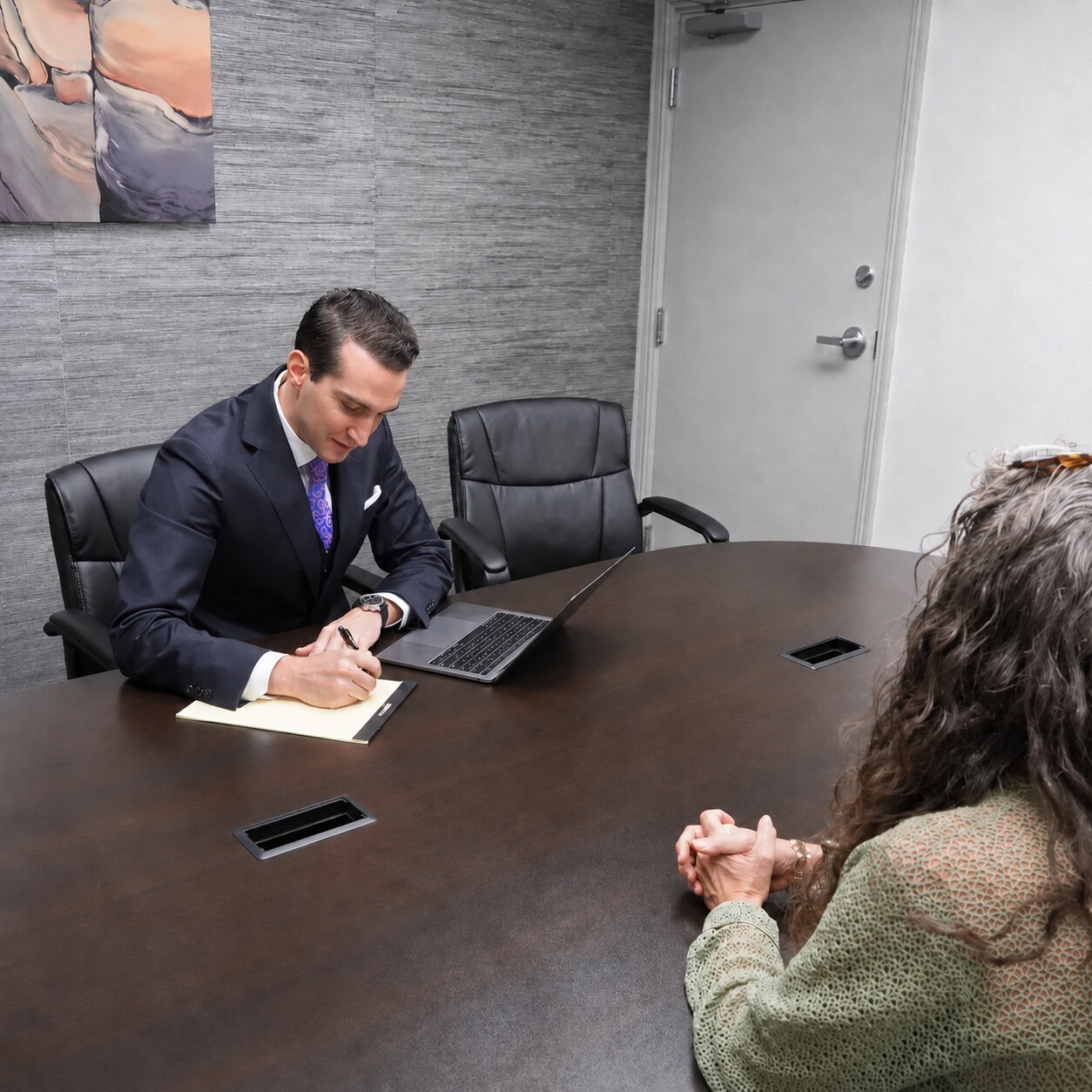
Jed Strong taking notes during a client meeting

How Strong Law Prepares Your Claim

Our review focuses on the condition, notice, control of the property, and medical consequences. We can help identify records that should be preserved, examine a denial, and explain the options for negotiation or litigation. Clear communication about missing evidence and the next step is part of the case plan.

Strong Law’s firm background includes insurance-defense experience. That perspective informs preparation, but each case depends on its own law and evidence. Before representation, we explain the written terms for fees and case expenses.

“I want to thank Jed and Tory of Strong Law for their outstanding help with my case. The attention to details and keeping me informed at all times made for a positive outcome. Thank you again for your help, determination, and hard work. I would not hesitate to recommend you to anyone in need of an excellent lawyer.” – Jaretta O.

Past results do not guarantee the outcome of another case.

What Questions Do Sandy Slip and Fall Clients Ask?

Do I Need an Incident Report to Bring a Fall Claim?

A report can help document the date, location, and notice to the business, but it is not the only evidence. Photos, witnesses, video, medical records, and maintenance records may also matter. Keep any report you receive and record how and when the fall was reported.

What if There Was a Wet Floor Sign?

A sign does not automatically resolve liability. Its placement, visibility, distance from the hazard, and adequacy need review, along with the condition itself and the available time to address it. Preserve wide-angle photos and witness descriptions if possible.

Can I Bring a Claim for a Fall on Ice?

Possibly, but an icy surface alone does not establish negligence. The legal duty, control of the property, weather, drainage, inspection history, and maintenance response matter. Photographs taken near the time of the fall and relevant complaints can help evaluate the claim.

Should I Accept the Insurer’s First Offer?

Evaluate what the offer covers and what the release would end. Ongoing treatment, work restrictions, future recommendations, and liens may affect the decision. A lawyer can compare the offer with the available evidence; there is no standard amount that fits every fall.

How Long Do I Have to File?

The filing deadline depends on the claim and the responsible parties. A governmental defendant, a work injury, or other circumstances can change the process or deadline. Consult promptly rather than rely on ongoing insurance talks. The Utah Courts filing-deadline guide explains why the correct limit and starting date need review.

Can You Review a Claim if the Spill Was Already Cleaned?

Yes. The missing hazard may make the investigation harder, but photographs are not the only possible evidence. Witness accounts, video, an incident report, or cleaning records may help. We assess what remains available without promising that missing evidence can be recovered.

What Should I Bring to the First Consultation?

Bring any incident report, photos, witness details, insurance letters, medical records, and wage information you already have. A simple timeline is helpful. Do not delay the review because a report or bill has not arrived; identifying missing records is part of the discussion.

How Can You Speak With a Sandy Slip and Fall Lawyer?

Strong Law serves Sandy from our Utah office at 193 E Fort Union Boulevard, Midvale, UT 84047. Call 385-746-1803 or request a free case review. We can discuss the available records, important deadlines, and whether representation fits your matter.

slip and fall lawyer in Sandy, UT

We’ve helped thousands of accident victims like you

we win
98%

win rate in court

4.9
stars

on Google reviews

over
2,000

successful cases
Strong Law client sharing her experience in a video testimonial
play button
"I would definitely recommend them."
Lindsey - Washington
Wistia video thumbnail
stars

“Very professional, and treated me as an equal.”

"Just wanted to say thank you to Jed and his team at Strong Law. Not only was I happy with the outcome, but the entire process as a whole. I would definitely recommend this firm to anyone. Thanks again."

Nick S.
Utah
stars

“Unbelievable work!”

"I had a claim involving my own insurance company. I tried to negotiate with them, and they completely denied my claim – two times. I then hired Strong Law, and the change was instant. The insurance company immediately began negotiating, and Jed was able to secure an unbelievably good settlement. I will never again attempt to take-on an insurance company without Strong Law in my corner. Thank you!"

Jonathon
Washington
Strong Law attorney speaking by phone at an office desk
play button
A welcome from Jed Strong
Wistia video thumbnail
Strong Law client discussing her experience in a video testimonial
play button
"They've always been there for me."
Marsha - Washington
Wistia video thumbnail
stars

“I got justice and awesome compensation.”

"I hired Strong Law after my car accident. Jed and his team worked hard on my case. They were professional and compassionate through my surgery and as I recovered, and they were awesome on communication. I got justice and awesome compensation. I would recommend Strong Law to anyone in my situation."

Rick R.
Colorado
Empty courtroom used for civil legal proceedings

Get Your Free
Case Review

Contact us

Our team is standing by to help you.

How did you hear about us?
Privacy & Terms Agreement
I agree to Strong Law Accident & Injury Attorneys’
Privacy Policy and Terms & Conditions
SMS/Text Message Consent
By checking this box, I consent to receive SMS/text messages from Strong Law Accident & Injury Attorneys about my inquiry, consultations, appointment reminders, intake follow-up, case-related communications, and legal services. Message frequency varies. Message and data rates may apply. Reply STOP to opt out or HELP for help. Consent is not a condition of hiring our firm or receiving legal services. View our Terms & Conditions and Privacy Policy.
Strong Law attorney speaking with a prospective client by phone