


Anchorage Truck Accident Lawyer for Serious Injury Claims
An Anchorage truck accident lawyer can move quickly to preserve trucking-company evidence, identify every responsible party, and pursue compensation after a commercial-vehicle collision. These cases may involve federal safety rules, Alaska-specific hours-of-service limits, multiple insurance policies, and records controlled by the carrier.

An Anchorage truck accident lawyer can move quickly to preserve trucking-company evidence, identify every responsible party, and pursue compensation after a commercial-vehicle collision. These cases may involve federal safety rules, Alaska-specific hours-of-service limits, multiple insurance policies, and records controlled by the carrier. Strong Law helps injured people and families understand their options, protect the claim, and build a case for the full harm the crash caused.
Learn about our broader Anchorage personal injury practice, or contact Strong Law for a free case review. You pay no attorney fee unless we recover compensation for you.
What should you know after an Anchorage truck crash?
- Truck claims require different evidence than ordinary car-accident claims.
- Electronic logs, engine data, dispatch records, inspection files, and cargo documents can be lost or overwritten.
- The driver may not be the only responsible party; the carrier, truck owner, maintenance provider, shipper, or another company may share fault.
- Alaska law can reduce compensation when more than one person contributed to the crash, but partial fault does not necessarily end a claim.
- Many Alaska injury lawsuits are subject to a two-year filing period, although exceptions and shorter deadlines can apply.
The most useful first step is often an early investigation. A lawyer can send preservation notices, obtain public crash records, inspect the vehicles when possible, and compare the driver’s conduct with the rules that applied to that trip.
Why are truck accident claims different from car accident claims?
A collision involving a tractor-trailer, delivery truck, tanker, dump truck, or other commercial vehicle is not simply a larger car case. The impact can cause life-changing injuries, and the investigation usually reaches beyond the driver at the scene.
Motor carriers create records as part of their daily operations. Those records may show how long the driver worked, whether the truck was inspected, who assigned the route, when warnings appeared, how the cargo was loaded, and whether a known problem was repaired. Commercial claims may also involve several corporate defendants and layers of insurance coverage. Each company may have its own insurer, lawyers, and version of what happened.
That makes timing important. The carrier may begin its defense immediately, while the injured person is still receiving emergency care. Strong Law can take over insurer communications and focus the investigation on the evidence that can prove fault and damages.

Contents
Where do commercial trucks travel through Anchorage?
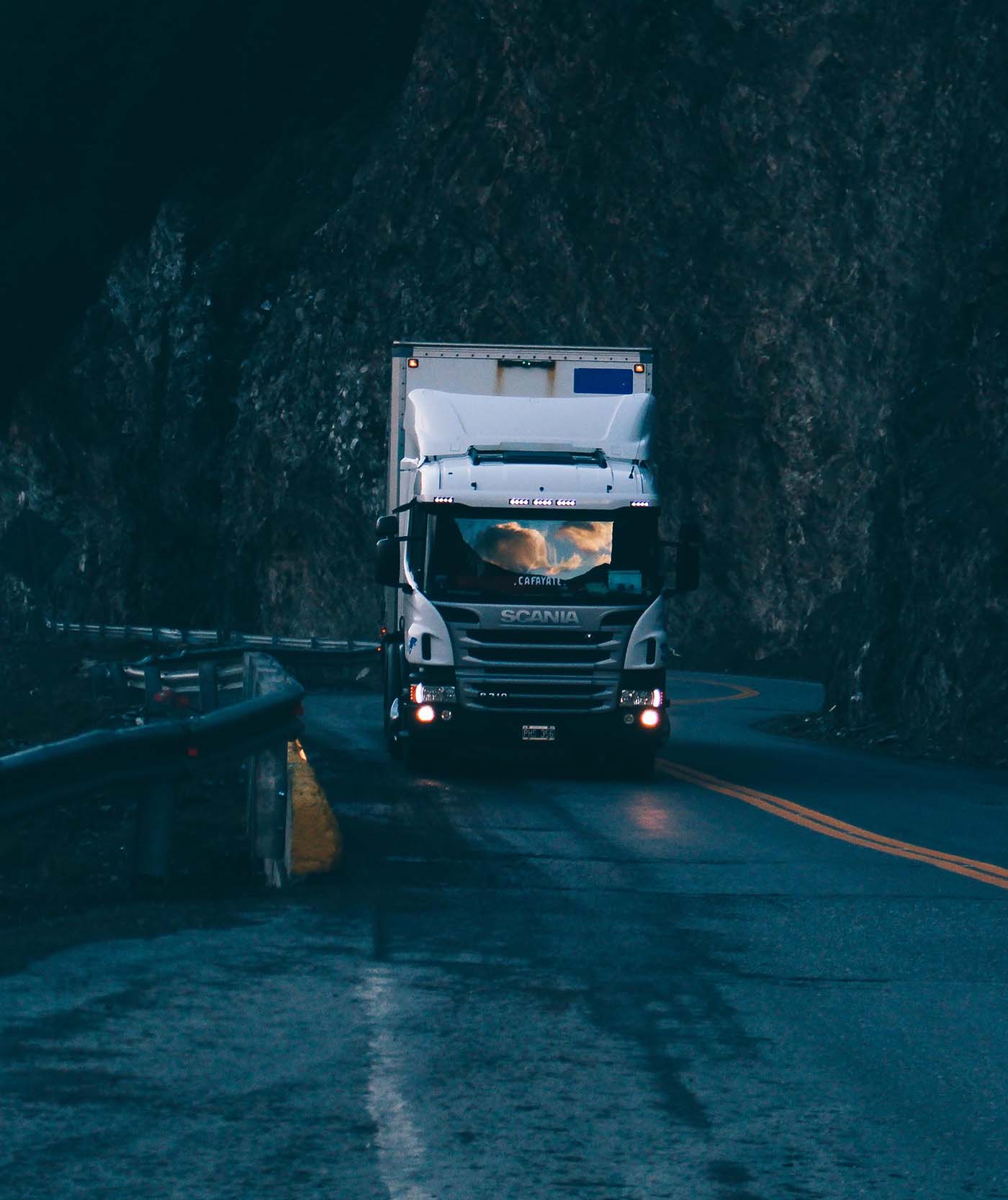
Anchorage is a freight hub as well as a population center. Commercial traffic moves between the Port of Alaska and major routes such as the Glenn Highway and Seward Highway. The Ingra-Gambell corridor connects downtown and port-area traffic with the highway system, while Minnesota Drive, Tudor Road, Ocean Dock Road, and other industrial routes carry a mix of passenger vehicles and heavy trucks.
Alaska Department of Transportation weigh-in-motion sites in the Anchorage area collect vehicle-classification, speed, axle, and weight information on routes including Minnesota Drive, Tudor Road, Ocean Dock Road, and the Glenn Highway. This does not establish fault in a particular crash, but it illustrates how closely freight movement is tied to Anchorage’s road network.
Winter darkness, snow, ice, freeze-thaw cycles, wind, and limited stopping distance can add to the risk. A professional driver and carrier must account for the actual conditions. A posted speed limit does not make a speed safe when visibility or traction is poor.
Who may be liable after an Anchorage truck accident?
The facts may support claims against one or several parties:
- The truck driver, for speeding, distraction, fatigue, unsafe lane changes, following too closely, impairment, or another driving error.
- The motor carrier, for its own negligent hiring, training, supervision, scheduling, inspection, maintenance, or safety practices, and for responsibility that may arise from the driver’s work.
- The truck or trailer owner, when ownership and maintenance duties are divided among companies.
- A maintenance contractor, if careless inspection or repair contributed to brake, tire, steering, lighting, coupling, or other equipment failure.
- A shipper, loader, or cargo contractor, when an overloaded, unbalanced, or unsecured load caused or worsened the crash.
- A parts manufacturer or seller, when a defective component contributed to the collision.
- Another driver or company, if a separate act helped cause the chain of events.
A freight broker is not automatically responsible simply because it arranged a load. Liability depends on the broker’s own conduct, contracts, control, and the law that applies. The same is true when a government-owned road or vehicle may be involved; special procedures and deadlines may apply.
Strong Law reviews corporate relationships, leases, bills of lading, dispatch records, contracts, and insurance information to determine who controlled the work and who may be legally responsible.

Which federal and Alaska trucking rules may matter?
Commercial drivers and motor carriers must follow federal safety regulations and other rules that depend on the vehicle, cargo, route, and type of operation. A violation does not decide every case by itself, but it can provide important evidence of unsafe conduct.
Hours of service are a major example. Under 49 CFR § 395.1(h), Alaska has special limits for many property-carrying commercial drivers. Subject to the rule and any applicable exceptions, a driver may not drive more than 15 hours after 10 consecutive hours off duty or drive after 20 hours on duty following 10 hours off. The rule also uses 70-hour/7-day or 80-hour/8-day limits, depending on whether the carrier operates every day of the week.
The exact rule must be matched to the trip. Attorneys may compare electronic logging device data, paper logs, fuel and toll records, dispatch messages, GPS history, and delivery times to determine whether the recorded hours are accurate.
Other rules may address driver qualification, vehicle inspection and maintenance, cargo securement, required lighting and equipment, controlled substances, and alcohol. Federal law prohibits a driver from operating a commercial motor vehicle with an alcohol concentration of 0.04 or greater. Testing duties after a crash depend on factors such as a fatality, citation, injury, and whether a vehicle had to be towed; testing is not automatically required after every collision.
What evidence should be preserved immediately?
Some of the strongest evidence is held by the trucking company or a third-party technology provider. A prompt preservation notice can identify the records at issue and put the recipient on notice before routine deletion or overwriting occurs.
Important evidence may include:
- Electronic logging device records and supporting documents. Federal guidance generally requires carriers to retain these records for six months, which is one reason delay can matter.
- Engine control module or event data. Depending on the truck and its equipment, data may show speed, engine revolutions, throttle position, braking events, fault codes, or other information near the crash.
- GPS, telematics, dispatch, route, delivery, and time-stamped communication records.
- Driver qualification, training, employment, safety, and disciplinary files.
- Pre-trip and post-trip inspection reports, repair invoices, annual inspection records, tire and brake records, and maintenance schedules.
- Bills of lading, weight tickets, cargo photographs, seal records, and loading instructions.
- Dash-camera, in-cab camera, traffic-camera, business-surveillance, and bystander video.
- The driver’s phone data and carrier policies when distraction is a disputed issue.
- Drug and alcohol testing records when testing was required or performed.
- The tractor, trailer, failed parts, passenger vehicle, and physical evidence from the scene.
- Police reports, 911 recordings, witness statements, photographs, measurements, and weather or roadway information.
When the cause is disputed, Strong Law may work with qualified collision-reconstruction, trucking-safety, mechanical, medical, economic, or life-care experts. Reconstruction can connect skid marks, vehicle damage, photographs, electronic data, and witness accounts into a tested explanation of how the crash occurred.
What commonly causes large-truck crashes?
Truck collisions can result from several failures at once. Common issues include driver fatigue, speed that is unsafe for conditions, distraction, impairment, following too closely, blind-spot lane changes, wide turns, improper backing, inadequate training, unrealistic delivery schedules, defective brakes or tires, missed inspections, and overloaded or poorly secured cargo.
The crash type can help focus the investigation. Jackknife, rollover, underride, rear-end, sideswipe, lost-load, and intersection crashes often raise different questions about speed, braking, visibility, load balance, following distance, and equipment condition.

We’ve helped thousands of accident victims like you
we win
98%
4.9
stars
over
2,000



“Very professional, and treated me as an equal.”
"Just wanted to say thank you to Jed and his team at Strong Law. Not only was I happy with the outcome, but the entire process as a whole. I would definitely recommend this firm to anyone. Thanks again."
“Unbelievable work!”
"I had a claim involving my own insurance company. I tried to negotiate with them, and they completely denied my claim – two times. I then hired Strong Law, and the change was instant. The insurance company immediately began negotiating, and Jed was able to secure an unbelievably good settlement. I will never again attempt to take-on an insurance company without Strong Law in my corner. Thank you!"

“I got justice and awesome compensation.”
"I hired Strong Law after my car accident. Jed and his team worked hard on my case. They were professional and compassionate through my surgery and as I recovered, and they were awesome on communication. I got justice and awesome compensation. I would recommend Strong Law to anyone in my situation."
What compensation may be available after a truck accident?
A truck crash can affect far more than the first hospital bill. A claim may seek compensation for losses that can be proven under Alaska law, including:
- Emergency care, hospitalization, surgery, medication, rehabilitation, counseling, medical equipment, and future treatment.
- Lost income, reduced hours, missed opportunities, and loss of future earning capacity.
- Vehicle damage and other out-of-pocket costs.
- Physical pain, emotional distress, loss of function, disfigurement, and reduced quality of life.
- Household services or care the injured person can no longer perform.
Serious truck crashes may cause traumatic brain injuries, spinal cord injuries, multiple fractures, internal injuries, burns, amputations, or permanent disability. Future damages may require medical opinions, vocational analysis, an economic projection, or a life-care plan rather than a simple estimate.
If the collision was fatal, eligible family members or the estate may have a wrongful death claim. These cases require careful attention to who may bring the action, recoverable losses, estate issues, and filing deadlines.
What if you were partly at fault for the crash?
Alaska follows a pure comparative-fault system under AS 09.17.060. A court may assign percentages of responsibility among the people and entities that contributed to the harm. An injured person’s damages may then be reduced by that person’s share of fault. Being partly responsible does not necessarily prevent recovery.
Insurers may use this rule to argue that the passenger-vehicle driver changed lanes, followed too closely, entered a blind spot, or failed to react soon enough. Those claims should be tested against the physical evidence, electronic records, video, driver conduct, and the carrier’s safety obligations rather than accepted at face value.
How long do you have to file an Alaska truck accident claim?
AS 09.10.070 generally requires many Alaska personal-injury actions to be started within two years. That is a general rule, not a universal deadline. Claims involving a government entity, a child, a death, an out-of-state defendant, or another unusual circumstance may involve different procedures or timing.
The practical evidence deadline may be much earlier. Video can be overwritten, vehicles can be repaired, employees can leave, and some trucking records have short retention periods. Contacting a lawyer early can protect both the legal deadline and the evidence needed to prove the claim.
What should you do after a collision with a commercial truck?
- Call 911 and seek emergency help. Do not delay urgent care to collect evidence.
- If it is safe, photograph the vehicles, truck and trailer numbers, license plates, company markings, cargo, roadway, skid marks, debris, traffic controls, and weather conditions.
- Get witness names and contact information. Ask whether anyone recorded the crash.
- Obtain the responding agency’s report or incident number.
- Follow medical advice and report new or worsening symptoms. Keep appointments, bills, work-loss records, and a simple recovery journal.
- Avoid guessing about speed, distance, fault, or injuries in recorded insurer statements or public posts.
- Preserve your own vehicle, phone, photographs, dash-camera footage, clothing, and damaged property.
- Speak with a truck accident attorney before signing a release or accepting a quick settlement.

How does Strong Law build an Anchorage truck accident case?
Strong Law begins by listening to what happened and identifying immediate risks to the person’s health, finances, and legal claim. The legal team can handle insurer communications, send preservation notices, gather crash and medical records, investigate the carrier and related companies, and determine which insurance policies may apply.
The firm then develops both sides of the case: why the defendants are responsible and how the collision changed the client’s life. That may include interviews, vehicle inspections, electronic-data analysis, expert review, treatment documentation, wage and employment records, and proof of future needs.
Strong Law’s experience with the insurance industry helps the team evaluate adjuster tactics and the evidence an insurer is likely to challenge. The goal is to prepare the claim as if it may need to be proven in court, while pursuing a fair resolution whenever possible.
Frequently asked questions about Anchorage truck accident claims
Can you sue if a truck driver hits you?
You may have a claim if the truck driver, carrier, or another party caused the collision and you suffered damages. The responsible parties depend on the driver’s work status, the carrier’s control, truck ownership, maintenance, cargo loading, and other facts. A lawyer can investigate the corporate relationships and insurance coverage before deciding whom to include.
Can you sue the trucking company as well as the driver?
Sometimes. A carrier may be responsible for conduct within the driver’s work and may also face claims based on its own hiring, training, supervision, scheduling, inspection, maintenance, or safety decisions. The answer depends on the evidence and legal relationship between the driver and company; a logo on the truck is useful information but not the entire analysis.
What is the difference between a truck accident and a car accident claim?
Truck claims often involve federal regulations, Alaska-specific driving-hour rules, commercial insurance, corporate records, electronic logs, engine data, cargo records, and multiple potential defendants. The carrier may control much of that evidence. Car claims can also be complex, but a commercial-truck investigation usually requires a broader and faster preservation effort.
How long does a trucking company keep driver logs?
Federal Motor Carrier Safety Administration guidance generally requires carriers to retain electronic logging device records of duty status and supporting documents for six months. Other documents have different retention rules, and companies may keep some records longer. A preservation notice can identify relevant material before routine deletion, but it should be sent as early as practical.
What if the trucking company says you caused the crash?
The company’s position is not the final answer. Alaska’s comparative-fault rule allows responsibility to be divided among parties. Physical evidence, video, witness accounts, electronic data, inspections, dispatch records, and reconstruction may confirm or contradict the carrier’s claim. Your compensation may be reduced if you share fault, but partial fault does not necessarily bar recovery.
How much does it cost to hire Strong Law?
Strong Law offers a free consultation and handles injury cases on a contingency-fee basis. You do not pay an attorney fee unless the firm recovers compensation for you. Before representation begins, the written fee agreement should explain the fee, case expenses, and how those items are handled so you can make an informed decision.
Should you accept the trucking insurer’s first settlement offer?
Not before you understand your injuries, future care, income loss, all responsible parties, and the available coverage. An early offer may arrive before the long-term effects are known or before important evidence is obtained. Signing a release can end the claim. A lawyer can evaluate the offer and explain the tradeoffs before you decide.
Talk with an Anchorage truck accident lawyer
A commercial-truck collision can leave a family facing medical treatment, missed work, and urgent questions while the trucking company protects its own interests. Strong Law can investigate the crash, preserve key records, handle insurer communications, and pursue the compensation supported by the evidence.
Contact Strong Law for a free case review. There is no attorney fee unless we recover compensation for you.
Get Your Free
Case Review

Contact us
Our team is standing by to help you.