

Washington Wrongful Death and Survival Damages: Who Recovers What?

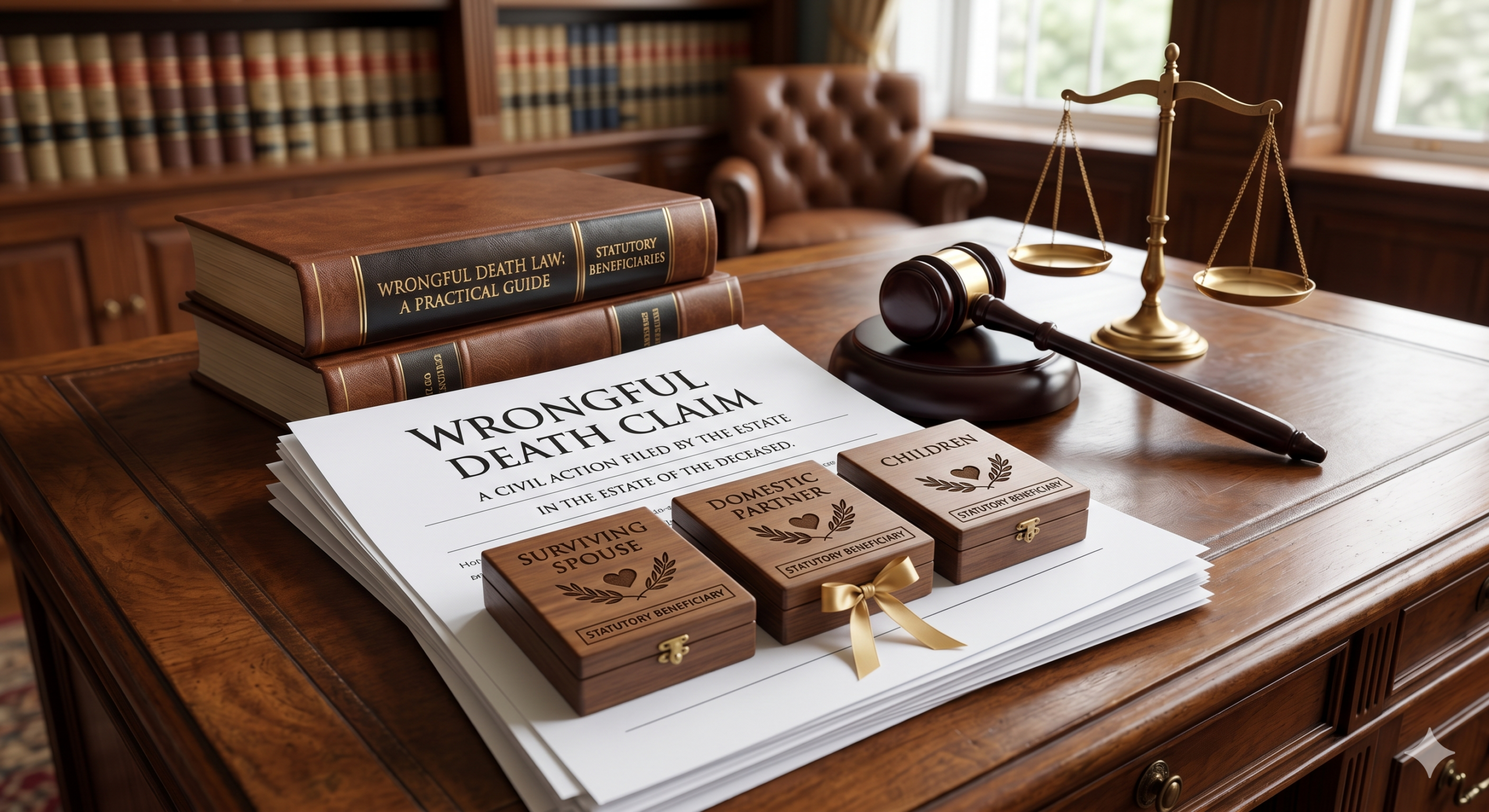
Washington wrongful death damages address eligible beneficiaries’ losses caused by a death. Survival claims preserve certain losses personal to the person who died. The distinction affects both the evidence needed and who may receive the recovery.
Some survival damages are recovered for the estate, while others are recoverable on behalf of statutory beneficiaries. A will does not control every category. Strong Law’s Washington wrongful death lawyer page explains the broader claim process; this guide focuses on damages and recipients.
Which Losses Belong to a Wrongful Death Claim?
Under RCW 4.20.010, the personal representative may seek economic and noneconomic damages sustained by eligible beneficiaries because of the death. Depending on the evidence and relationship, those losses may include financial support, household services, and the loss of companionship, care, or guidance.
The beneficiaries are identified by statute, rather than simply by who is named in a will. RCW 4.20.020 includes a surviving spouse, state-registered domestic partner, and children, including stepchildren. Parents or siblings may benefit when none of those first-category beneficiaries survives.
Which Losses Can a Survival Action Preserve?
Economic Losses and the Estate
RCW 4.20.046 preserves causes of action through the personal representative. It allows economic losses to be recovered on behalf of the estate. Depending on the underlying claim, those losses may include injury-related medical expenses, income lost before death, or property damage. This statute can apply even when the injury did not cause the death.
The Deceased Person’s Noneconomic Losses
The same statute treats the deceased person’s pain, suffering, anxiety, emotional distress, or humiliation differently: recovery of those noneconomic losses is on behalf of the beneficiaries identified in RCW 4.20.020. It is inaccurate to say that every survival recovery automatically becomes an estate asset distributed under the will.
Injuries That Cause Death
RCW 4.20.060 separately addresses personal injuries that cause death. It provides for an action through the personal representative in favor of the specified surviving relatives, with economic losses and the deceased person’s qualifying noneconomic losses addressed under that statute. The applicable provision and beneficiary group need to be identified before describing how money will be distributed.
Can Both Claims Arise from the Same Incident?
Yes. Consider a person who is seriously injured in a truck crash, receives hospital treatment, and later dies from those injuries. Records may support a survival claim for the person’s injury-related losses before death and a wrongful death claim for eligible beneficiaries’ losses caused by the death.
Each claimed loss needs a legal basis and supporting evidence. Medical bills, funeral expenses, income losses, and relationship losses should be assigned to the appropriate claim and recipient. The same loss should not be counted twice just because more than one cause of action is available.
What Evidence Helps Identify and Support the Damages?
- Medical records: treatment dates, expenses, symptoms, and the relationship between the injury and death.
- Financial records: earnings, employment benefits, household contributions, and documented expenses.
- Family and estate records: the personal representative’s appointment and information establishing the relevant family relationships.
- Expert analysis when needed: medical causation, financial support, or other disputed losses.
A list of losses is a starting point, not proof that every item is recoverable. The legal theory, beneficiary status, and evidence determine what may be pursued.
Do Wrongful Death and Survival Claims Have the Same Deadline?
Do not assume they do. Washington’s general three-year limitations statute applies to many injury claims. Wrongful death claims generally accrue at death, while survival claims depend on the underlying cause of action. Discovery rules, other statutes, and the person’s prior claim history can matter. In Deggs v. Asbestos Corp., an expired underlying claim affected the later wrongful death action.
Government claims also require separate attention. Washington’s local-government claim statute and state-government claim statute generally require a 60-calendar-day waiting period after claim presentment before suit. That is not a general rule requiring a family to submit its claim within 60 days of the death. The correct presentment procedure and limitations calculation should be checked early.
Discuss the Claims and Recipients Together
A useful case review identifies who brings each claim, whose losses are being sought, and which records support them. It should also explain how any estate recovery differs from damages recovered for statutory beneficiaries.
Contact Strong Law for a free case evaluation to discuss a fatal injury in Washington and the claims that may apply to your family’s circumstances.

See If Your Injury Claim May Qualify
Answer a few quick questions to help Strong Law understand what happened and whether your claim may qualify for a free review.
