

What to Do After a Work-Truck Accident

Video overview: Jed Strong explains why a collision involving a company vehicle can require a different investigation from an ordinary two-car crash. The employer, vehicle owner, contractor, commercial insurer, maintenance company, or another business may possess evidence and may share responsibility.
Important: “Work truck” is a practical description, not one legal category. A company pickup, utility truck, delivery van, box truck, construction vehicle, or tractor-trailer may be governed by different insurance policies and state or federal rules. The correct deadlines and responsible parties depend on where the crash occurred, who owned and controlled the vehicle, and what the driver was doing at the time.
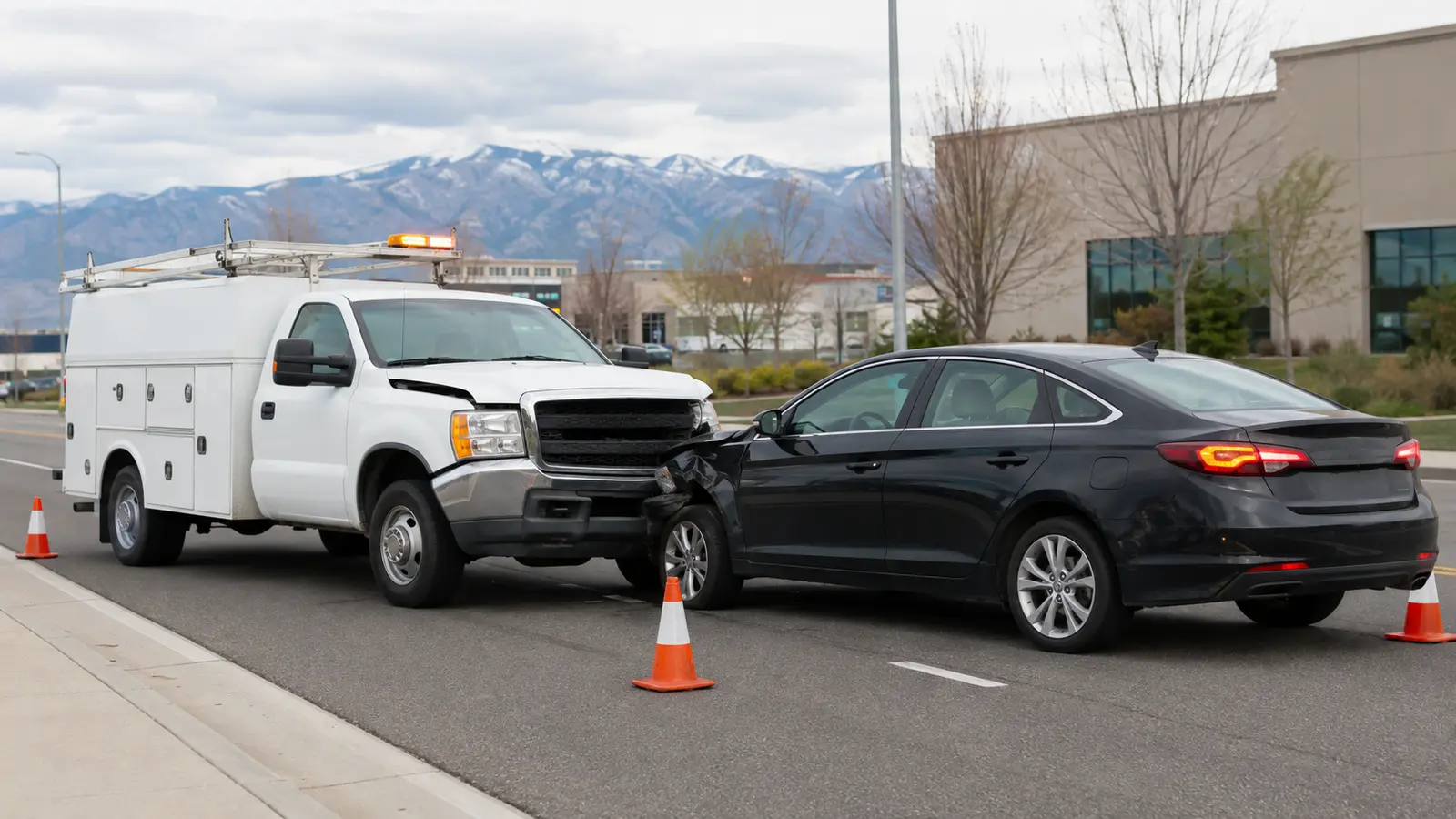
After a work-truck accident, protect your health first, report the collision, photograph the vehicle’s identifying information, and preserve evidence before it is overwritten or lost. A company vehicle may create additional claims and insurance questions, but those issues are easier to investigate when the driver, employer, vehicle, and electronic records are identified early.
What Should You Do After a Work-Truck Accident?
Take these eight steps when your condition and the scene allow:
- Move to safety and call 911 when the crash involves injury, danger, blocked traffic, or significant damage.
- Accept appropriate medical care and arrange follow-up care for delayed symptoms.
- Get the driver’s license, insurance, employer, and contact information.
- Photograph the truck, license plate, company name, unit number, and any USDOT number.
- Document the roadway, vehicle positions, damage, debris, traffic controls, and witnesses.
- Notify the appropriate insurers without guessing about injuries or accepting blame.
- Preserve your photographs, dash-camera footage, damaged property, medical records, and expense records.
- Request prompt preservation of company-controlled evidence when injuries or disputed fault make it important.
These steps overlap. Medical treatment, vehicle repairs, insurance calls, and evidence collection may all begin during the same week. Our guide to the basic auto-accident claim process explains the broader sequence from opening a claim through settlement or litigation.
Step 1: Report the Crash and Address Immediate Safety
Call for emergency help when anyone may be injured or the vehicles create a roadway hazard. Move out of active traffic when it is safe and lawful to do so, turn on hazard lights, and follow the responding officer’s directions. Do not enter a dangerous lane to take a photograph.
Ask for the report or incident number before leaving when possible. A police report may help identify the driver, vehicle owner, employer, witnesses, and insurance carrier. It is not always the final word on fault, so preserve your own evidence as well.
Step 2: Get Medical Care and Track Your Symptoms
Seek care based on your symptoms rather than the visible condition of the vehicles. A work truck can transfer substantial force even when exterior damage looks limited. Tell each provider when and how the symptoms began, describe all affected areas accurately, and follow reasonable treatment instructions.
Keep visit summaries, bills, prescriptions, mileage, work restrictions, and receipts together. If symptoms change, report the change to the treating provider instead of trying to diagnose the condition yourself. Consistent medical documentation helps providers plan care and helps establish whether the injury is connected to the collision.
Step 3: Identify the Driver, Employer, and Vehicle
A personal license plate and insurance card may not identify every business connected to the truck. If you can do so safely, collect or photograph:
- The driver’s name, license, contact information, and insurance card
- The company name, logo, telephone number, and business address shown on the vehicle
- The license plate, vehicle identification number if visible, trailer plate, and unit or fleet number
- The USDOT or motor-carrier number displayed on the truck
- The names of the vehicle owner, driver’s employer, contractor, shipper, or delivery platform mentioned at the scene
- The police-report number and witness contact information
Some commercial carriers can be researched by company name or USDOT number through the FMCSA Company Snapshot. FMCSA explains that the free snapshot can show a carrier’s identification, size, cargo, inspection summary, crash data, and safety rating when available. Not every work vehicle is an interstate motor carrier, so the absence of a useful federal record does not end the investigation.
Step 4: Photograph Details That May Disappear
Document both the overall scene and the small identifying details. Take wide photographs showing lanes, intersections, traffic lights, signs, weather, visibility, skid marks, debris, and final vehicle positions. Then photograph damage to every involved vehicle, the work truck’s markings, nearby cameras, and any cargo, tools, ladder racks, trailer connections, or leaking materials that may be relevant.
Save the original files rather than only screenshots or social-media copies. Original files may preserve timestamps and other information. Write down what happened while the sequence is still fresh, but keep the notes private and factual. Avoid posting photographs, injury updates, or fault opinions publicly.
Step 5: Handle Insurance Communications Carefully
Give prompt factual notice without speculating about fault, injuries, or the value of the claim. More than one policy may apply, including the company’s commercial auto coverage, the vehicle owner’s policy, an excess or umbrella policy, and coverage available through your own insurer.
An adjuster may ask for a recorded statement, broad medical authorization, quick release, or early settlement. Those requests can affect the claim. Before signing a release, confirm that it does not end claims for injuries, future care, wage loss, property damage, or another policy that has not yet been evaluated.
Step 6: Preserve Company-Controlled Evidence
Commercial evidence can change hands or be overwritten long before a lawsuit deadline expires. Depending on the vehicle and business, potentially relevant records may include:
- Dash-camera, cab-camera, surveillance, and nearby business video
- GPS, telematics, event-data-recorder, braking, speed, and engine data
- Dispatch messages, route information, delivery scans, and mobile-device records
- Driver schedules, time records, training, hiring, and disciplinary documents
- Inspection, repair, tire, brake, and maintenance records
- Cargo, loading, weight, trailer, and securement records
- Contracts showing who hired, supervised, leased, owned, or controlled the driver and vehicle
- The company’s internal crash report, photographs, and post-crash investigation
Federal motor-carrier rules apply only when their definitions and jurisdictional requirements are met. For covered carriers and drivers, 49 C.F.R. § 395.8(k) generally requires records of duty status and supporting documents to be retained for at least six months. A business may keep some records longer and other records for much less time. A targeted preservation request should identify the crash, vehicle, driver, date range, and categories of data without assuming every listed record exists.
Step 7: Determine Who May Be Responsible
The driver may be only one of several potentially responsible parties. Responsibility depends on the facts and applicable state law, but an investigation may examine:
- Whether the driver was negligent
- Whether the driver was performing assigned work or acting within the scope of employment
- Whether an employer negligently hired, trained, supervised, scheduled, or retained the driver
- Whether another company owned or leased the truck
- Whether a maintenance provider, loader, broker, contractor, or manufacturer contributed to the crash
- Whether another driver, a dangerous road condition, or a defective vehicle component played a role
A logo on the door is useful evidence, but it does not by itself prove who employed the driver or controlled the trip. Written contracts, payroll or dispatch records, vehicle registrations, insurance policies, and testimony may be needed to sort out the relationships.
Step 8: Document Every Category of Loss
A supported claim explains both what happened and how the collision changed the injured person’s life. Preserve medical records and bills, wage records, employer verification, work restrictions, repair estimates, vehicle valuations, rental expenses, transportation costs, household-service needs, photographs, and a factual record of physical limitations.
Do not assume the first insurance limit disclosed is the only coverage. The available policies may depend on vehicle ownership, permissive use, employment, contracts, additional insureds, and excess coverage. Coverage analysis is specific to the policy language and state law.
Is a Work Truck the Same as a Commercial Truck?
Not necessarily. “Work truck” may describe any vehicle being used for a job, while “commercial motor vehicle” can have a specific definition under a statute, regulation, or policy. A plumber’s pickup, utility-company truck, delivery van, landscaping trailer, rented box truck, municipal vehicle, and interstate tractor-trailer can raise different rules.
This page addresses the shared practical issues: identifying the business, finding the correct insurance, preserving company evidence, and determining who controlled the driver and vehicle. The national truck-accident lawyer page covers legal representation for commercial truck claims and remains the primary commercial service page.
What If You Were Working When the Crash Happened?
A person injured while working may have a workers’ compensation claim and, in some cases, a separate claim against a negligent third party. These systems have different benefits, procedures, deadlines, reimbursement rights, and limits. The answer can change depending on whether the negligent driver worked for the same employer, another company, or an independent business.
Report a work-related injury through the required employment process and keep copies of the report. Do not assume that receiving workers’ compensation benefits automatically prevents every claim against another responsible person or company. State-specific review is necessary.
Frequently Asked Questions
Who pays after an accident with a company vehicle?
The answer depends on fault, vehicle ownership, employment, and the insurance policies. The driver, employer, vehicle owner, contractor, commercial auto insurer, excess insurer, or another responsible party may be involved.
Should I photograph the USDOT number?
Yes, when it is visible and you can photograph it safely. A USDOT number can help identify a federally registered motor carrier through FMCSA records. Not every work truck is required to display one.
Can the company be responsible for its employee’s driving?
Possibly. State law may hold an employer responsible when an employee causes a crash while performing assigned work or acting within the scope of employment. Direct claims involving hiring, training, supervision, scheduling, or maintenance may also be examined.
What evidence should be preserved after a work-truck crash?
Important evidence may include photographs, witness information, police records, dash-camera video, GPS and telematics data, dispatch messages, driver schedules, inspection and maintenance records, contracts, insurance policies, and the company’s internal crash file.
Should I give the commercial insurer a recorded statement?
You should understand who is requesting the statement, which policy is involved, and how the statement may be used before agreeing. Provide required notice, but do not guess, accept blame, or minimize injuries that are still being evaluated.
Can I have both a workers’ compensation claim and a third-party claim?
Sometimes. A person injured while working may qualify for workers’ compensation benefits and may also have a claim against a negligent driver or company that is legally separate from the employer. State law and the parties’ relationships control.
Talk With a Work-Truck Accident Attorney
If a company or commercial vehicle caused a serious injury, Strong Law can review the driver’s work status, responsible businesses, insurance policies, evidence, and deadlines. Learn more about working with a truck accident lawyer, visit the Strong Law Video Library, or call 385-483-4682 for a free consultation.

See If Your Injury Claim May Qualify
Answer a few quick questions to help Strong Law understand what happened and whether your claim may qualify for a free review.
