

Hit by an Uninsured Driver in Tacoma: What Comes Next?

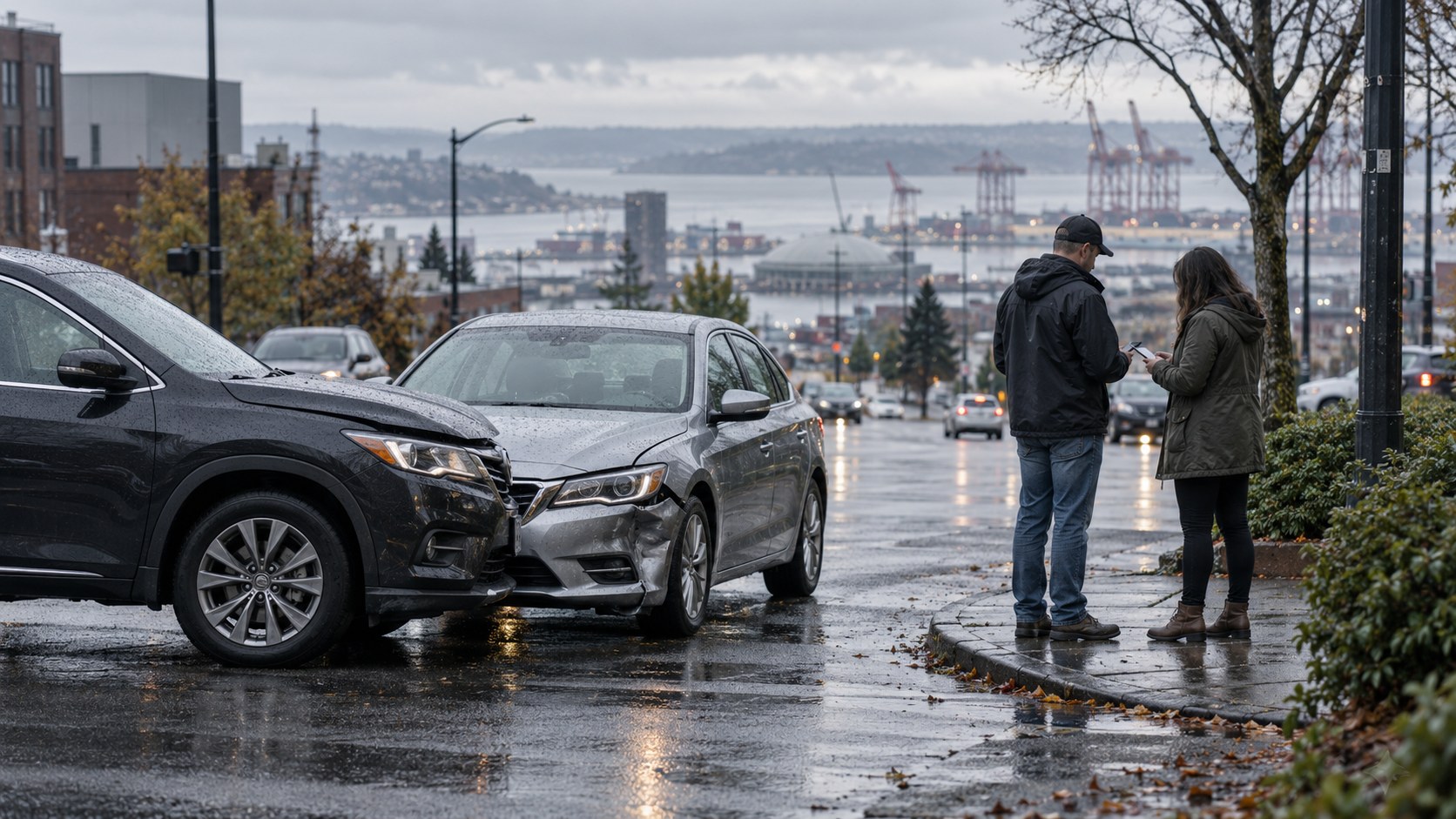
If an uninsured driver injures you in Tacoma, you may still have a path to compensation through available uninsured or underinsured motorist coverage, other applicable insurance, or a claim against a legally responsible party. Start by reporting the collision, documenting your injuries, and checking the policies in force on the accident date.
The other driver’s statement that they have no insurance is a starting point, not a complete coverage investigation. Our Tacoma car accident lawyers can review the circumstances and identify which insurance questions need answers.
A collision on I-5, South Tacoma Way, or a residential street presents the same immediate concern: how to handle treatment and expenses when the driver who caused the harm may not have coverage. The steps below help you organize that problem without assuming the loss must come entirely out of your pocket.
How do I confirm that the driver was uninsured?
Collect the driver’s name, contact details, vehicle information, and any insurance information provided at the scene. If the vehicle belongs to someone else, record the owner’s name as well. A missing insurance card does not establish that no applicable policy exists.
Provide those details to your insurer. If a carrier denies coverage, ask for the denial in writing and keep the explanation. A policy might have been canceled, the driver might be excluded, or the insurer might be investigating whether the vehicle was being used for work. Those are different coverage issues.
Tell your attorney if the driver was making deliveries, driving for an employer, or using an app for paid rides. Commercial activity can require a separate investigation. Avoid accepting or rejecting a potential source of coverage based solely on the driver’s description.
If the driver offers cash in exchange for keeping insurers out of the matter, do not assume the amount will cover your injuries. Avoid signing an agreement or release before understanding its effect.
What does uninsured or underinsured motorist coverage do?
This coverage may help compensate an insured person when the responsible driver has no applicable liability insurance or too little coverage for the loss. Washington’s statute addresses uninsured, underinsured, hit-and-run, and qualifying phantom-vehicle situations. Coverage can be rejected in writing, and policy terms matter. See RCW 48.22.030.
Ask your insurer for the declarations page and the full policy that applied on the crash date. Look for UM or UIM coverage, but do not stop with an abbreviation on the summary page. Ask who qualifies as an insured and what notice or claim requirements apply.
If the insurer says you rejected coverage, request the signed rejection and the explanation of how it applies. Do not assume that carrying what someone calls “full coverage” answers the question.
What can help pay medical bills while the claim is open?
Ask whether personal injury protection benefits are available under an applicable auto policy. Washington requires insurers to offer PIP, but a named insured can reject it in writing. That means PIP is not automatically present in every policy. See RCW 48.22.085.
Health insurance may also cover eligible treatment under its own terms. Give providers accurate accident and insurance information, and ask which carrier should receive bills first. Save claim numbers and payment explanations so you can track unpaid accounts.
A UM or UIM claim does not necessarily produce an immediate check for every appointment. Ask the adjuster which benefits are available now and which require evaluation of the overall injury claim.
If payment stops, find out whether a benefit was exhausted, a charge was denied, or information is missing. Send the written explanation to your attorney and the provider’s billing office. Do not assume every unpaid bill means the entire claim has been rejected.
What if the uninsured driver damaged my car too?
Vehicle damage and bodily injury may involve different coverage sections, adjusters, and settlement documents. Ask whether collision coverage or uninsured motorist property damage coverage applies to the vehicle, and what deductible or limitations the policy contains.
Keep the repair estimate, towing records, storage notices, and photographs. Ask the insurer what steps it expects you to take to prevent avoidable storage charges. If you need a rental vehicle, confirm whether rental reimbursement exists and what limits apply before committing to an expense.
Before approving repairs or disposal, preserve photographs and any evidence relevant to how the collision occurred. Let your attorney know if the vehicle may be totaled or sent to a salvage facility.
Review any release to see whether it settles only the property claim or also affects your injury claim. A quick vehicle payment should not create confusion about unresolved medical treatment.
What evidence matters when the driver has no insurance?
You still need evidence of how the crash happened and what injuries it caused. Insurance status alone does not establish fault. A useful claim file includes:
- Photographs of vehicle positions, damage, signs, and the surrounding roadway.
- Names and contact information for independent witnesses.
- The responding agency and report number, if available.
- Original dashcam footage and other relevant recordings.
- Medical records, work restrictions, and receipts.
Write down your recollection while it is fresh. Separate what you saw from what another person told you. If you do not know how fast a vehicle was traveling, describe the movement you observed rather than guessing a speed.
Identify nearby businesses or residences that may have cameras. Ask promptly whether relevant footage exists and can be preserved. Do not assume a traffic camera records video or that an agency will retain footage until your claim is ready.
What if the driver left or never made contact?
A hit-and-run and a crash caused by a vehicle that never touched yours can raise different proof questions. Record the direction the vehicle traveled, any plate information, its appearance, and the details of witnesses who saw it.
For a qualifying phantom-vehicle claim, Washington’s statute includes independent corroborating evidence and reporting to the appropriate law enforcement agency within 72 hours. That specific rule does not mean every uninsured-driver claim has the same deadline. RCW 48.22.030 sets out the conditions.
Report promptly and tell your insurer exactly what occurred. If the crash happened earlier or you are unsure whether a deadline was met, seek advice without assuming the claim is lost. The facts, policy, and legal requirements need review.
Can I sue the uninsured driver personally?
A person who negligently causes a collision may be personally responsible for resulting harm. Whether pursuing that person is practical depends on the evidence, available assets, other responsible parties, and the cost of enforcement.
A judgment is not the same as collected money. Before investing in a lawsuit, discuss both legal responsibility and realistic recovery options with an attorney.
Also consider whether someone other than the driver may bear responsibility. Vehicle ownership, employment, and the purpose of the trip can matter, but none of those facts automatically makes another person liable. The investigation should establish a legal basis before naming additional parties.
Keep any messages in which the driver discusses the collision or offers payment. Do not threaten the driver or agree to repayment terms that release claims you have not evaluated.
What if my own insurer disputes the claim?
An insurer may dispute coverage, responsibility, the relationship between treatment and the crash, or the amount of the loss. Ask the adjuster to identify the specific issue and any information needed to resolve it.
Keep correspondence in one place. After an important telephone conversation, send a short factual email confirming your understanding and requesting correction if needed. Save the original response.
Cooperate with valid policy requirements. At the same time, review recorded-statement requests, medical authorizations, examinations, and settlement releases carefully. An attorney can explain what the request seeks and how to respond accurately.
If payment is denied, obtain the written decision and the policy language cited. A denial letter is more useful for review than a general statement that the insurer “will not help.”
How long do I have to act?
Washington generally gives an injured person three years to bring an ordinary negligence lawsuit for personal injury under RCW 4.16.080. Exceptions and separate requirements can apply, including special procedures for claims involving public entities.
That lawsuit deadline is not a reason to wait before notifying an insurer. Contractual notice requirements, evidence preservation, and particular coverage rules may require much earlier action. Claims against an insurer can also involve a different legal analysis from the lawsuit against the driver.
Tell your attorney the exact accident date and provide any notice or denial you received. Do not rely on an open claim number or ongoing settlement conversations as proof that a filing deadline has been extended.
What should I prepare before speaking with a Tacoma attorney?
Gather your policy documents, the other driver’s information, photographs, report details, treatment records, and communications with insurers. Include any coverage rejection or denial, even if you disagree with it.
Write down the questions creating the most immediate difficulty. Perhaps the next treatment visit has no payment arrangement, the vehicle is accumulating storage charges, or the adjuster wants a release signed. Identifying the immediate issue helps the consultation address what you need first.
If you were a passenger, explain whose car you occupied and whether you have your own auto policy or may qualify under a household policy. If you were working, describe the work activity. Those details can change which coverage deserves attention.
What else should I know about uninsured-driver claims?
Does the driver being uninsured prove they caused the crash?
No. The claim still requires evidence about responsibility. Preserve the same scene photographs, witness details, and medical records you would need if the driver carried insurance.
Will buying UM coverage now cover a crash that already happened?
Do not expect a newly purchased policy or added coverage to apply retroactively. Request the policy and endorsements in effect at the time of the collision.
Can I accept a small payment directly from the driver?
Have any proposed agreement reviewed first. Even a modest payment may come with release language that affects a larger injury or insurance claim.
Should I assume I have no case if UM coverage is absent?
No. The investigation may identify other coverage or a responsible party. It may also show limited recovery options. A case-specific review is needed before reaching either conclusion.
How can Strong Law help after an uninsured-driver crash?
Strong Law Accident & Injury Attorneys can review the collision evidence, available policies, and any coverage denial. We help injured people understand what can be pursued and what remains uncertain.
Request a free consultation about your Tacoma crash. Bring the insurance documents you have, including any rejection or denial letters, so we can address the coverage questions directly.

See If Your Injury Claim May Qualify
Answer a few quick questions to help Strong Law understand what happened and whether your claim may qualify for a free review.
