

Injured as a Passenger in a Tacoma Car Accident?

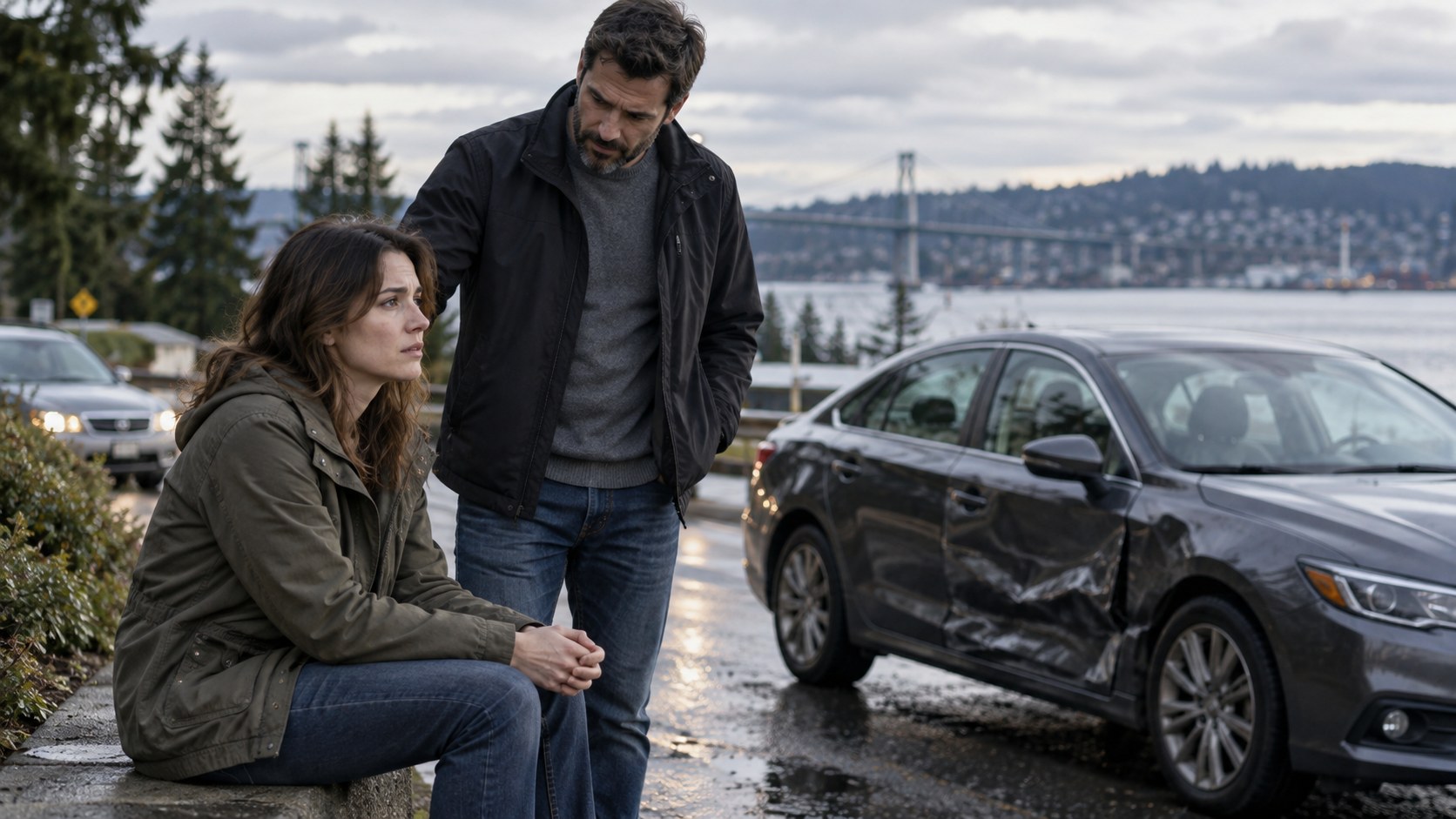
If you were injured as a passenger in a Tacoma car accident, you may have a claim against a driver who caused the collision. That could be the driver of another vehicle, the person driving you, or more than one responsible party. Available medical and auto coverage may also help, depending on the policies and circumstances.
You do not have to settle the drivers’ disagreement before asking for legal advice. Our Tacoma car accident lawyers can review the evidence and insurance while you focus on treatment.
Passenger claims often involve an uncomfortable question: what happens if the person responsible is a friend or relative? Another concern arises when several people are injured and may seek payment under the same policy. Understanding those issues early helps you avoid treating another person’s claim decisions as your own.
Whose insurance should I contact as an injured passenger?
Collect the names and insurance details of each involved driver and vehicle owner. Identify the vehicle you occupied and your seat location. Then ask about opening an injury claim and any available medical benefits.
The coverage review may include liability insurance for a responsible driver, PIP under an applicable auto policy, other auto coverage under which you qualify, and health insurance. Which policy responds depends on the facts and terms, so avoid assuming that every passenger follows the same billing order.
Washington’s PIP definitions include certain passengers occupying the insured automobile with permission. PIP availability still depends on the policy and any valid rejection. See RCW 48.22.005 and RCW 48.22.085.
If you have your own auto policy or may qualify under a household policy, provide that information to your attorney. Do not assume owning no vehicle means no potentially applicable coverage exists.
What if the driver was my friend or a family member?
Being close to the driver does not make medical bills or lost income disappear. You can ask an attorney to evaluate insurance without deciding in advance that you want to pursue every available legal option.
If your driver caused the crash, a liability claim may involve that driver’s insurer. Coverage for a particular passenger can depend on policy language, exclusions, and the relationship between the people involved. Have the actual policy reviewed rather than relying on an assurance that family members are always covered or always excluded.
An insurance claim may be resolved without filing suit. If litigation becomes necessary, the responsible person may need to be named. An attorney should explain that possibility plainly before you make decisions.
Do not accept a private repayment agreement simply to avoid an awkward conversation. A promise to cover the first medical bill may not address continuing treatment, missed work, or a permanent injury.
What happens if both drivers blame each other?
A passenger may have useful observations without knowing the entire sequence. Tell the truth about what you saw and what you did not. If you were looking at a phone or speaking with another passenger before impact, say so.
The investigation can consider vehicle damage, photographs, witness accounts, video, signal information, and other evidence. One insurer’s initial position does not settle the question for everyone.
When more than one driver may be responsible, an attorney can evaluate potential claims against each. Do not choose a driver to blame solely because that insurer is easier to reach or offers money first.
Be careful about releases. Settling with one party can affect the remaining claim, depending on the terms and law. Have the complete agreement reviewed before accepting payment that requires you to release anyone.
Can passengers be assigned part of the fault?
A passenger is not automatically responsible for a driver’s conduct. Whether the passenger’s own actions contributed to the injury is a separate, fact-specific question. An allegation by an adjuster needs an evidentiary and legal basis.
Washington’s comparative-fault rule generally reduces compensation according to a claimant’s own share of fault rather than barring recovery entirely. See RCW 4.22.005.
If an insurer assigns you a percentage, ask what conduct it relies on and how that conduct allegedly contributed. Do not accept a reduction simply because the driver of your vehicle was partly responsible.
An attorney can distinguish an issue affecting the driver’s claim from one affecting yours. That distinction is particularly important when the driver and passenger have been communicating with the same adjuster together.
Who pays for medical care before the claim settles?
Ask about available PIP and health benefits promptly. Give providers the correct claim information and ask which insurer should receive their bills. A liability claim may remain under investigation while treatment expenses become due.
Keep your own copies of medical records, bills, and payment explanations. Do not rely on the driver to collect them for you. Your treatment and losses are separate, even if you attended the same emergency department after the crash.
If payment is denied or benefits are exhausted, request a written explanation and share it with your attorney. Ask the provider about billing options while the coverage question is addressed.
Follow medical advice about your recovery and explain any financial barriers to recommended care. An insurance dispute should be documented rather than allowed to create an unexplained gap in the treatment history.
What if several passengers share limited insurance coverage?
Some liability policies have both a per-person bodily injury limit and an overall limit for a single accident. The actual policy determines the available amounts. When several people are injured, the total claimed losses may exceed that overall limit.
For a hypothetical illustration, a policy might limit one person’s recovery to $50,000 and all bodily injury payments from the accident to $100,000. Three injured people would not automatically receive $50,000 each from that policy. This example explains the structure, not Washington’s minimum requirements or the coverage in your case.
Do not assume the available money will be divided equally. The injuries, supported losses, competing claims, and settlement process may differ. Your attorney should assess the policy and other potential coverage before you accept a distribution.
Also ask about other responsible parties or coverage under which you may qualify. Their existence should be investigated, not assumed. A serious injury may require a broader coverage review than the driver’s first claim call provides.
What if the responsible driver has no insurance or too little?
Available uninsured or underinsured motorist coverage may warrant review. It is not enough to know that a policy exists; you must qualify for the coverage and satisfy applicable conditions. Do not assume multiple policies can simply be added together. Washington addresses this coverage in RCW 48.22.030.
Give your attorney every potentially relevant auto policy, including household coverage. If an insurer denies that you qualify, request the decision and cited policy language in writing.
An offer from the responsible driver’s insurer should be reviewed alongside any potential UIM claim. Do not sign a release without considering whether it affects other available coverage or the insurer’s rights.
The review may reveal substantial coverage, limited coverage, or a genuine gap. No conclusion should be based solely on the driver’s insurance card.
What evidence should a passenger preserve?
Save the crash date, location, direction of travel, and the seat you occupied. If the collision happened on I-5 or SR 16, record the direction and nearest exit or landmark you can accurately identify.
Useful evidence includes photographs, witness contact details, the report number, original videos, and messages about the collision. Preserve communications with the driver without editing or deleting parts that appear unfavorable.
Keep your own account of what you remember. Note whether you saw the other vehicle before impact, heard a warning, or observed the driver’s actions. Do not repeat another person’s account as if you witnessed it yourself.
For your losses, save treatment records, receipts, work restrictions, and payroll information. If a damaged personal item is part of the claim, photograph it and retain evidence of ownership and value when available.
Should the driver and passengers use the same attorney?
Sometimes people injured in the same crash seek help from one firm. Whether joint representation is appropriate depends on their interests and potential conflicts.
A conflict may arise if a passenger has a claim against the driver, the people disagree about what happened, or they are competing for insufficient insurance proceeds. The lawyer needs to assess that before agreeing to represent everyone.
Ask who the attorney represents and whether your interests could differ from those of other occupants. You should understand whether advice is being given to you individually or to someone else.
An initial conversation about a shared crash does not mean one lawyer can represent every person through every stage. Separate counsel may be appropriate if the facts or available coverage create conflicting interests.
What if a rideshare, taxi, or work vehicle was involved?
Identify the vehicle’s use at the time of the crash. If you were taking a paid ride, preserve the trip receipt, app screenshots, pickup information, and any communication with the platform.
If the driver was working, record the employer or business information you know. Different policies and legal duties may need review, and coverage can depend on the activity underway at the time.
Do not assume a commercial logo guarantees a particular amount of insurance. Likewise, a driver’s personal insurer declining the claim does not necessarily end the investigation.
Public transportation and government vehicles can involve special procedures. Tell your attorney immediately if a public agency may be involved so the applicable notice and filing requirements can be checked.
How long should a Tacoma passenger wait before getting help?
Seek advice while evidence is available and before signing a final release. Washington generally has a three-year limitation period for an ordinary personal injury negligence lawsuit under RCW 4.16.080, but exceptions and separate notice requirements can apply.
Do not assume the driver’s claim preserves yours. A passenger may have different defendants, coverage questions, and procedural needs. Tell the attorney if the injured passenger is a child or a public entity is involved.
Ongoing treatment does not prevent an initial review. An attorney can help identify evidence and deadlines without requiring you to accept a settlement before the medical outlook is understood.
What else do injured passengers ask?
Do I need my own car insurance to make a claim?
Not necessarily. A claim against a responsible driver does not depend on owning a car. The available benefits and insurance still require an individual review.
Does the driver’s settlement settle my claim too?
Do not assume it does. Your injury claim is separate, but any document you sign may affect your rights. Review the actual agreements and confirm who is included.
Can I ask for help without agreeing to sue my friend?
Yes. A consultation can explain coverage and options before you choose a course of action. Ask the attorney to explain what each option would involve for both you and the driver.
Is this the same as borrowing a friend’s car?
No. A passenger’s claim differs from a claim involving someone who borrowed and drove the vehicle. Our guide to an accident in a friend’s car addresses that separate situation.
How can Strong Law help an injured Tacoma passenger?
Strong Law Accident & Injury Attorneys can review who may be responsible, which policies need examination, and whether a proposed settlement addresses your injuries. We can also assess whether your interests differ from those of the driver or other passengers.
Request a free consultation. Bring the drivers’ insurance information, your medical records, and any release or settlement offer you have received.

See If Your Injury Claim May Qualify
Answer a few quick questions to help Strong Law understand what happened and whether your claim may qualify for a free review.
