

What Is Negligent Entrustment After a Car Accident?

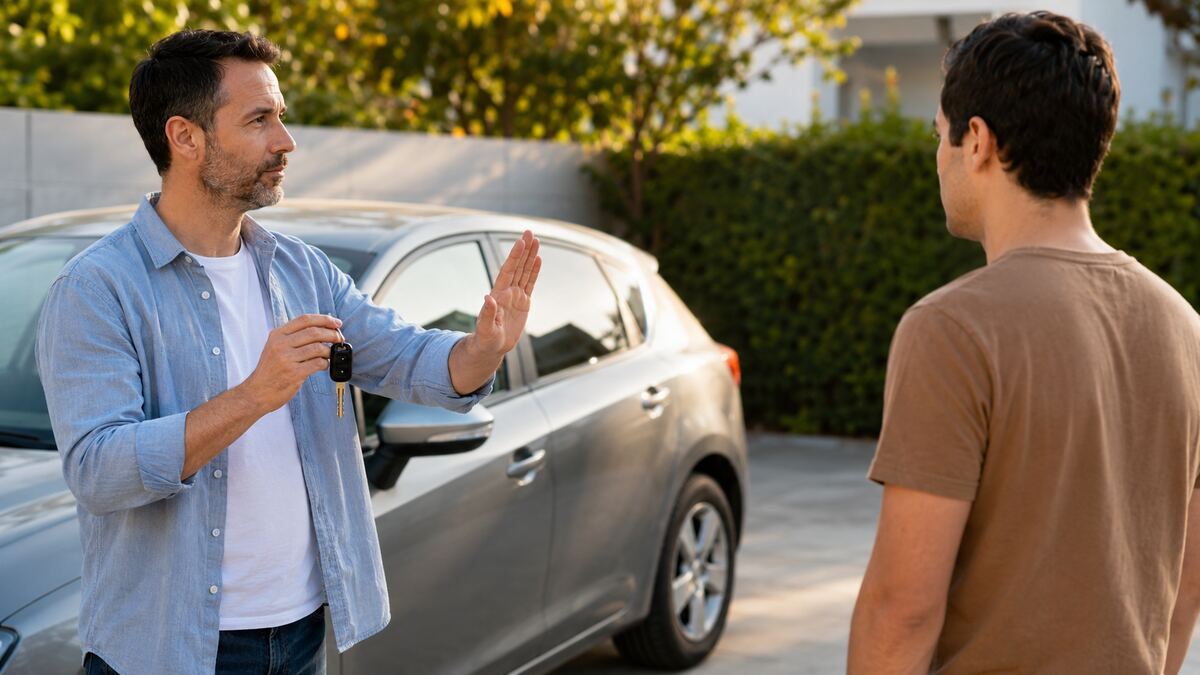
Negligent entrustment is a legal theory that may make a vehicle owner or another person with control of a vehicle directly liable for allowing an unsafe driver to use it. A claim generally requires more than proof that the borrower caused a crash. The evidence must connect the decision to provide the vehicle, the driver’s known or reasonably knowable unfitness, and the collision that caused the injuries.
For example, an owner may face a negligent-entrustment claim after handing the keys to someone the owner knows is intoxicated, legally prohibited from driving, or repeatedly reckless. The result is not automatic, and the precise legal test varies by state. Strong Law’s car accident lawyer page explains the broader process for investigating fault, insurance coverage, injuries, and losses after a collision.
This article provides general information, not legal advice. Negligent-entrustment law, owner-liability rules, insurance coverage, filing deadlines, and available damages vary by state and by the facts of the case.
Video overview: Attorney Jed Strong explains how someone who knowingly gives an unsafe person control of a vehicle may share responsibility when that driver causes a collision.
What Does Negligent Entrustment Mean?
Negligent entrustment focuses on the conduct of the person who supplied or allowed the use of a dangerous instrument—here, a motor vehicle. The theory treats the entrustor’s decision as a separate act of negligence. It does not merely transfer the driver’s fault to the owner.
Suppose a party host sees that a guest is visibly impaired but gives the guest car keys anyway. If the guest then causes a crash because of that impairment, the injured person may investigate both the driver’s conduct and the host’s decision to provide the vehicle. The National Highway Traffic Safety Administration advises people not to let someone who has been drinking get behind the wheel and recommends taking the keys and arranging a sober ride.
State law controls the claim. As one illustration, the Wisconsin State Law Library’s current civil jury-instruction set includes instructions specifically addressing negligent entrustment. Other states may define the claim through statutes, appellate decisions, pattern jury instructions, or a combination of those authorities.
What Must Be Proven in a Negligent-Entrustment Claim?
The wording differs by jurisdiction, but a negligent-entrustment case commonly examines whether:
- The defendant owned, possessed, or controlled the vehicle. Ownership can be important, but the inquiry may also include who had authority to provide access.
- The defendant entrusted the vehicle to the driver. This may involve express permission, handing over the keys, or conduct that allowed the driver to use the vehicle.
- The driver was unfit, incompetent, or unsafe for the intended use. The alleged problem must be relevant to the risk that led to the collision.
- The defendant knew or should have known about that risk. Some states phrase the knowledge requirement differently, so the applicable law must be checked.
- The driver’s unsafe operation caused the crash. A poor driving history that had nothing to do with the collision may not establish causation.
- The crash caused legally recoverable harm. Medical records, wage documents, property evidence, and other proof may be needed to establish the losses.
Checking boxes is not enough. Each part must be supported with admissible evidence, and defenses may dispute permission, knowledge, causation, the extent of injury, or all of them.
When May a Driver Be Considered Unsafe or Unfit?
A driver’s unfitness is usually tied to a specific condition, history, restriction, or lack of ability that made the entrusted use foreseeably dangerous. Depending on state law and the facts, relevant circumstances may include:
- Visible intoxication or known drug impairment
- A suspended or revoked license connected to unsafe driving
- A known history of reckless driving, repeated serious violations, or preventable crashes
- Lack of training or experience needed to operate the particular vehicle
- A known medical or functional limitation that made driving unsafe at that time
- Fatigue, illness, or medication effects that were apparent to the person providing the vehicle
- Prior misuse of the same vehicle or violations of clear restrictions on its use
No single fact necessarily proves the claim. Being unlicensed, young, older, previously cited, or diagnosed with a medical condition does not automatically establish that a person was unfit to drive. The issue is whether the evidence shows a meaningful driving risk, whether the entrustor knew or reasonably should have known about it under the governing law, and whether that risk contributed to the crash.
Is a Vehicle Owner Automatically Liable for a Borrower’s Crash?
No. Vehicle ownership alone does not establish negligent entrustment. An owner who lends a car to a properly licensed, apparently competent, sober driver may have no reason to foresee that the person will cause a collision. The driver may still be liable for careless operation, but that is different from proving that the owner made a negligent decision.
Some states have separate owner-liability statutes, family-purpose doctrines, agency rules, or presumptions involving permissive use. Those rules are distinct from negligent entrustment and may produce a different result. The registration, title, permission evidence, household relationship, employment relationship, and applicable state law should all be examined before drawing a conclusion.
What Does “Knew or Should Have Known” Mean?
The knowledge element asks what the entrustor actually knew and, where the state recognizes constructive knowledge, what a reasonably careful person in the same circumstances should have recognized. Direct proof may include an admission such as, “I knew his license was suspended.” Circumstantial evidence may show knowledge even when the owner denies it.
Consider an owner who has repeatedly taken the keys from the same driver after drinking, received notices about a license revocation, or personally witnessed several recent reckless incidents. Those facts may support an inference of knowledge. In contrast, a driving problem that was concealed from the owner and could not reasonably have been discovered may weaken the claim.
The timing matters. Information the owner learned only after the collision generally cannot prove that the original decision was negligent. The investigation should focus on what was known or reasonably knowable before the keys or vehicle were provided.
What Evidence Can Prove Negligent Entrustment?
Evidence may be held by the driver, vehicle owner, employer, insurer, licensing agency, witnesses, or third parties. Useful material can include:
- Vehicle title, registration, lease, rental, or company-assignment records
- Text messages, emails, social posts, and recorded communications about permission or the driver’s condition
- Witness accounts describing intoxication, fatigue, threats, prior incidents, or the transfer of keys
- Driver’s-license status and legally obtainable motor-vehicle records
- Prior crash, citation, disciplinary, or training records when relevant and admissible
- Receipts, video, photographs, or toxicology evidence concerning impairment
- Vehicle-access policies, key-control logs, and employer safety procedures
- Police reports, dashcam footage, event-data records, and crash-scene evidence
- Medical, wage, and other records documenting the injuries and losses caused by the collision
Records can disappear quickly. Surveillance video may be overwritten, digital messages may be deleted, and a commercial vehicle may return to service. A timely preservation request can identify evidence that should be retained. Strong Law’s guide to how fault is determined after a car accident explains other evidence used to reconstruct a collision.
What If the Vehicle Was Taken Without Permission?
A vehicle that was genuinely stolen or taken without permission may defeat the basic allegation that the owner entrusted it. However, the label “no permission” does not end the investigation. The facts may show standing permission, habitual access to the keys, prior authorized use, or an owner who later withdrew permission.
For example, an owner may say that a household member was forbidden to drive while evidence shows that the person used the car regularly with the owner’s knowledge. Conversely, forcing entry and taking secured keys without the owner’s knowledge is materially different. Police reports, messages, key access, household testimony, and prior-use records can help resolve the dispute.
Can an Employer Be Liable for Entrusting a Company Vehicle?
Potentially. An employer or business may face a negligent-entrustment allegation if it gives a company vehicle to a worker it knows—or under the applicable law should know—is not qualified to operate it safely. Other possible theories may include vicarious liability, negligent hiring, negligent retention, negligent training, or negligent supervision. Each theory has separate requirements.
Commercial-motor-carrier cases may involve additional records. For covered motor carriers, 49 C.F.R. § 391.51 requires specified driver-qualification records to be maintained. Whether federal regulations apply depends on the vehicle, operation, carrier, and other facts; they do not govern every company-car accident.
When a commercial truck or carrier is involved, Strong Law’s truck accident lawyer page explains how driver files, electronic data, maintenance records, dispatch information, and corporate safety practices may become part of the investigation.
How Is Negligent Entrustment Different From Vicarious Liability?
Negligent entrustment is based on the entrustor’s own decision to provide the vehicle. Vicarious liability generally concerns whether one party is legally responsible for another party’s conduct because of a relationship, such as an employer and an employee acting within the scope of employment.
A case may involve one theory, both theories, or neither. For example, a company may be accused of negligently assigning a truck to a driver with known safety problems and also be held responsible for the driver’s on-the-job negligence under agency law. The proof and available defenses can differ, so the theories should not be treated as interchangeable.
Can Both the Driver and the Entrustor Be Liable?
Yes, depending on the evidence and state law. The driver may be liable for speeding, impairment, distraction, failure to yield, or another act that caused the crash. The owner or controller may separately be liable for supplying the vehicle despite a known driving risk.
Fault can also involve other parties, including another driver, an employer, a vehicle manufacturer, a repair provider, or a government entity responsible for a dangerous road condition. Comparative-fault and allocation rules vary by state. Identifying an additional defendant does not guarantee a larger recovery; liability, causation, damages, insurance, and collectability still must be established.
How Does Insurance Apply to Negligent Entrustment?
Insurance depends on the policy language, state law, permission, vehicle, driver, exclusions, limits, and the allegations made. A vehicle policy may provide coverage for a permissive driver, an owner, or both, but that should not be assumed. Personal umbrella, household, employer, or commercial policies may also need to be examined.
The National Association of Insurance Commissioners recommends contacting the number on the proof-of-insurance card promptly to begin an auto claim. Injured people should preserve every insurance card, policy number, claim letter, reservation-of-rights notice, and coverage denial they receive.
An insurer may dispute whether the driver had permission, whether an exclusion applies, or whether the owner had the required knowledge. Coverage questions can proceed separately from the underlying negligence case, and accepting a release may end claims against parties who were not yet fully investigated.
What Should an Injured Person Do After This Type of Crash?
- Address safety and medical needs. Call 911 when appropriate and obtain evaluation for new, serious, or worsening symptoms.
- Document the scene. Photograph the vehicles, plates, road, damage, debris, and visible conditions when it is safe to do so.
- Identify the owner. Preserve registration, insurance, rental, employer, and driver information without assuming the person behind the wheel owns the vehicle.
- Collect witness information. A witness may have seen who provided the keys or observed the driver before the trip began.
- Preserve communications. Save messages, call logs, social posts, and insurance correspondence in their original form.
- Avoid unsupported accusations. Report what you observed and allow records and testimony to establish permission, impairment, and knowledge.
- Learn the deadline. Statutes of limitation and special notice requirements vary, especially when a government vehicle or entity is involved.
How Can a Lawyer Investigate Negligent Entrustment?
A lawyer can determine who owned and controlled the vehicle, identify applicable state law, request insurance information, preserve electronic and video evidence, obtain legally available driving records, interview witnesses, and examine the relationship between the driver and entrustor. In a business case, counsel may also pursue driver files, policies, training records, prior incident reports, and key-control evidence.
The investigation must still connect the legal theory to the client’s injuries and losses. Strong Law’s personal injury lawyer page explains how negligence, causation, medical evidence, wage loss, and other damages fit into a broader injury claim.
Frequently Asked Questions About Negligent Entrustment
Is a vehicle owner automatically liable when a borrower causes a crash?
No. Negligent entrustment generally requires evidence that the owner or controller supplied the vehicle despite knowing—or, where the law provides, having reason to know—that the driver was unfit for the intended use. Separate owner-liability rules may apply in some states.
Does an unlicensed driver automatically prove negligent entrustment?
No. License status may be relevant, but the reason for the status, the entrustor’s knowledge, the driver’s actual ability, and the cause of the crash can all matter. The governing state law determines what must be proven.
What if the owner says they did not know the driver was unsafe?
The claim may be evaluated using both direct and circumstantial evidence. Messages, prior incidents, witness testimony, license notices, household knowledge, or employer records may support or contradict the owner’s account.
Can both an impaired driver and the person who provided the keys be liable?
Potentially. The impaired driver may be liable for unsafe operation, while the person providing the vehicle may face a separate negligent-entrustment claim if the required knowledge, causation, and other elements are proven.
Can negligent entrustment apply to a company vehicle?
Yes, depending on the facts. A company may face a claim if it provided a vehicle to a worker known to be unqualified or unsafe. Vicarious liability and negligent hiring, training, retention, or supervision may also need to be considered separately.
What if the driver took the vehicle without permission?
A genuine theft or unauthorized taking may undermine the entrustment element. Evidence of prior permission, regular access, key control, household practices, and communications may determine whether the vehicle was actually entrusted.
Talk With Strong Law After a Crash
If an unsafe driver caused your injuries and someone else supplied the vehicle, Strong Law can investigate ownership, permission, the driver’s history, the entrustor’s knowledge, insurance coverage, and the evidence needed to prove your losses. Request a free case review or call 385-483-4682. Strong Law handles qualifying injury cases on a contingency-fee basis, so there is no upfront attorney fee and no attorney fee unless compensation is recovered.

See If Your Injury Claim May Qualify
Answer a few quick questions to help Strong Law understand what happened and whether your claim may qualify for a free review.
