

Who Pays If You Crash a Friend’s Car?

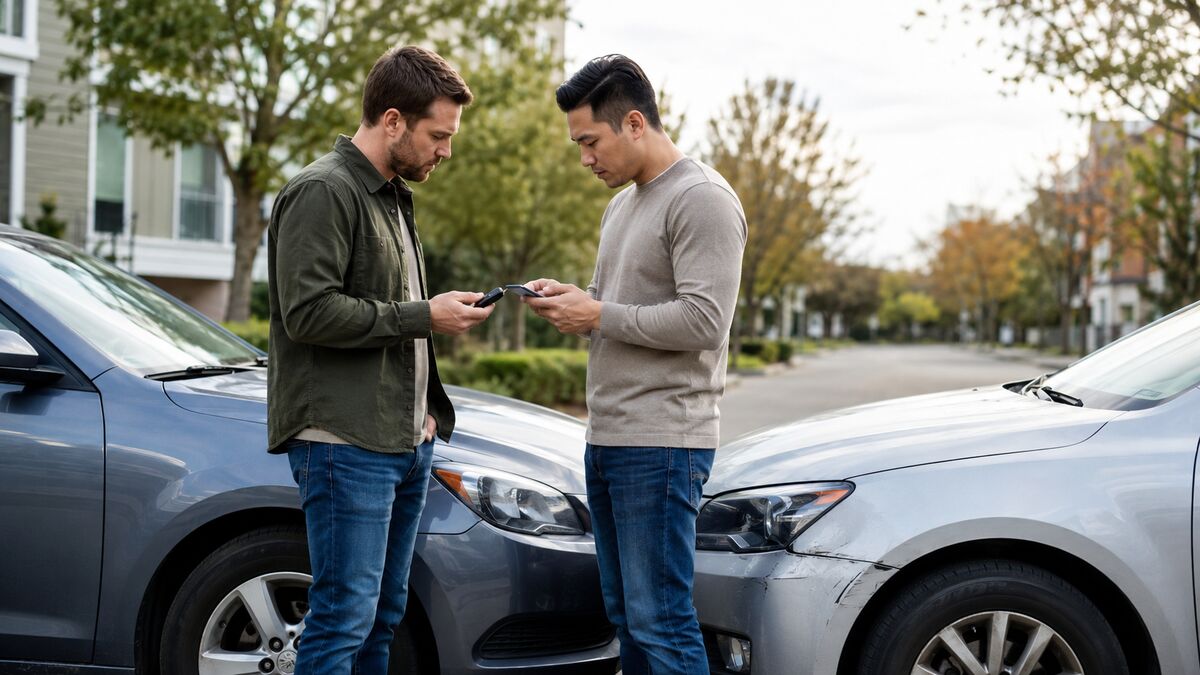
If you crash a friend’s car, the vehicle owner’s insurance is often the first policy examined when you had permission and were only an occasional borrower. Your own auto policy may provide secondary coverage or separate benefits. But there is no universal rule: the state, the wording of both policies, who had permission, how often the car was used, and any exclusions all matter.
Quick answer: In a typical personal-use crash, the owner’s liability policy may respond first for injuries or property damage caused to other people. The borrower’s policy may provide excess coverage if it applies. Collision coverage may pay to repair the friend’s car, while PIP, MedPay, health insurance, or UM/UIM may address injuries in different situations. Every part of that answer depends on the policies and state law.
Video summary: Jed Strong explains why the vehicle owner’s insurance is commonly the starting point and when the driver’s own coverage may also apply.
Who Usually Pays If You Crash a Friend’s Car?
The first question is not simply, “Who was driving?” Insurers also ask which policy covers the vehicle, whether the driver qualified as an insured person, and how the policies coordinate with each other.
For an occasional borrower who had permission to use the car for a personal trip, the owner’s policy is often the starting point. The National Association of Insurance Commissioners explains that auto policies contain several distinct coverages and that the rules and required coverages vary by location. A regulator’s general rule is useful, but the declarations page, definitions, exclusions, and endorsements in the actual policies control the claim.
The driver’s own auto policy may also matter. Depending on the policy and state priority rules, it might provide excess liability coverage after the owner’s applicable limit is reached, or it might provide separate benefits. Do not assume it automatically fills every gap. “Other insurance” clauses, exclusions, and insured-person definitions can change the result.
Insurance Coverage and Legal Fault Are Different Questions
Insurance coverage asks whether a policy applies to a person, vehicle, event, or type of loss. Fault asks whose conduct caused the collision. The negligent driver may be legally responsible even when someone else’s policy pays the claim.
Evidence—not car ownership alone—usually determines fault. Police reports, photographs, video, witness statements, vehicle damage, road conditions, and electronic data may all matter. Read more about how fault is determined after a car accident.
The car owner may also face a claim in some circumstances. State law can impose liability on an owner for a permissive driver, and an owner’s own conduct may matter if the owner knowingly lent the vehicle to someone who was unsafe or unqualified to drive. That separate theory is explained in Strong Law’s guide to negligent entrustment after a car accident. It should not be confused with ordinary permissive use.
What Does “Permissive Use” Mean?
Permissive use generally means the driver had the owner’s express or implied permission to use the vehicle. Express permission might be as simple as, “You can borrow my car to go to the store.” Implied permission may be inferred from a pattern of conduct, but it can be disputed.
Permission can also have limits. An owner might authorize one driver, one destination, or one purpose. A claim becomes more complicated when the borrower gives the keys to another person, drives far outside the agreed area, keeps the car longer than authorized, or uses it for a purpose the policy excludes.
The Texas Department of Insurance’s auto insurance FAQ, for example, says a licensed friend who has permission and does not regularly borrow the car is usually covered, while a named-driver exclusion can change that result. That is helpful consumer guidance, not a nationwide guarantee.
When Might the Owner’s Policy Not Cover the Driver?
Possible coverage disputes include:
- No permission: The driver took the vehicle without the owner’s consent.
- Named-driver exclusion: The policy specifically excludes that person from coverage.
- Regular or household use: The driver lives with the owner or uses the car frequently but was not properly disclosed or listed.
- Use outside the permission granted: The borrower used the car in a materially different way from what the owner authorized.
- Commercial, delivery, or rideshare use: A personal auto policy may limit or exclude a business use that requires an endorsement or commercial policy.
- Intentional or illegal conduct: Policy terms and state law may restrict coverage for certain conduct.
An “unlisted” driver is not automatically the same as an “excluded” driver. The distinction can be decisive. The California Department of Insurance’s automobile guide illustrates how exclusions and coverage types can affect a claim, but the rule in another state or policy may differ.
Which Insurance May Pay Each Type of Loss?
| Loss | Coverage that may apply | Important qualification |
|---|---|---|
| Injuries or property damage to other people | Bodily injury and property damage liability | Depends on fault, insured status, exclusions, limits, and policy priority |
| Damage to the friend’s car | Collision coverage applicable to that vehicle | Usually subject to a deductible, valuation rules, and policy terms |
| Driver or passenger medical expenses | PIP, MedPay, health insurance, or an at-fault liability claim | Eligibility, priority, reimbursement, and coordination vary |
| Loss caused by an uninsured or underinsured driver | UM/UIM coverage | Definitions, limits, offsets, stacking, and available damages vary |
| Towing or a temporary replacement vehicle | Optional towing, rental, or transportation coverage | These benefits are not automatically included with every policy |
Who Pays for Injuries and Damage to Other People?
If the borrower caused the crash and qualifies for coverage under the owner’s policy, the owner’s liability insurer may defend the claim and pay covered bodily injury or property damage up to the applicable limits. The borrower’s own liability policy may be excess or otherwise applicable, but that must be confirmed rather than assumed.
Liability insurance does not erase the driver’s legal responsibility. If all applicable insurance is denied or exhausted, a legally responsible person may face personal exposure for unpaid damages. Serious injury claims can involve multiple insurers, competing coverage positions, and deadlines. A car accident lawyer can identify potential policies and separate the coverage dispute from the underlying injury claim.
Who Pays to Repair the Friend’s Car?
Liability coverage generally pays covered harm the insured causes to other people; it does not usually repair the insured vehicle itself. Damage to the borrowed car is commonly addressed through collision coverage that applies to that vehicle. The owner may owe a deductible, and the insurer may repair the car, declare it a total loss, or dispute whether the damage arose from a covered collision.
If the owner did not buy applicable collision coverage, there may be no first-party policy available to repair that car. The owner might then pursue the driver or another at-fault party, depending on the facts and law. A loan or lease requirement to carry physical-damage coverage does not prove that valid coverage was in force on the crash date.
Can PIP or MedPay Cover Medical Bills?
Personal injury protection (PIP) or medical payments coverage (MedPay) may pay certain covered medical expenses without waiting for a final fault decision. Depending on the state and policy, PIP may also address part of lost income, replacement services, or other specified losses.
The applicable policy is not always obvious. Coverage may turn on whether the injured person was the named insured, a household member, the driver, a passenger, or an occupant of a vehicle listed on a policy. For example, the Washington Office of the Insurance Commissioner describes who may qualify for Washington PIP and notes circumstances in which the vehicle must appear on the declarations page. Other states use different systems.
What If the Other Driver Caused the Crash?
If another driver caused the collision, that driver’s liability coverage may be the primary source of compensation for covered injuries and property damage. The fact that you were driving a friend’s car does not automatically make you responsible for a crash someone else caused.
Collision, PIP, or MedPay may still provide earlier benefits while fault is investigated. If the at-fault driver has no insurance or too little insurance, applicable uninsured or underinsured motorist coverage may matter. Which UM/UIM policy applies—and in what order—can depend on the injured person’s status, the occupied vehicle, household policies, and state law.
What If the Policy Limits Are Too Low?
An insurer generally does not pay more than the applicable limit. When one policy is not enough, another valid auto policy or a personal umbrella policy may provide additional liability coverage. That additional protection is possible, not automatic.
Insurers may disagree about which policy is primary, whether the borrower is an insured person, or whether an exclusion applies. The owner, driver, and injured claimant should not rely on an adjuster’s informal statement about “no other coverage.” Obtain the coverage decision in writing and ask which policy language supports it.
Can an Insurer Seek Repayment After It Pays?
Possibly. Subrogation is the process through which an insurer that paid a covered loss may seek recovery from a responsible party or another insurer. It can affect deductibles, settlements, and releases.
The Washington Office of the Insurance Commissioner’s claim guidance explains subrogation and advises consumers to coordinate with their insurer before settling. Do not assume the owner’s insurer will always pursue the borrower; policy language and state anti-subrogation rules can complicate that question.
What Should You Do After Crashing a Friend’s Car?
- Protect people first. Move to a safe place if possible, call 911 when appropriate, and obtain medical care.
- Document the scene. Photograph vehicle positions, damage, license plates, traffic controls, weather, debris, and visible injuries.
- Exchange information. Collect each driver’s name, contact information, license, registration, and insurance details.
- Preserve proof of permission. Save messages, call logs, or other evidence showing why and when the vehicle was borrowed.
- Report the crash promptly. Notify both the vehicle owner’s insurer and the borrower’s insurer. Follow policy notice requirements without guessing about coverage.
- Get the collision report. Strong Law explains how to obtain an accident police report.
- Request the relevant documents. Ask for declarations pages, driver and exclusion endorsements, and a written explanation of any coverage denial or limitation.
- Track every loss. Keep medical records, bills, wage documentation, repair estimates, rental expenses, and insurer correspondence.
- Be careful with recorded statements and releases. Answer required questions truthfully, but do not speculate. Review Strong Law’s guide to questions an insurance adjuster may ask.
When Should You Talk to a Lawyer?
Legal help may be useful when someone was injured, an insurer denies permissive use, a named-driver exclusion is disputed, the owner and borrower give different accounts, more than one policy may apply, or the damages may exceed the available limits.
Strong Law can investigate fault, identify potentially applicable insurance, preserve evidence, handle insurer communications, and evaluate the full effect of an injury. A personal injury lawyer can also help prevent a premature release from ending a claim before all responsible parties and policies are identified.
Injured in a Crash Involving a Borrowed Car?
Strong Law offers free case evaluations for people dealing with injuries, disputed fault, coverage denials, or multiple insurance policies after a crash. There is no obligation to hire the firm, and attorney fees are not charged unless compensation is recovered.
Frequently Asked Questions
Whose insurance usually pays when I crash a friend’s car?
The owner’s policy is often examined first when you had permission and were an occasional borrower. Your own policy may provide excess or separate coverage, but state law and both policies control.
Am I covered if I was not listed on my friend’s policy?
Possibly. Many policies cover an occasional permissive driver, but regular household drivers, named excluded drivers, and uses barred by the policy may not be covered.
What if I am a named excluded driver?
A named-driver exclusion may remove some or all coverage while you are driving. The precise effect depends on the endorsement and state law; your own insurance does not automatically cure the gap.
Who pays to repair my friend’s car?
Applicable collision coverage, not liability coverage, commonly handles damage to the borrowed car after a covered collision, subject to the deductible and policy terms. Without applicable collision coverage, no insurer may owe for that vehicle under first-party coverage.
Who pays the driver’s and passengers’ medical bills?
PIP or MedPay may pay covered expenses without deciding fault first. Health insurance and a claim against an at-fault driver may also apply; UM/UIM may matter if that driver lacks adequate insurance. Eligibility and priority vary.
What happens when the insurance limits are too low?
Another applicable auto or umbrella policy may provide additional coverage. If all available limits are exhausted, legally liable parties may be responsible for the remaining damages. An insurer that paid may also pursue subrogation.
Important: This article provides general information, not legal or insurance advice. Auto insurance and liability rules vary by state and policy. For state-specific consumer resources or complaint information, use the NAIC directory of state insurance departments or speak with a qualified professional.

See If Your Injury Claim May Qualify
Answer a few quick questions to help Strong Law understand what happened and whether your claim may qualify for a free review.
